
.avif)


Do you have any experience?
We match you with the perfect vocal coach for your goals, so you can learn to sing conveniently online - singing lessons with no waiting time. Right after signing up you get a no-obligation trial-lesson slot via WhatsApp.
After your free trial lesson, discuss your goals and availability with your vocal coach and start learning to sing right away.
Book your singing lessons flexibly online. In the SIRIUS Workspace you get unlimited access to vocal exercises outside your lessons, so you can keep practicing at home with our tools.
Want to learn to sing and looking for a vocal coach in Salina, Kansas? We work with SIRIUS-vetted vocal coaches. Based on your needs we match you with the perfect vocal coach - whether you are just starting to sing or looking for singing lessons for adults or kids. Want to work on your intonation, improve your head voice or explore breath training? Sign up for our free trial lesson and get a session proposal with your perfect vocal coach.
Our experienced vocal coaches help you unlock your full potential. Our technology, built for online singing lessons, guarantees excellent sound quality and lets you learn to sing from anywhere - with no extra software or download.


.avif)

.avif)





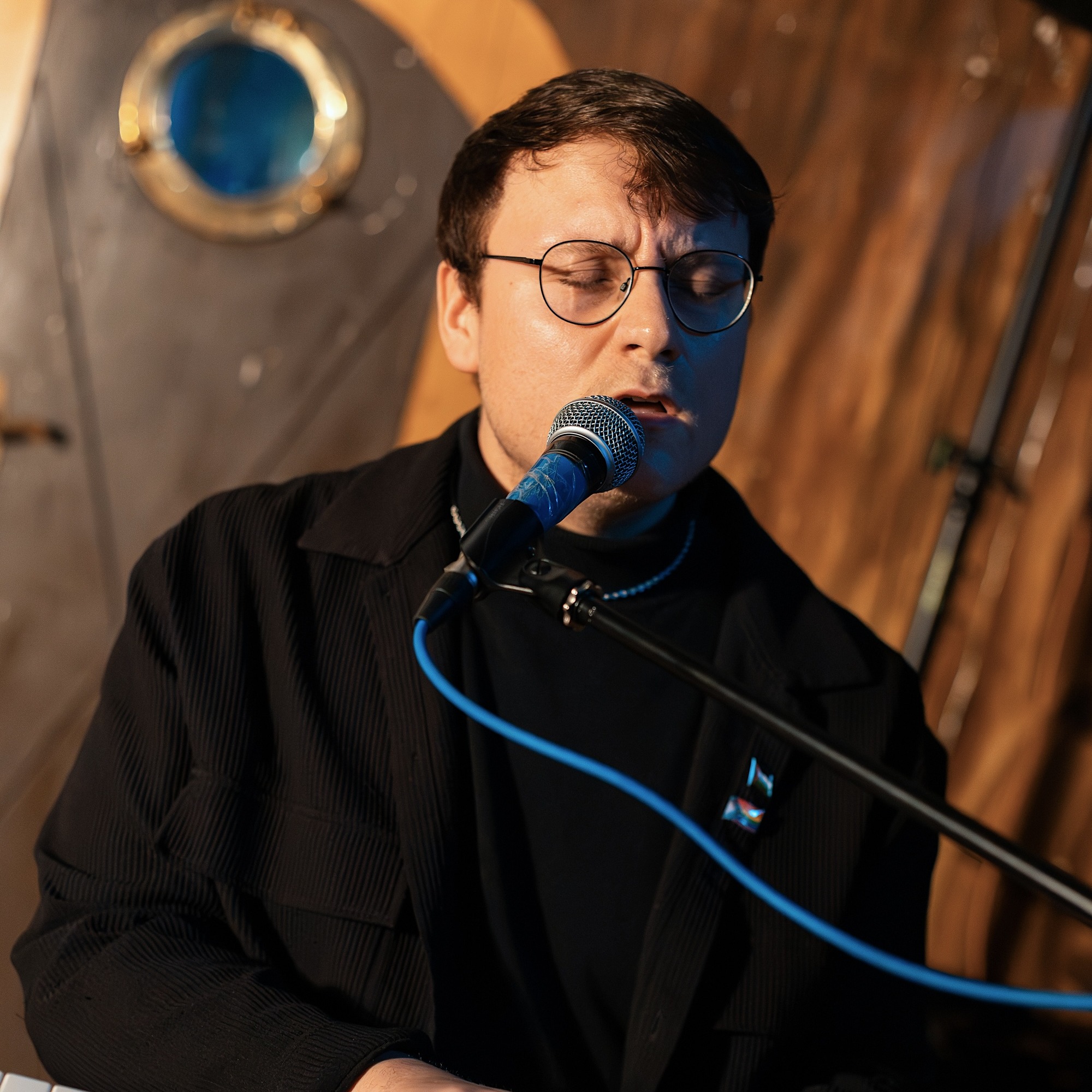

SIRIUS gives you personal singing lessons tailored to your needs - from finding a coach to payment, everything runs smoothly through our platform. Whether you want to add lessons or reschedule, it all works effortlessly online through our booking tool. You can even rent a keyboard to accompany yourself while you sing.
Learn the fundamentals of music theory, expand your vocal range and develop your sense of intonation - whether you want to sing pop, jazz, opera, rock or metal. These voice lessons and vocal lessons always meet you at your level.
SIRIUS gives you not only professional singing lessons but exclusive access to a digital Workspace that makes learning to sing more efficient and structured. In the SIRIUS Cloud you find all key materials and targeted vocal exercises from your vocal coach - available anytime in one place. Lessons can be summarized automatically, and you can access recordings of your sessions to track progress and work on your vocal technique.
Alongside one-on-one lessons you can join monthly group sessions to connect with other singers, try new vocal exercises and get valuable feedback - so you benefit from individual coaching and the energy of the community.

More hours = a better price per hour. Every plan: 45-min one-on-one lessons with vetted teachers.
Perfect to get started.
/hour
/hour
2 hours / month
$80.10 / month
$89.00 / month
with a 6-month membership
with a 3-month membership
↓ You save $53.40 with a 6-month plan
For lasting progress.
/hour
/hour
3 hours / month
$98.10 / month
$109.00 / month
with a 6-month membership
with a 3-month membership
↓ You save $65.40 with a 6-month plan
Faster progress, more practice.
/hour
/hour
4 hours / month
$116.10 / month
$129.00 / month
with a 6-month membership
with a 3-month membership
↓ You save $77.40 with a 6-month plan
All prices incl. VAT · Pause anytime
Do you have any experience?
Many music students worldwide already trust SIRIUS.
“Maya is very friendly and competent. The singing lessons are great! ”
.avif)
Lily
Singing student
“I've been studying singing with Jessica for 8 months now and I'm still having fun:)”
.avif)
Maria
Singing student
“Self-learning videos for learning to sing were not my thing. But since I discovered singing lessons with Lena about Sirius, I've been fully motivated.”
.avif)
Georgina
Singing student
“I'm taking singing lessons for the first time and I just love Sirius. I've received a lot of valuable tips from Habib. I really recommend it to you guys.”

Lucas
Singing student
“Lena not only knows about singing lessons, but also makes the lesson a real experience. It is always my highlight of the week.”
.avif)
Carl
Singing student
In central Kansas the private hour generally runs fifty to a hundred dollars, though nobody publishes a going rate, so ask two or three teachers before committing. If group work suits you, the Stiefel's Mike Finnigan School of Music teaches guitar, piano, voice and ukulele in classes as well as privately. The trial session with us costs nothing.
Yes. Twenty-one miles south in Lindsborg, the Bethany Oratorio Society has sung Messiah at least once a year since 1882, built every time from community members alongside students and faculty. New singers come early to the first rehearsal for a brief voice test that places them in a section. A hundred and forty-odd years of practice says the barrier is smaller than people think.
Children can begin around seven, with the sessions kept brief. No stage rewards good guidance more than the adolescent voice change. Adults may start at any age, and the Salina Chorale takes juniors and seniors who sing in their school choir alongside anyone older.
Air changes within weeks. A tone that stays steady with twelve hundred seats facing you is a longer project, and how long depends on where you start. Beyond that it becomes a long, absorbing job rather than a short one.
They do. If you work a second shift, or a rotating one at the hospital, a fixed Monday evening rehearsal is simply out of reach, and an hour that fits your own schedule is not a compromise. It is the only version that happens.
Do you have any experience?
Nearby cities
More cities in Kansas
Singing lessons by state
Salina was laid out in 1858 by Free-State settlers on the Smoky Hill River and grew into the town where I-70 meets I-135, which is why most people have driven through it. About forty-six thousand live here and the number has been drifting down, 1.7 percent across five years, city and county at exactly the same rate. Better to put that down plainly than to dress it up. What the town has done with itself is unusual: since 1966 Salina has run an arts department inside city government, with a director, an education coordinator and a grants program - not a volunteer council but a municipal department, and it has been there for sixty years. In June 2026 the Smoky Hill River Festival held its fiftieth edition and logged more than fifty-three thousand admissions across four days at Oakdale Park, in a city of forty-six thousand.
Because the demand here is documented and the supply is not. When the Salina Symphony put Beethoven's Ninth on the program, it built its hundred-voice chorus by borrowing - the Kansas Wesleyan choir, the Salina Chorale, and singers driven in from Hutchinson, sixty miles away. There is no standing symphony chorus here at all. The Salina Chorale is the only adult community chorus in town: roots in 1961, reorganized under its present name in 1979, sixty-odd singers, Mondays seven to eight thirty at Sunrise Presbyterian on East Beloit, no auditions, forty dollars a semester. Kansas Wesleyan's Philharmonic Choir takes anyone without an audition, but only KWU students, so it is not a route in for the rest of town. Kansas State's Salina campus is an aerospace and technology school with no music at all, and the technical college has none either. Theatre Salina, meanwhile, has seven musicals in one season.
A symphony that imports singers from sixty miles away is not short of people. It is short of places where a voice gets built, which is a different problem and a smaller one to solve.
Breath first. Then intonation that survives an orchestra behind you, a register change nobody hears happen, and the endurance for a full oratorio rather than one movement. If Messiah is the target, the language and the runs need starting early.
Your teacher gets picked deliberately, by somebody who has already looked at the music you brought. We cover the opening hour, and your calendar stays yours.
Sound is the only thing that has to make the trip, so sound is what got built first. Breath escaping where it should not, or an entry sitting below the note, comes through clearly and is put right without stopping the phrase.
The Stiefel Theatre opened in 1931 as the Fox-Watson, a Boller Brothers house that cost four hundred thousand dollars, closed in August 1987, and reopened on the eighth of March 2003 after a three-point-two million dollar restoration; it seats twelve hundred and sixty-five and its tower was rebuilt in 2021 to the original design. Its music school is named for Mike Finnigan, and here the record wants straightening: Finnigan was born in Troy, Ohio, came to Kansas on a basketball scholarship, played the organ on Electric Ladyland and with Crosby, Stills and Nash, and simply loved the state and this theater. He was not from Salina. Neither, for that matter, is Samuel Ramey, who grew up in Colby. The real story is twenty-one miles down the road: the Bethany Oratorio Society in Lindsborg has performed Handel's Messiah at least once every year since the twenty-eighth of March 1882, rehearses Sunday afternoons at Presser Hall, and has welcomed singers from the surrounding towns from the beginning. New voices come thirty to forty-five minutes early to the first rehearsal for a short voice test, which places you rather than judges you.
Ours sign on from the streets off Santa Fe and Iron, and from Lindsborg, Abilene and McPherson.
Second shift at the plants, a rotating schedule at the hospital, and a Monday-night rehearsal that assumes you finished work at five: those three between them shut a lot of people out. An hour arranged around your week shuts nobody out.
Book the free hour. Bring the song you have sung most often in your life, and get a trained verdict on what is really inside it.
A town that has kept an arts department on the payroll since 1966 is not short of intent. Start at home, above the Smoky Hill.



.avif)
.avif)
