
.avif)


Do you have any experience?
We match you with the perfect vocal coach for your goals, so you can learn to sing conveniently online - singing lessons with no waiting time. Right after signing up you get a no-obligation trial-lesson slot via WhatsApp.
After your free trial lesson, discuss your goals and availability with your vocal coach and start learning to sing right away.
Book your singing lessons flexibly online. In the SIRIUS Workspace you get unlimited access to vocal exercises outside your lessons, so you can keep practicing at home with our tools.
Want to learn to sing and looking for a vocal coach in Wilkes-Barre, Pennsylvania? We work with SIRIUS-vetted vocal coaches. Based on your needs we match you with the perfect vocal coach - whether you are just starting to sing or looking for singing lessons for adults or kids. Want to work on your intonation, improve your head voice or explore breath training? Sign up for our free trial lesson and get a session proposal with your perfect vocal coach.
Our experienced vocal coaches help you unlock your full potential. Our technology, built for online singing lessons, guarantees excellent sound quality and lets you learn to sing from anywhere - with no extra software or download.


.avif)

.avif)





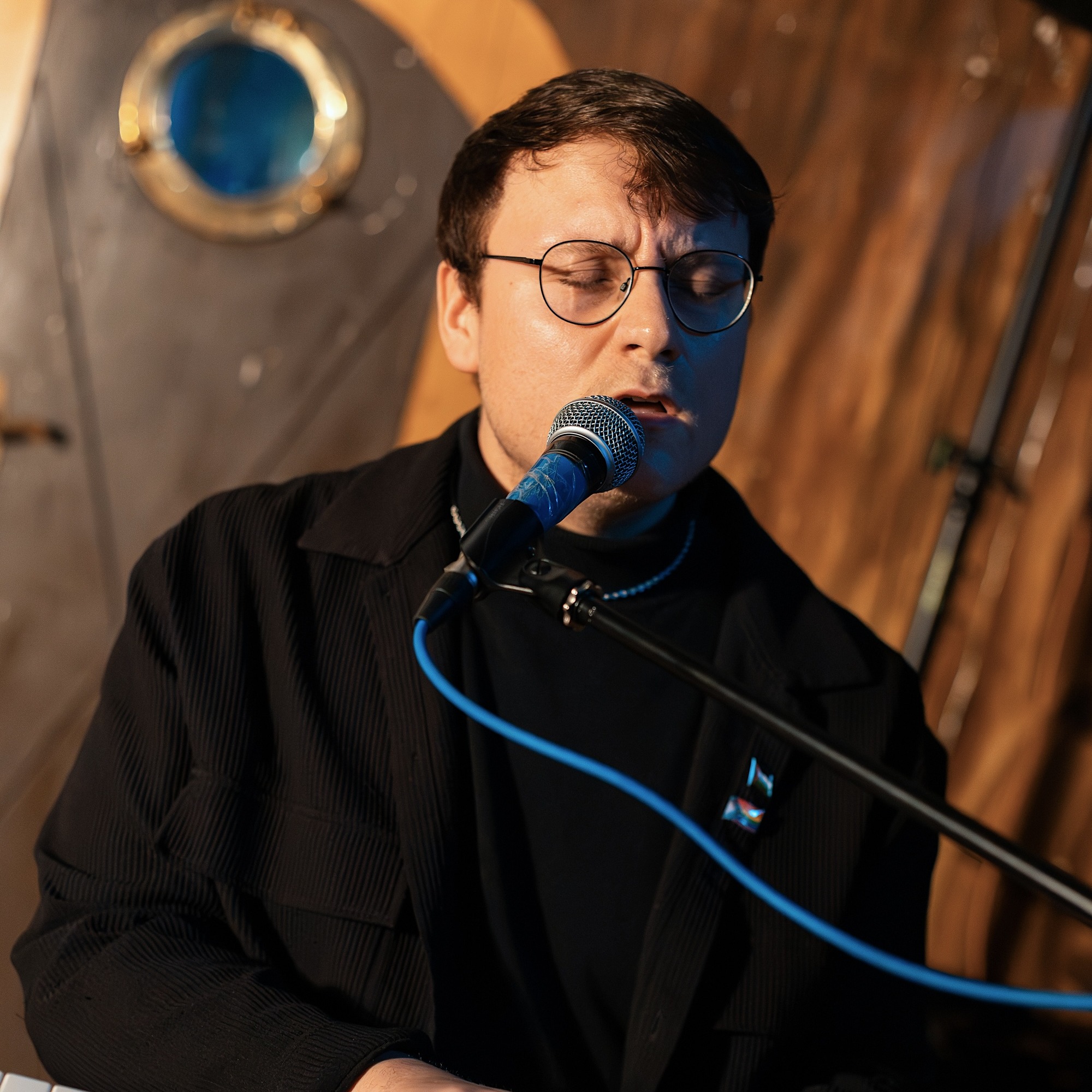

SIRIUS gives you personal singing lessons tailored to your needs - from finding a coach to payment, everything runs smoothly through our platform. Whether you want to add lessons or reschedule, it all works effortlessly online through our booking tool. You can even rent a keyboard to accompany yourself while you sing.
Learn the fundamentals of music theory, expand your vocal range and develop your sense of intonation - whether you want to sing pop, jazz, opera, rock or metal. These voice lessons and vocal lessons always meet you at your level.
SIRIUS gives you not only professional singing lessons but exclusive access to a digital Workspace that makes learning to sing more efficient and structured. In the SIRIUS Cloud you find all key materials and targeted vocal exercises from your vocal coach - available anytime in one place. Lessons can be summarized automatically, and you can access recordings of your sessions to track progress and work on your vocal technique.
Alongside one-on-one lessons you can join monthly group sessions to connect with other singers, try new vocal exercises and get valuable feedback - so you benefit from individual coaching and the energy of the community.

More hours = a better price per hour. Every plan: 45-min one-on-one lessons with vetted teachers.
Perfect to get started.
/hour
/hour
2 hours / month
$80.10 / month
$89.00 / month
with a 6-month membership
with a 3-month membership
↓ You save $53.40 with a 6-month plan
For lasting progress.
/hour
/hour
3 hours / month
$98.10 / month
$109.00 / month
with a 6-month membership
with a 3-month membership
↓ You save $65.40 with a 6-month plan
Faster progress, more practice.
/hour
/hour
4 hours / month
$116.10 / month
$129.00 / month
with a 6-month membership
with a 3-month membership
↓ You save $77.40 with a 6-month plan
All prices incl. VAT · Pause anytime
Do you have any experience?
Many music students worldwide already trust SIRIUS.
“Maya is very friendly and competent. The singing lessons are great! ”
.avif)
Lily
Singing student
“I've been studying singing with Jessica for 8 months now and I'm still having fun:)”
.avif)
Maria
Singing student
“Self-learning videos for learning to sing were not my thing. But since I discovered singing lessons with Lena about Sirius, I've been fully motivated.”
.avif)
Georgina
Singing student
“I'm taking singing lessons for the first time and I just love Sirius. I've received a lot of valuable tips from Habib. I really recommend it to you guys.”

Lucas
Singing student
“Lena not only knows about singing lessons, but also makes the lesson a real experience. It is always my highlight of the week.”
.avif)
Carl
Singing student
One published figure exists nearby and it belongs to the conservatory at Wilkes University, which lists $30, $40 and $50 for thirty, forty-five and sixty minutes, plus a $30 registration fee. Treat it as a reference point rather than a market rate, because its own pages disagree about which academic year it applies to. Beyond that: at least nine providers teach voice in or around the city, and none of them prints what an hour costs. The state teachers' association directory yields a single voice entry for Wilkes-Barre, reachable only through an address that is not a studio. Our own rate is set out in writing at the start, and the first session is not charged.
No. The Choral Society of Northeast Pennsylvania describes itself in two words on its own site, an unauditioned community chorus, and asks one thing of a new singer: that you can match pitch. Reading music is not required. It rehearses Mondays from 6:30 to 9:00 p.m. across the September-to-May season, and the first semester costs nothing before the $75 dues start. First Presbyterian on South Franklin Street is putting it even more plainly, saying it is always looking for more voices and inviting people to come and add theirs. Neither of those rooms is built around one person's technique.
Seven is a workable point for a child, kept brief. Above that nobody publishes a limit and we would not invent one. What genuinely differs between two adult students is not the decade they were born in but how much of the early work has to be breath, and that varies person to person. Somebody who has sung a part in a congregation for years arrives with stamina and ensemble instincts already built, and usually wants something narrow. Somebody starting from nothing needs the foundations first. Both are ordinary.
Breath changes early, usually inside the first month. Getting one song to the standard you would perform is months of unglamorous work rather than weeks. Holding an unfamiliar line from the first read-through comes last, and it is the plainest part of the whole business: it tracks hours at the music stand and nothing else.
They work, and the reason here is the evening schedule rather than the distance. No bus runs anywhere in Luzerne County on a Sunday. On weekdays the last service inbound from Scranton leaves there at 5:07 p.m. and arrives at 6:19, and the last arrival on the other route we could read in both directions is 6:49 p.m. The unauditioned chorus that would take you meets Mondays until nine, in Avoca. If your evening depends on a bus, that rehearsal is not reachable and back. An hour taught at your own table takes the return leg out of the question.
Do you have any experience?
More cities in Pennsylvania
Singing lessons by state
The Choral Society of Northeast Pennsylvania is in its twenty-eighth season and calls itself, in its own words, an unauditioned community chorus. It rehearses Mondays from 6:30 to 9:00 p.m. between September and May at a parish house in Avoca, employs professional section leaders, and asks a new singer only to match pitch. Reading music is not a requirement. The first semester is free; after that it is $75 a semester plus fifteen to twenty-five dollars for music.
Because the singing is easier to find than the teaching, once you know where to look. First Presbyterian on South Franklin Street runs an adult choir under John Vaida and says on its own worship page that it is always looking for more voices. Wilkes University has a Director of Choral Activities and runs both a University Chorus and a Chamber Singers. King's College, in the city, runs three vocal groups, one of them explicitly non-audition, although neither college publishes whether somebody unenrolled can join. A mixed barbershop chorus founded in 1952 rehearses on Monday nights, though its rehearsal address is in Plymouth rather than here. Against all that, at least nine providers teach voice in and around the city and not one publishes an hourly rate.
An unauditioned chorus is a generous institution and a blunt instrument for one voice. It exists to make thirty or sixty people sound like one, and it succeeds by carrying anybody who falters. The measure at which your support fails is the whole content of an individual hour: found, described, and worked until the line stops breaking there.
Breath sized to the phrase rather than to most of it. A crossing between registers with no step in it. Vowels that hold a word together when the pitch climbs past comfort. A ten-minute warm-up built for the voice you actually have. And material chosen for this term rather than for an imagined one, so that practice compounds.
The teacher does not rotate, so the hour opens where the last one closed. No one else occupies the lesson. The plan is on paper with its next steps named. And the price is fixed before you commit, which is worth saying out loud in a city where nine voice providers between them publish exactly one figure, and that one belongs to a university.
The sound is set for singing, not for speech, and the difference is larger than the phrase suggests. Each session is recorded and yours, because playback is what turns an impression that something slipped into a specific bar. Notes and exercises are written up afterward, so no part of the hour rests on memory.
The F. M. Kirby Center downtown carries the region's orchestra, which programs four dates there and publishes no chorus of its own. The Little Theatre of Wilkes-Barre casts adults. A chamber choir in Scranton runs a Messiah sing-along every December, now in its forty-second year, which is an afternoon anybody can walk into and sing at. And a bar downtown runs karaoke on Thursday nights with the doors at seven. One thing worth stating plainly, because the maps make it confusing: the arena and the mall are in Wilkes-Barre Township, a separate municipality of about three thousand people.
People arrive from very different starting points. Some have held a line in a church choir for ten years and want an upper register that stops thinning out. Some are working toward an audition and would like to know what to fix first. Some have never sung with another adult in the room and would rather fix that without spectators. No one of those is a better position than the others, and the opening month runs much the same for all three.
The transit picture here is the constraint. Nothing runs on a Sunday anywhere in the county, and on weekdays the useful inbound services have finished by around seven in the evening. The chorus that would take anybody meets Mondays until nine, in another borough. The college ensembles sit inside a semester. None of that is anybody's fault, and none of it bends. An hour booked against your own week does bend, and it moves when the week does.
Take the free hour first. It is teaching, not selling: you sing, somebody listens properly, and you come away with a straight account of what the voice does well and what it has yet to reach. Continue if that appeals. If not, nothing stays open.
Wilkes-Barre has an unauditioned chorus a short drive away that charges nothing for a first semester, a Presbyterian choir openly asking for voices, two colleges running vocal ensembles inside the city, and a December sing-along anybody can join. What none of the nine voice providers here will tell you is what an hour of their time costs. Ours is on paper before you decide.



.avif)
.avif)
