
.avif)


Do you have any experience?
We match you with the perfect vocal coach for your goals, so you can learn to sing conveniently online - singing lessons with no waiting time. Right after signing up you get a no-obligation trial-lesson slot via WhatsApp.
After your free trial lesson, discuss your goals and availability with your vocal coach and start learning to sing right away.
Book your singing lessons flexibly online. In the SIRIUS Workspace you get unlimited access to vocal exercises outside your lessons, so you can keep practicing at home with our tools.
Want to learn to sing and looking for a vocal coach in Cedar City, Utah? We work with SIRIUS-vetted vocal coaches. Based on your needs we match you with the perfect vocal coach - whether you are just starting to sing or looking for singing lessons for adults or kids. Want to work on your intonation, improve your head voice or explore breath training? Sign up for our free trial lesson and get a session proposal with your perfect vocal coach.
Our experienced vocal coaches help you unlock your full potential. Our technology, built for online singing lessons, guarantees excellent sound quality and lets you learn to sing from anywhere - with no extra software or download.


.avif)


.avif)





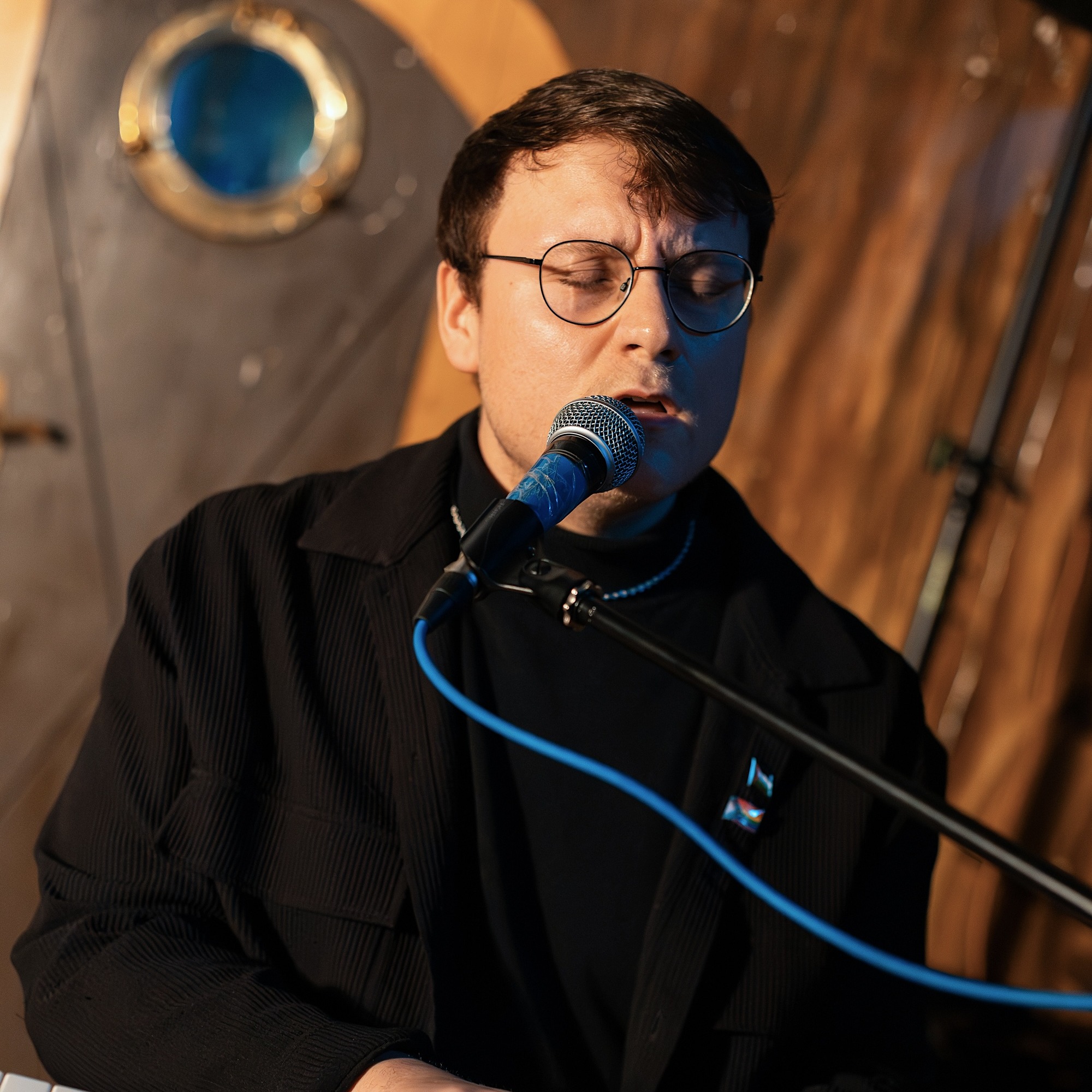

SIRIUS gives you personal singing lessons tailored to your needs - from finding a coach to payment, everything runs smoothly through our platform. Whether you want to add lessons or reschedule, it all works effortlessly online through our booking tool. You can even rent a keyboard to accompany yourself while you sing.
Learn the fundamentals of music theory, expand your vocal range and develop your sense of intonation - whether you want to sing pop, jazz, opera, rock or metal. These voice lessons and vocal lessons always meet you at your level.
SIRIUS gives you not only professional singing lessons but exclusive access to a digital Workspace that makes learning to sing more efficient and structured. In the SIRIUS Cloud you find all key materials and targeted vocal exercises from your vocal coach - available anytime in one place. Lessons can be summarized automatically, and you can access recordings of your sessions to track progress and work on your vocal technique.
Alongside one-on-one lessons you can join monthly group sessions to connect with other singers, try new vocal exercises and get valuable feedback - so you benefit from individual coaching and the energy of the community.

More hours = a better price per hour. Every plan: 45-min one-on-one lessons with vetted teachers.
Perfect to get started.
/hour
/hour
2 hours / month
$80.10 / month
$89.00 / month
with a 6-month membership
with a 3-month membership
↓ You save $53.40 with a 6-month plan
For lasting progress.
/hour
/hour
3 hours / month
$98.10 / month
$109.00 / month
with a 6-month membership
with a 3-month membership
↓ You save $65.40 with a 6-month plan
Faster progress, more practice.
/hour
/hour
4 hours / month
$116.10 / month
$129.00 / month
with a 6-month membership
with a 3-month membership
↓ You save $77.40 with a 6-month plan
All prices incl. VAT · Pause anytime
Do you have any experience?
Many music students worldwide already trust SIRIUS.
“Maya is very friendly and competent. The singing lessons are great! ”
.avif)
Lily
Singing student
“I've been studying singing with Jessica for 8 months now and I'm still having fun:)”
.avif)
Maria
Singing student
“Self-learning videos for learning to sing were not my thing. But since I discovered singing lessons with Lena about Sirius, I've been fully motivated.”
.avif)
Georgina
Singing student
“I'm taking singing lessons for the first time and I just love Sirius. I've received a lot of valuable tips from Habib. I really recommend it to you guys.”

Lucas
Singing student
“Lena not only knows about singing lessons, but also makes the lesson a real experience. It is always my highlight of the week.”
.avif)
Carl
Singing student
<p>The one studio we found publishing its rates in full is Cedar Music Store and Studio on East 200 North, which lists voice among its subjects and bills by the month: $92 for a weekly half-hour lesson, $60 per student for a half hour in a group, and $175 for two students or for two hours a week, with registration of $20 per student up to $50 per family. A lesson with us is $29 to start, fixed in writing, billed one at a time, and the introductory hour reaches no invoice.</p>
<p>Yes, and the community Messiah chorus and the university's Concert Choir are both built on that assumption. The community Messiah chorus says plainly that there is no audition, asking only for consistent attendance. The Concert Choir at the university is open to students of any major and encourages a prepared solo without requiring one. Between them they put a great many untrained people into choral singing. What none of that supplies is a moment when somebody listens to you specifically, which is the part that turns willingness into a technique you can rely on.</p>
<p>The usual floor is a child of about seven, with the lesson and the song both kept brief. This town is well used to young singers: there is a children's choir, and Star Search runs age categories with a cash prize in each. Teenagers can work straight through the years the voice is changing, which goes far better observed than guessed at. Above that there is no limit worth naming, and the December chorus demonstrates it annually by taking whoever turns up.</p>
<p>Take the published requirements one at a time. Contrast, a fast piece and a slow one asking opposite things of the breath, is a matter of a few months, because the second exposes what the first concealed. Memory is quicker than people expect once a piece is genuinely secure, and slower than they hope while it is not. A key that suits you can be settled in an afternoon. Starting cold and in tune on nothing but your own first note is the one that takes a year, because it is no trick but the accumulated result of everything else being reliable.</p>
<p>They do, and here the obstacle was never distance. A town of roughly 38,000 people counts seventeen festivals a year; the scarce thing here is a free evening. The Festival occupies the summer, the semester occupies the rest, Messiah occupies the fall, and each runs to a calendar somebody else sets. A lesson delivered to your own address is the one part of the week that bends. It also means the sixteen bars get rehearsed in the room you actually use, rather than one you visit weekly.</p>
Do you have any experience?
More cities in Utah
Singing lessons by state
In Cedar City you can read, months in advance, exactly what a stage will ask you to sing. Sixteen bars of a Broadway-style song that shows your range and vocal prowess, plus a monologue of ninety seconds, no sonnets: that is the Utah Shakespeare Festival's own wording for the Equity audition it holds in town each September; for 2026 the sign-up window opened a week ahead. The Festival is a department of Southern Utah University, and it is running its sixty-fifth season, June 18 to October 3, 2026. Very few towns of this size put the requirement in public before the door opens.
Because this town prints both ends of the distance, and the stretch in between is wide. At one end sit written requirements. The university asks an entering singer for two classical pieces of contrasting style, one fast and one slow, from memory, in about ten minutes, and notes that accompaniment is optional. At the other end sits singing that asks nothing at all. The Orchestra of Southern Utah's community Messiah chorus states there is no audition, only that attendance be consistent. The churchwide handbook that governs the ward choirs here puts it in four words: auditions are not held.
The consequence is a town where a great many people sing every week and have never once sung alone in front of anybody. A ward choir rehearsal usually runs no longer than an hour. The university's Concert Choir meets four days a week, Monday through Thursday, and encourages a prepared solo without requiring one. In all of it you are inside a section, and a section is a shelter. Sixteen bars by yourself in a rehearsal hall is a different act entirely, and the only preparation for it is having done it, repeatedly, where the stakes are nothing.
This town publishes two sets of audition requirements, and between them they name the syllabus. The university asks for contrast, because one piece has to be fast and the other slow, and the two ask opposite things of breath; for memory, because the page is not allowed in your hands; and for a key that fits you, since nobody assigns one. It also makes accompaniment optional, which in practice means being able to start cold and in tune on nothing but your own first note. The Festival asks for something else again: sixteen bars that show a range rather than occupy it, which is a matter of choosing the entry and the exit.
Lay the year out and look at how it is divided. June 18 to October 3, 2026 belonged to the Festival. The university runs two semesters either side of it. Messiah rehearsals gather in October and discharge on December 13, 2026. Star Search, the city's own talent competition, takes video entries online and empties itself in one evening at the Heritage Center Theater; in 2026 that evening was March 7. Each is a block with a start and an end. What none of them offers is an unbroken run of weeks that does not stop when a season does. A lesson begins at $29. The first one is given, not sold.
The university makes accompaniment optional and suggests bringing your own. A recorded lesson answers that directly. Sessions are kept, so a passage settled on Tuesday is still available on Saturday, at the tempo it was taken and in the key that was agreed, precisely the reference an unaccompanied singer has no other way of holding on to. Written notes follow each hour.
The city has called itself Festival City USA since 2004 and counts seventeen festivals a year. The Beverley Taylor Sorenson Center for the Arts on campus holds three stages, seating from about 200 up to 921. The Greenshow plays free in the open air at 7:10 p.m., Monday through Saturday, from mid-June to early September; in 2026 members of the Paiute Indian Tribe of Utah shaped four of those evenings with music, storytelling and dance. Cedar City Music Arts, older than the Festival, reaches its ninety-seventh Virtuoso Season in 2026-27, with concerts at 7:30 p.m. at the Heritage Center Theater. The Orchestra of Southern Utah gives Messiah on December 13, 2026. The Paiute Indian Tribe of Utah has its headquarters at 440 North Paiute Drive; its Restoration Gathering and Pow-Wow, held there in June 2026, was free and open to the public.
Two people sit at opposite ends of singing in this town. One has stood in a ward choir every week for two decades without ever being listened to alone. The other is nineteen, has an audition date coming, and has been listened to alone exactly once, badly. Their situations have nothing in common except the thing they both need, which is why the first hour looks the same for both: somebody establishes what the voice actually does, and says so out loud.
What this population shares is not a schedule but the lack of one: students on semester calendars, festival staff on summer contracts, families on a December rehearsal cycle. A weekly appointment at a fixed place and hour is the one thing that suits almost none of them. An hour that shifts as the week shifts suits every one of them.
Here is what those sixteen bars feel like. You walk in, name what you are singing, and start on your own first note. Somebody listens and forms a view, and that is the entire event. The first hour here is a rehearsal of exactly that, and nothing is billed for it. Doing it for the first time in front of a stranger and doing it for the twentieth are not the same act. That distance is what preparation means.
This city publishes what its stages want and when they want it, which is rarer than it sounds. It also keeps a December chorus open to all comers and ward choirs where the question of auditioning never arises. Between singing inside a section every Sunday and standing alone for sixteen bars lies the whole of what private lessons are for. Cedar City lays out both ends in writing. The sixteen bars are the part nobody else will rehearse with you.



.avif)
.avif)
