
.avif)


Do you have any experience?
Hast du bereits Erfahrung?
Tell us your goals and we pair you with a SIRIUS-vetted piano teacher who fits them, so you can start playing online at a time that fits your week.
After the free trial lesson you agree on times directly with your teacher, and you can move a session whenever work, school or family gets in the way.
The SIRIUS Workspace holds your sheet music, the exercises your teacher assigns and the recordings of your sessions, so the days between lessons stay productive.
Do you want to learn piano and find a piano teacher in Mesa? We work with more than 150 SIRIUS-vetted music teachers and match you with the one who suits your goals, whether you are pressing your first keys or returning to an instrument you left behind years ago. Classical repertoire, pop songs, jazz voicings or the styles you grew up hearing: you decide what your lessons are about.
Our teachers help you build technique that lasts instead of habits you later have to unlearn. The SIRIUS platform was developed for online instrumental teaching, so sound quality stays clear enough to hear touch and pedaling, and you can join from anywhere in Mesa without installing extra software.
.avif)
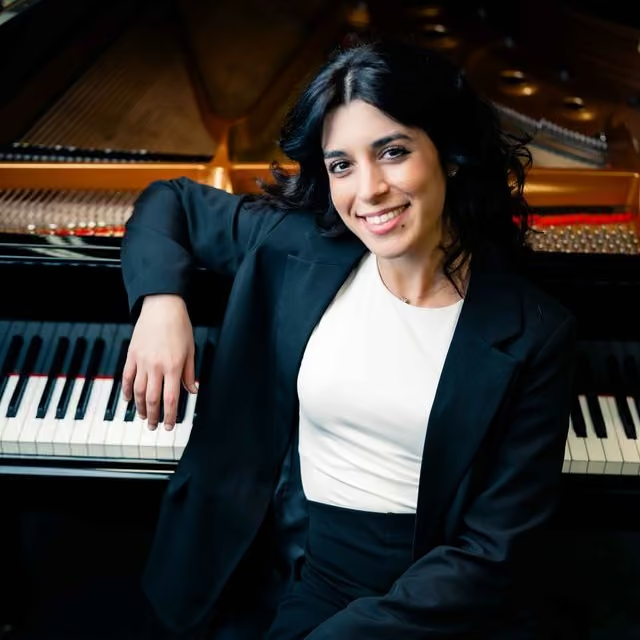




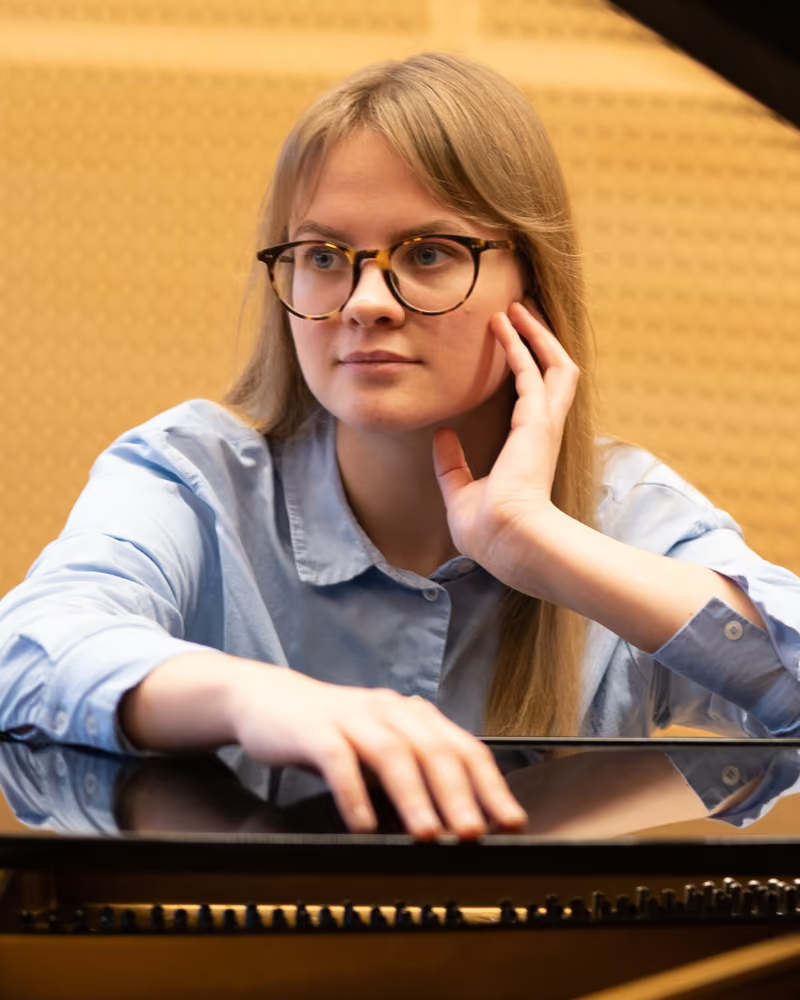

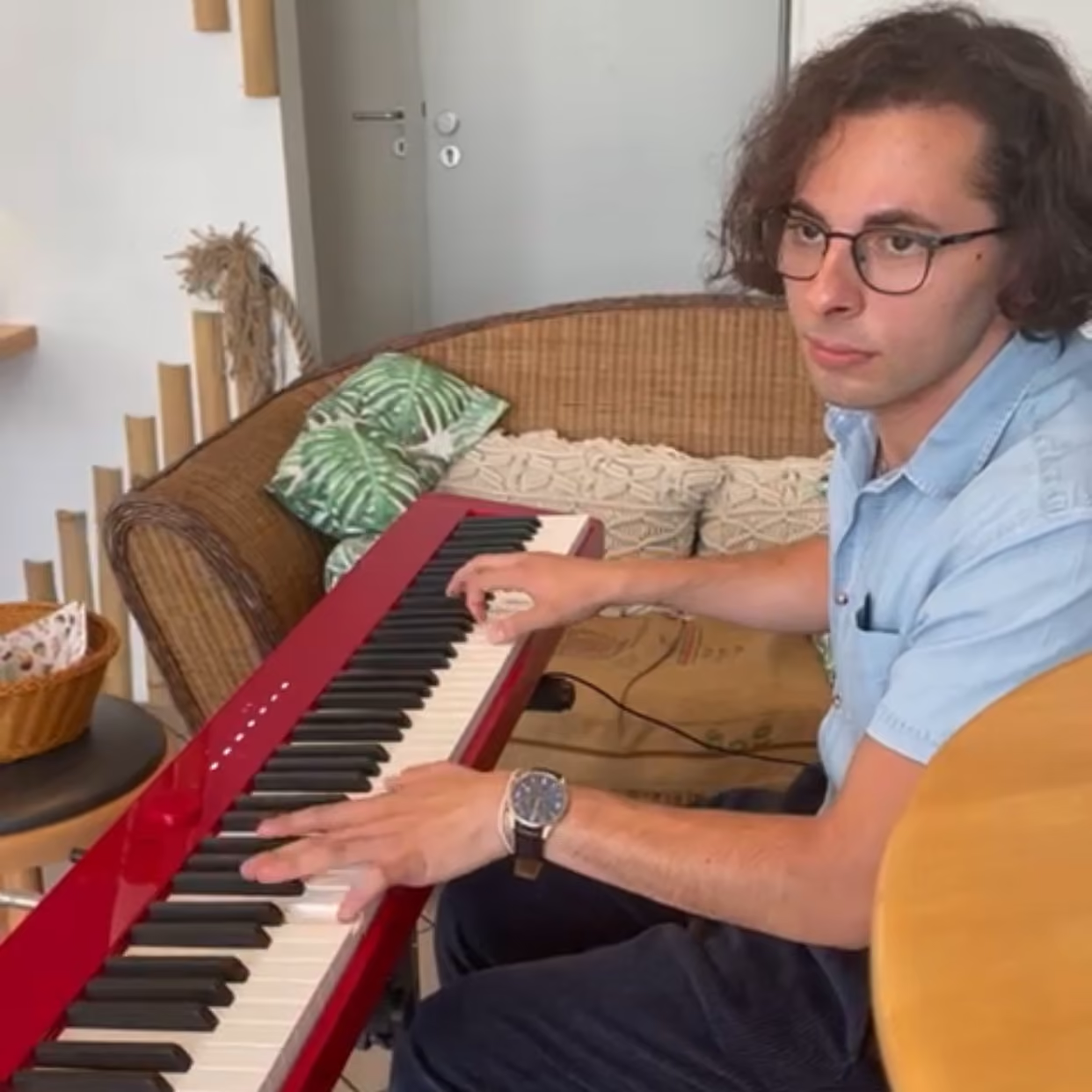


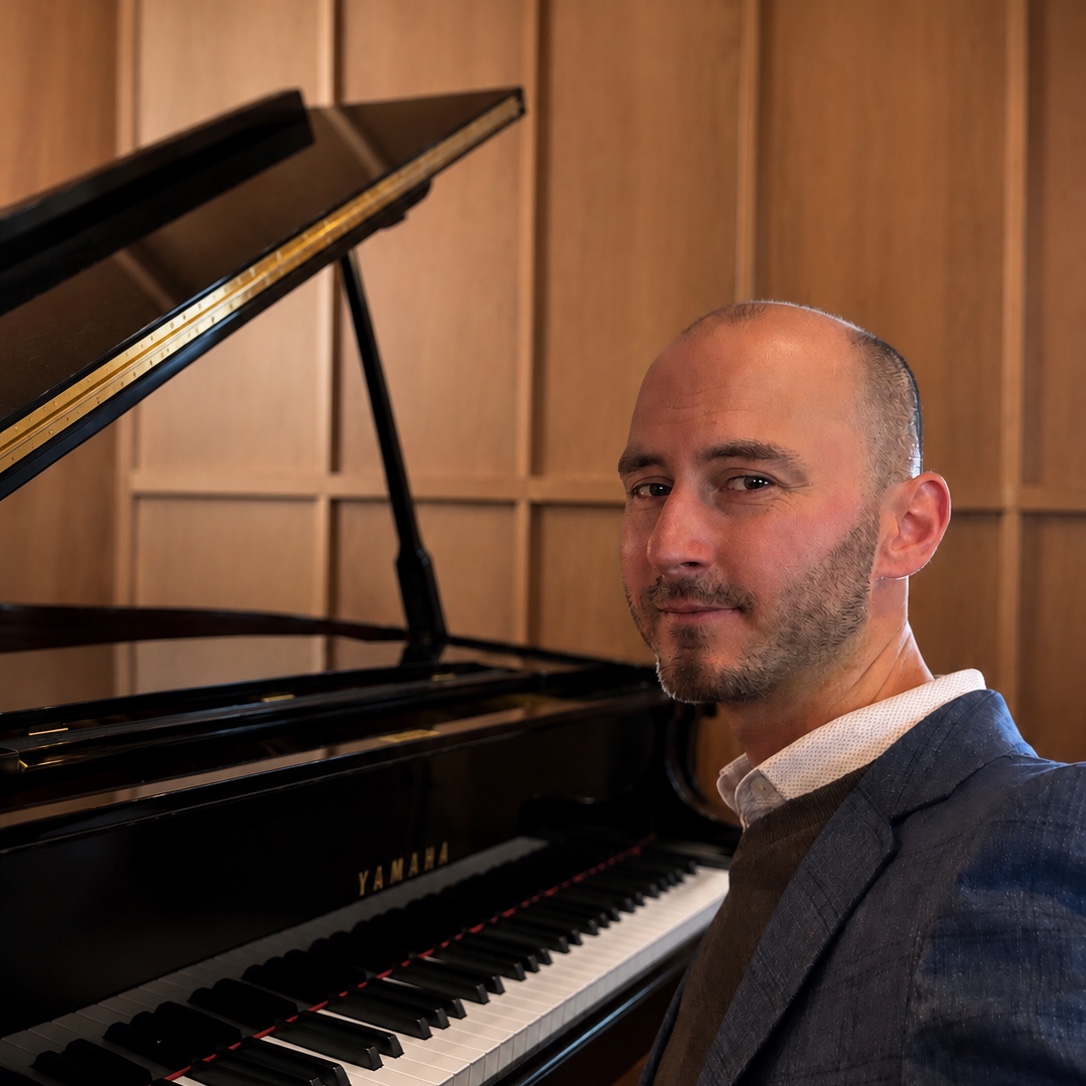
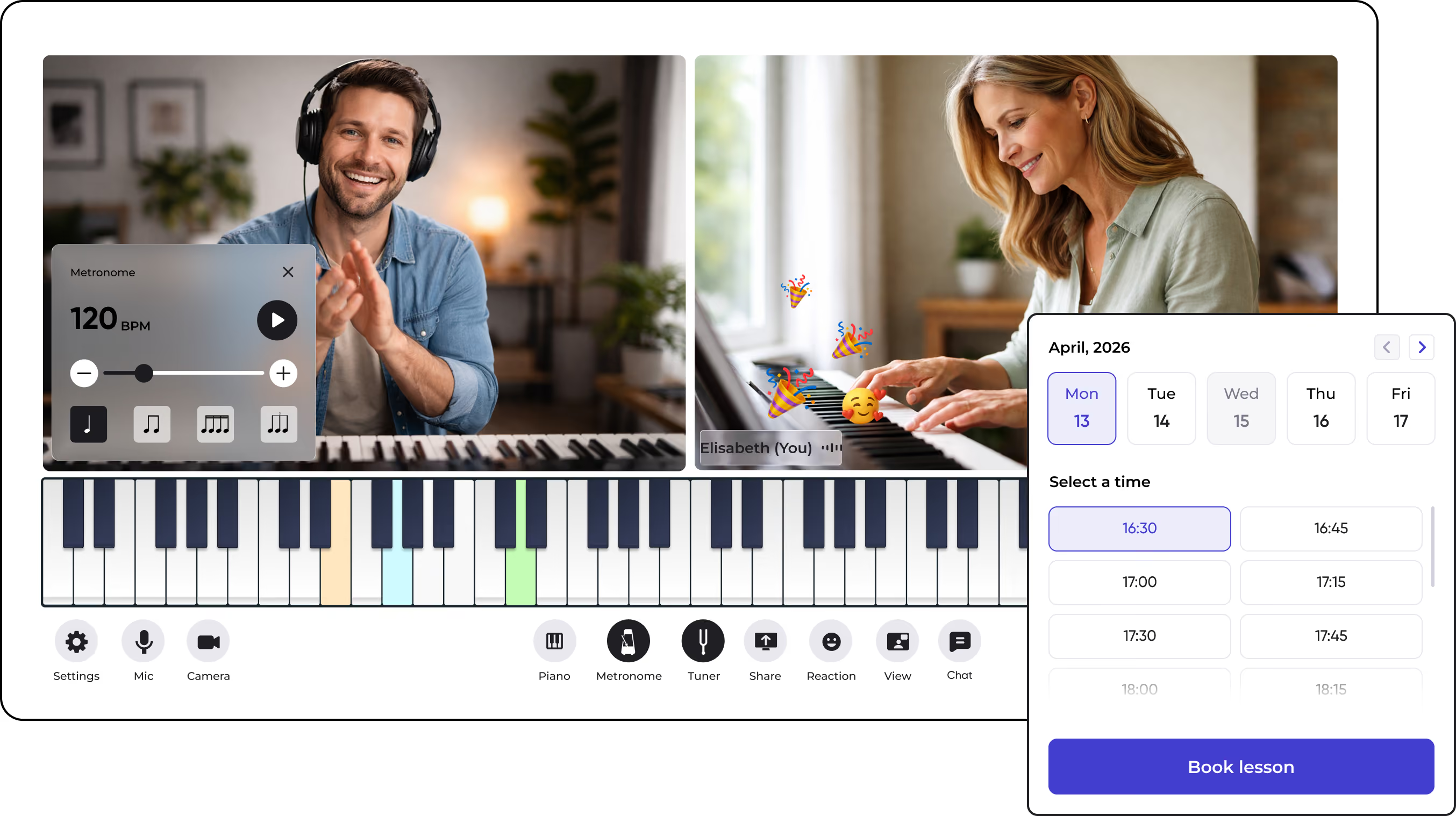
SIRIUS gives you one-on-one piano lessons shaped around you, and everything from finding your teacher to payment runs through one platform. Adding an extra session before a recital or moving a lesson to a quieter week takes a few clicks in the booking tool. If you do not own an instrument yet, you can rent a keyboard through us and start right away.
In your lessons you learn to read both clefs, understand how chords are built, keep a steady pulse and use the sustain pedal so it clarifies rather than blurs your playing. Music theory arrives when it explains something under your hands, never as homework for its own sake.
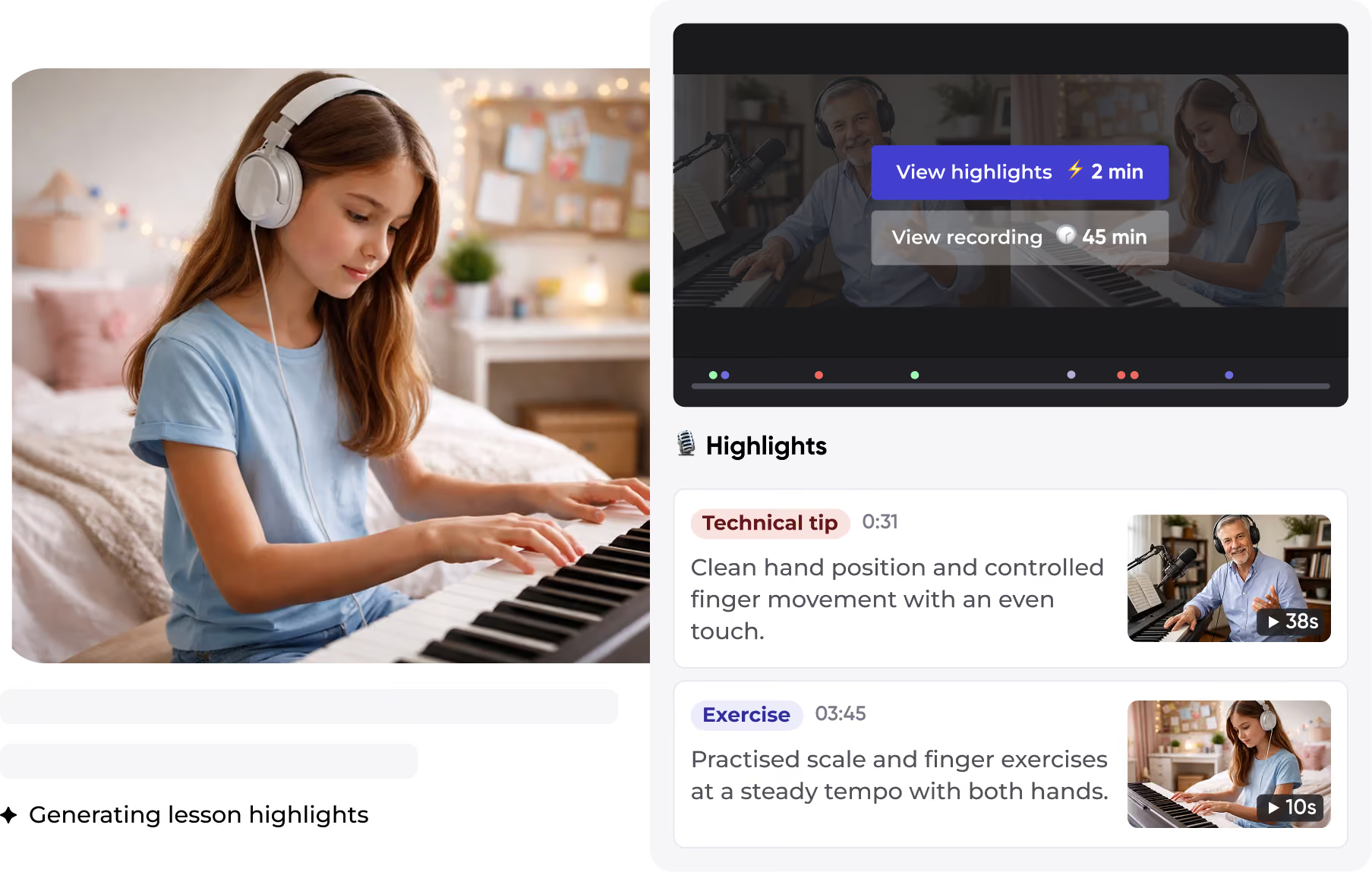
Alongside your lessons you get the SIRIUS Workspace, a digital home for everything you are working on. Sheet music, fingering notes and the exercises your teacher assigns stay in one place, lessons can be summarized automatically so you can look up what you covered, and recordings of your sessions let you watch your own hands and check posture, tempo and dynamics between lessons.
You can also join monthly group sessions with other players, hear how they approach a piece and get feedback beyond your one-on-one lessons. For many students that mix of private coaching and community is what keeps daily practice going.
More hours = a better price per hour. Every plan: 45-min one-on-one lessons with vetted teachers.
Perfect to get started.
/hour
/hour
2 hours / month
$80.10 / month
$89.00 / month
with a 6-month membership
with a 3-month membership
↓ You save $53.40 with a 6-month plan
For lasting progress.
/hour
/hour
3 hours / month
$98.10 / month
$109.00 / month
with a 6-month membership
with a 3-month membership
↓ You save $65.40 with a 6-month plan
Faster progress, more practice.
/hour
/hour
4 hours / month
$116.10 / month
$129.00 / month
with a 6-month membership
with a 3-month membership
↓ You save $77.40 with a 6-month plan
All prices incl. VAT · Pause anytime
Do you have any experience?
Hast du bereits Erfahrung?
Many music students all over the world already trust SIRIUS.
My daughter was able to start singing lessons the very next day, and the sessions with Leonie are fantastic!

Anita
Mother of a singing student
David explained music theory to me in such a clear, vivid way. I’ve been at it for 4 months now and I love it…

Robert
Piano student
I always used to shy away from sheet music and music theory. Now, learning the piano is actually fun for me…

Christiane
Piano Student
I actually just wanted to learn a few campfire songs on the guitar, but I’ve been at it for over half a year now. Highly recommended!

Alex
Guitar student
Julianna is fantastic! The professional voice training has completely transformed my stage presence…

Beatrix
Vocal student
In the East Valley, private instruction goes for $40 to $90 per hour. That is the local market range for private teachers, not a SIRIUS price. Where a given piano teacher in Mesa sits within that range varies. At SIRIUS, the trial lesson is free and there is no long contract, so you can meet your match, play through a first session and decide afterward whether it fits.
Yes. Lessons run online, so the address changes and little else does: the same teacher, the same weekly slot, and the same personal workspace with your sheet music, lesson notes and recordings waiting where you left them. Take a keyboard along or use one at the other end. Students who split the year often find the quieter stretch is when they gain the most ground.
Heat and very dry air are the issue. Steinway recommends 40 to 60 percent relative humidity and 68 to 78 degrees Fahrenheit, and a shut-up house through an Arizona summer sits outside both for weeks. Glue joints are stressed, the soundboard loses moisture and its crown flattens, and tuning drifts unevenly. Plan on a pitch raise and a follow-up visit, or fit humidity control and book the technician for your return.
Short and frequent beats long and rare. Fifteen to twenty minutes on most days of the week does more for an adult beginner than one long session at the weekend, because the hands consolidate between sittings. Younger children manage less at a stretch and do better with an adult nearby. The useful measure is not total hours but how many separate days you touched the keys.
Yes. People who start later tend to read carefully, ask precise questions and bring taste that is already formed, which shapes the repertoire from the first lessons onward. Progress comes from regular short practice, as it does at any age, and hands stay capable with sensible technique and no forcing. A teacher builds the plan around the weeks you actually have, using music you want to hear.
Hast du bereits Erfahrung?
Hast du bereits Erfahrung?
Mesa has its own downtown, its own arts campus and its own calendar — and a year shaped as much by who is in town as by the weather. Deciding on piano lessons in Mesa comes down to three practical questions: when you can sit down to play, what instrument belongs in your house, and what the first months look like.
Mesa is spread out. A student near Eastmark, a teacher over by Dobson Ranch and a Wednesday evening in between add up to a drive that has nothing to do with music. Learning online removes that variable, which matters most in the months when going out after three in the afternoon is its own decision. It also widens the field: your piano teacher in Mesa no longer has to be someone within driving distance. And it travels: households away for part of the year keep the same teacher and the same weekly slot.
Early lessons build a reliable link between what you see, what you hear and what your fingers do. You start with posture and hand position, then a small map of the keyboard, then notation — one hand at a time before both together, the step that asks for patience rather than talent. Somewhere in the first months, rhythm stops being counted out loud and starts being felt, and chords arrive as shapes you recognize instead of notes you spell out. After a year of steady work, an adult is generally playing real pieces: a folk tune, a simplified pop arrangement, an easy classical movement. What sets the pace is how many days a week the lid gets opened.
Plenty of homes here are closed up for part of the year, cooling dialed back or switched off. That is a specific problem for an acoustic piano. Steinway recommends 40 to 60 percent relative humidity and 68 to 78 degrees Fahrenheit; a sealed house through an Arizona July sits well outside that on both counts, for weeks at a time. Heat works on glue joints. Very dry air draws moisture out of the soundboard and pinblock, crown flattens, string tension shifts, and the instrument drifts — not evenly, but section by section, so it returns out of tune with itself. Tuning it once everyone is home again underestimates that drift: a piano moved so far often needs pitch raised first, then a follow-up visit before it holds.
Two answers work. One is a digital instrument, indifferent to all of it — a full-size weighted keyboard sounds the same in a hot, shut-up living room in August as it did in March, and a keyboard rental is available through SIRIUS from your first lesson onward. The other is to keep the acoustic and manage it: a piano humidity control system, an interior wall away from windows and supply vents, a cover, and a technician booked for the week of your return.
We match by hand rather than hand you a list. Tell us where you are starting, what you would like to be playing and when you can practice, and we pair you with one person from more than 150 SIRIUS-vetted music teachers — a first-time beginner and a returning player do not land with the same teacher. Each student gets a personal online workspace holding sheet music, lesson notes and recordings, which makes the days between lessons useful. In the East Valley, private instruction goes for $40 to $90 per hour, the going market range for private teachers here; at SIRIUS there is no long contract, and the trial lesson is free. Beyond that you need a link and a laptop — nothing to install, and audio built for music rather than for conversation.
Mesa Arts Center opened in 2005 at One East Main Street in Mesa, AZ, with four theaters; the Tom and Janet Ikeda Theater seats 1,570. Symphony of the Southwest, a Mesa orchestra playing at the center, has been going since 1956 and reaches its 70th season in 2026-27 under music director Julie Desbordes. Salt River Brass plays a 2026-27 season there too, and Mesa Encore Theatre — started in 1937 by Joseph S. Jarvis of Mesa Parks and Recreation — is a founding resident company. A few blocks west, the Nile Theater on West Main Street was built in 1924 and still runs live music. Mesa Community College offers class piano, private instruction and a 16-credit certificate in beginning piano pedagogy.
Children do well once they can read a little and stay with a task; what predicts progress is an adult at home who keeps the routine alive. Teenagers usually arrive with particular songs in mind and should be taken at their word. Adults who played as children come back faster than they expect, because the reading returns before the hands do. People who begin in their sixties, seventies or beyond learn the way everyone does — deliberately, in short sessions, with music worth playing from the start. Lessons should fit around the rest of your life.
January and July are two different experiences in this city, and a habit built with a teacher carries through both. Book a free trial lesson and hear what your first year could sound like.
Bei SIRIUS kannst Du kostenlos eine Probestunde nehmen.
Die Anmeldung ist 100% kostenlos und unverbindlich.
Wir schicken Dir nach der Anmeldung Terminvorschläge für Deine gratis Probestunde.
Worauf wartest du noch?



.avif)
.avif)


