
.avif)


Do you have any experience?
Hast du bereits Erfahrung?
Tell us your goals and we pair you with a SIRIUS-vetted piano teacher who fits them, so you can start playing online at a time that fits your week.
After the free trial lesson you agree on times directly with your teacher, and you can move a session whenever work, school or family gets in the way.
The SIRIUS Workspace holds your sheet music, the exercises your teacher assigns and the recordings of your sessions, so the days between lessons stay productive.
Do you want to learn piano and find a piano teacher in Dallas? We work with more than 150 SIRIUS-vetted music teachers and match you with the one who suits your goals, whether you are pressing your first keys or returning to an instrument you left behind years ago. Classical repertoire, pop songs, jazz voicings or the styles you grew up hearing: you decide what your lessons are about.
Our teachers help you build technique that lasts instead of habits you later have to unlearn. The SIRIUS platform was developed for online instrumental teaching, so sound quality stays clear enough to hear touch and pedaling, and you can join from anywhere in Dallas without installing extra software.

.avif)



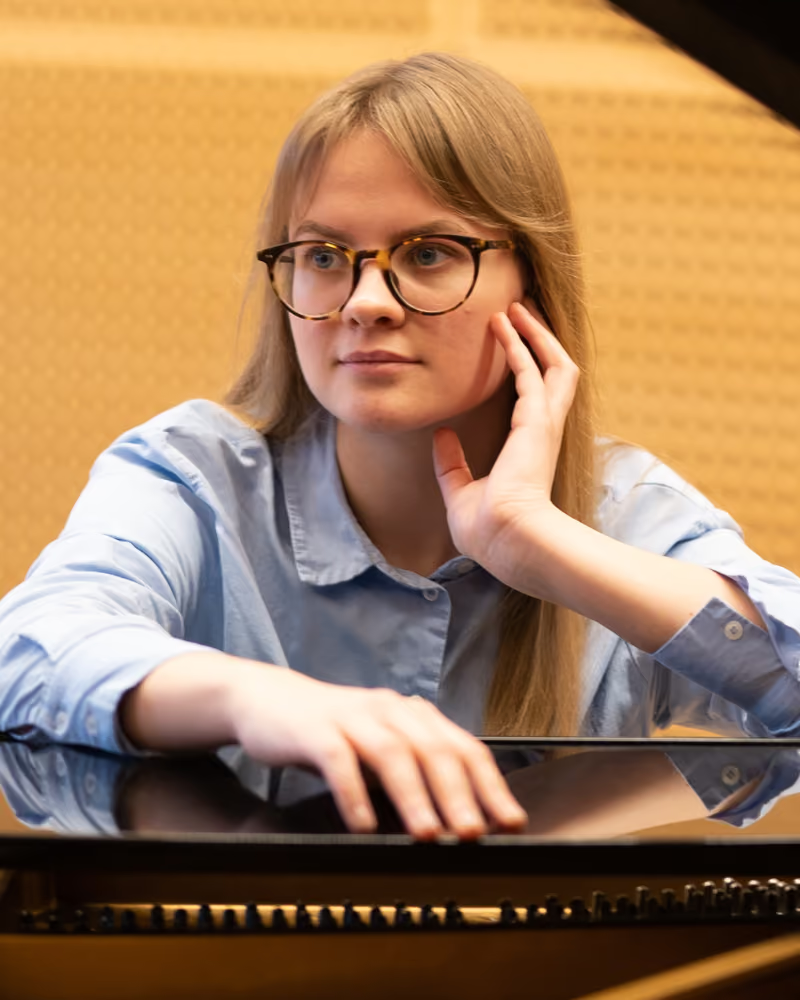
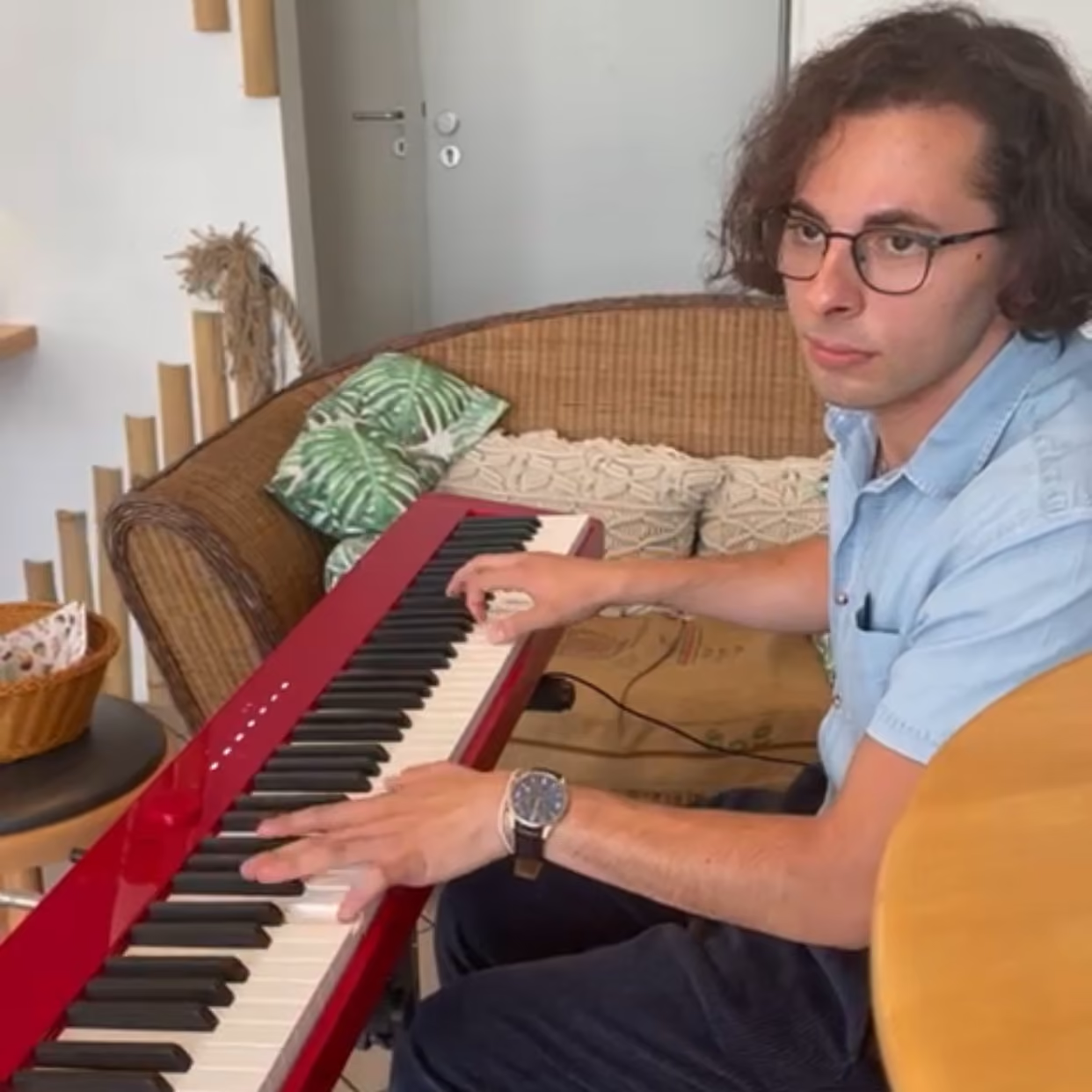


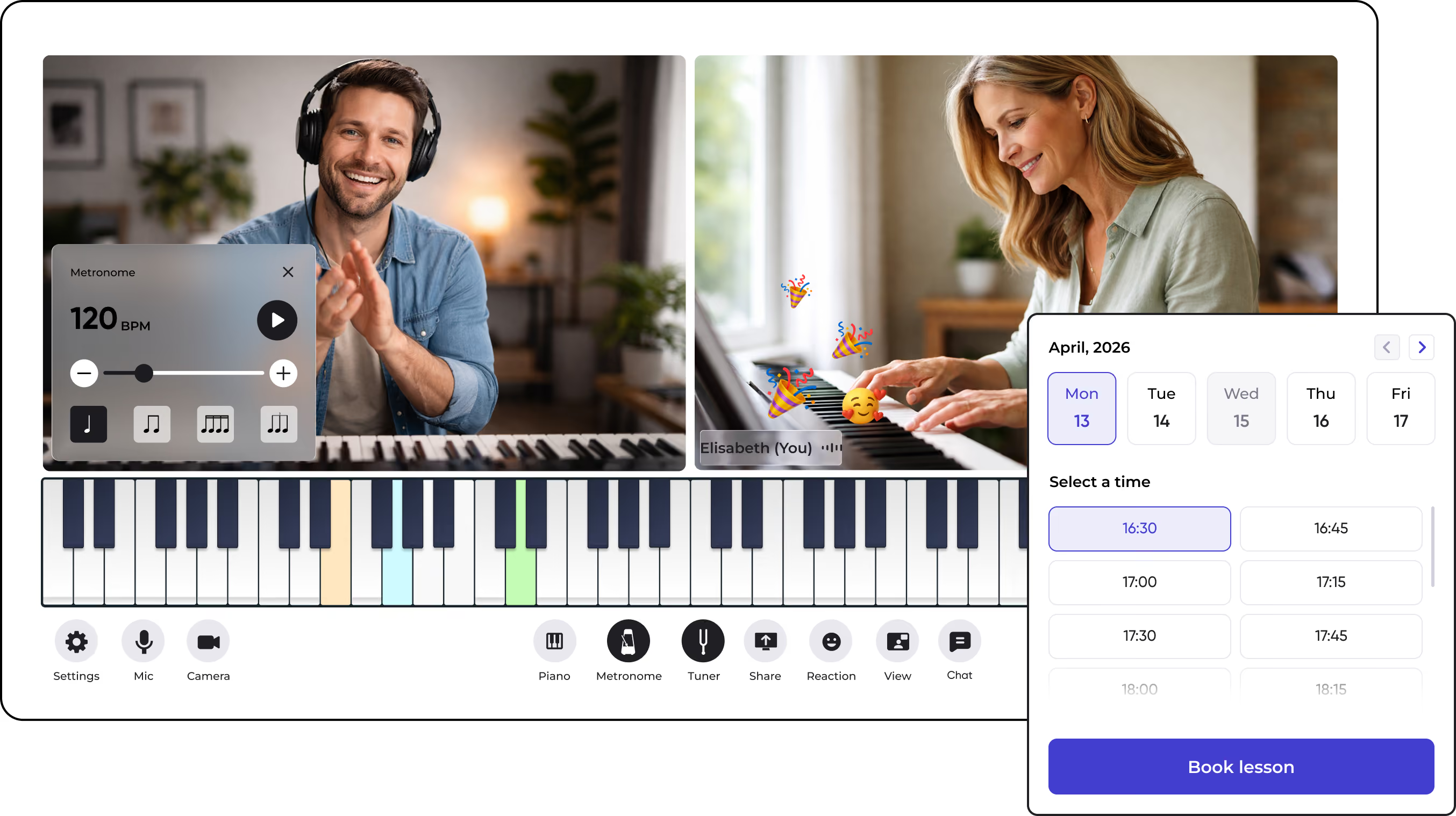
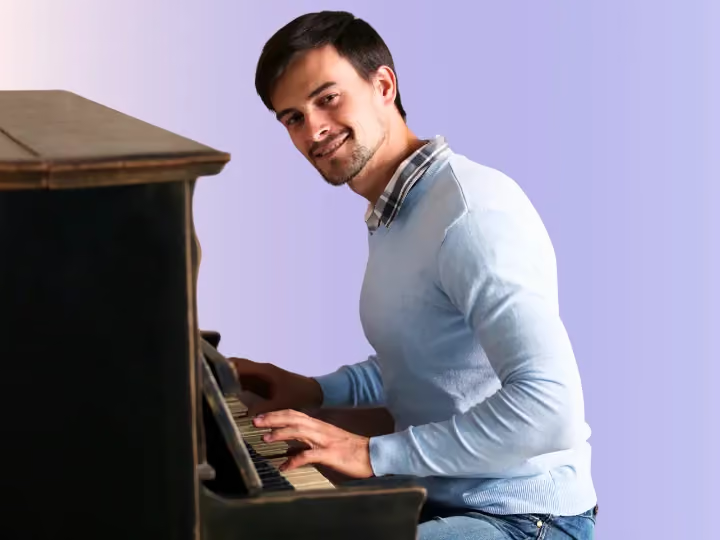
SIRIUS gives you one-on-one piano lessons shaped around you, and everything from finding your teacher to payment runs through one platform. Adding an extra session before a recital or moving a lesson to a quieter week takes a few clicks in the booking tool. If you do not own an instrument yet, you can rent a keyboard through us and start right away.
In your lessons you learn to read both clefs, understand how chords are built, keep a steady pulse and use the sustain pedal so it clarifies rather than blurs your playing. Music theory arrives when it explains something under your hands, never as homework for its own sake.
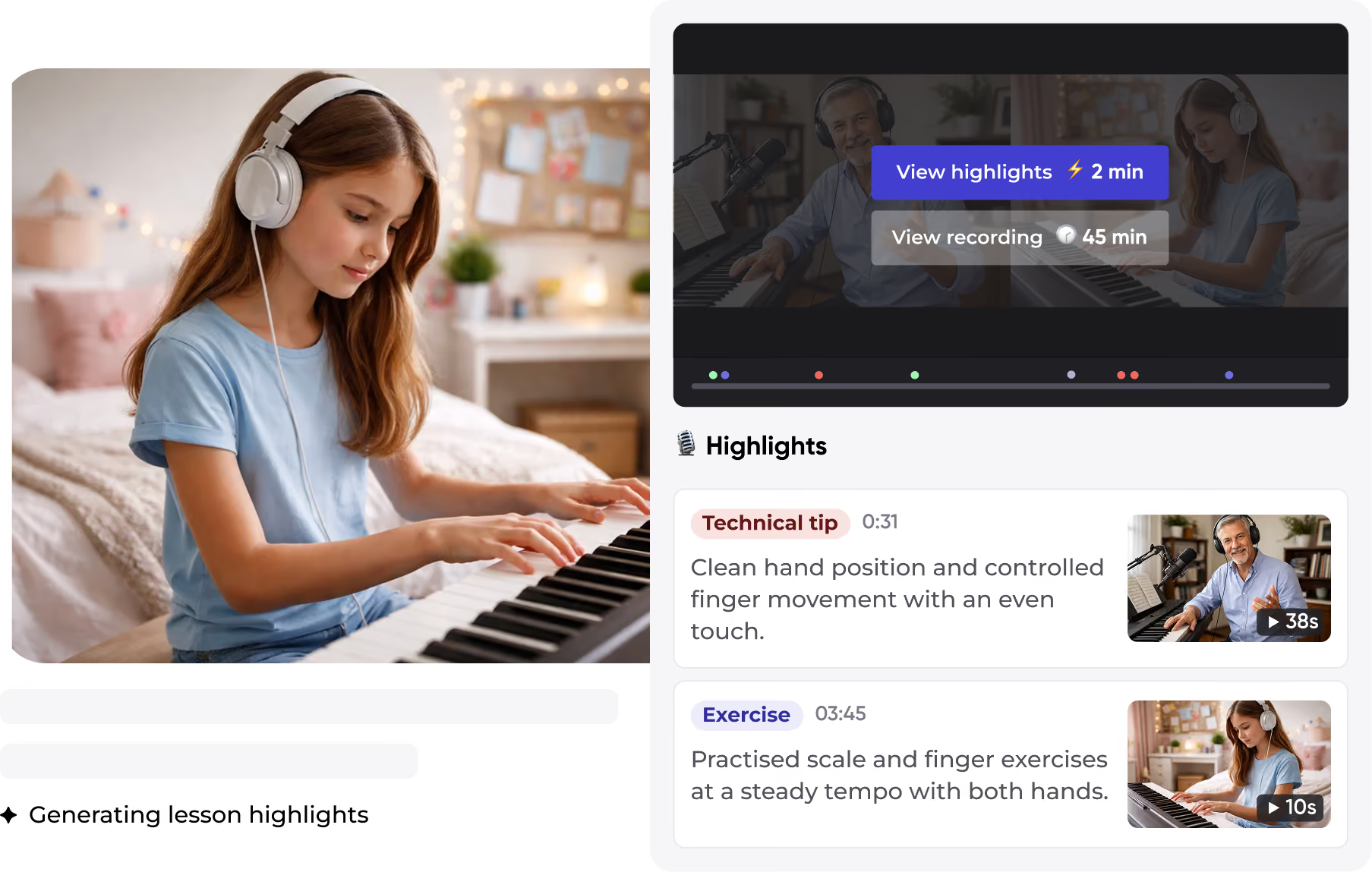
Alongside your lessons you get the SIRIUS Workspace, a digital home for everything you are working on. Sheet music, fingering notes and the exercises your teacher assigns stay in one place, lessons can be summarized automatically so you can look up what you covered, and recordings of your sessions let you watch your own hands and check posture, tempo and dynamics between lessons.
You can also join monthly group sessions with other players, hear how they approach a piece and get feedback beyond your one-on-one lessons. For many students that mix of private coaching and community is what keeps daily practice going.
More hours = a better price per hour. Every plan: 45-min one-on-one lessons with vetted teachers.
Perfect to get started.
/hour
/hour
2 hours / month
$80.10 / month
$89.00 / month
with a 6-month membership
with a 3-month membership
↓ You save $53.40 with a 6-month plan
For lasting progress.
/hour
/hour
3 hours / month
$98.10 / month
$109.00 / month
with a 6-month membership
with a 3-month membership
↓ You save $65.40 with a 6-month plan
Faster progress, more practice.
/hour
/hour
4 hours / month
$116.10 / month
$129.00 / month
with a 6-month membership
with a 3-month membership
↓ You save $77.40 with a 6-month plan
All prices incl. VAT · Pause anytime
Do you have any experience?
Hast du bereits Erfahrung?
Many music students all over the world already trust SIRIUS.
My daughter was able to start singing lessons the very next day, and the sessions with Leonie are fantastic!

Anita
Mother of a singing student
David explained music theory to me in such a clear, vivid way. I’ve been at it for 4 months now and I love it…

Robert
Piano student
I always used to shy away from sheet music and music theory. Now, learning the piano is actually fun for me…

Christiane
Piano Student
I actually just wanted to learn a few campfire songs on the guitar, but I’ve been at it for over half a year now. Highly recommended!

Alex
Guitar student
Julianna is fantastic! The professional voice training has completely transformed my stage presence…

Beatrix
Vocal student
In this market private teachers charge $40 to $90 per hour. That range describes independent local teachers around the city, not SIRIUS's own rate. Ask any teacher what a lesson includes before you set two quotes side by side. At SIRIUS the first lesson is free and no long contract follows, so you can hear how a match works before committing anything.
For almost every beginner, no. A grand gives you a horizontal action that repeats quickly, a lid you can open by degrees, and longer strings in a longer case. But a five-foot grand can hold shorter bass strings than a fifty-two-inch upright while taking far more floor, and the room has to allow the case, the bench and space to walk behind it. Lessons are the better spend.
Ask again in three months and you will usually have an answer you like. Short pieces with a melody in one hand and a simple accompaniment in the other come first, often inside eight to twelve weeks of regular practice. Something you would play for a room full of people takes longer. The pace depends far more on daily minutes at the keys than on talent.
Piano suits it well. Your hands, the keys and the score all sit in one clear frame, and a teacher can see fingering, wrist height and posture without leaning over your shoulder. SIRIUS lessons use audio built for music instead of speech, so tone and dynamics survive the trip. Nothing gets installed, and your workspace keeps the sheet music and recordings between sessions.
Yes, and it is a common starting point. Notation is taught from the first pieces rather than as a separate subject, so you read what you are already playing. A piano teacher in Dallas matched to adult beginners will set the pace around your practice time and the music you came for. The free trial lesson is a low-stakes way to see whether the approach suits you.
Hast du bereits Erfahrung?
Hast du bereits Erfahrung?
Learning piano usually stalls on logistics rather than motivation. A weekly drive across town at six in the evening is its own commitment, and it is the part that breaks first. Online one-on-one lessons remove that piece. Here is how piano lessons in Dallas work through SIRIUS Music School, what the local rate looks like, and an honest answer to the instrument question beginners ask too early.
Dallas is a city where the drive is the variable, and an evening appointment across the metroplex can cost more time than the lesson itself. In this market private teachers charge $40 to $90 per hour. Working online also means your choice of a piano teacher in Dallas is not bounded by a fifteen-minute radius around your house, so the match can be made on musical grounds instead of map distance.
The first weeks are mostly about the body: how you sit, where the bench goes, what a relaxed hand looks like on the keys. Reading arrives alongside that, one clef at a time, attached to pieces you are already playing. Rhythm gets counted out loud before it gets felt. Somewhere in the first couple of months the left hand stops copying the right, and that split is what most people remember as the moment it turned into music. After that the work becomes repertoire: a piece a month, then a piece that takes longer, with scales and chord shapes picked up as the music calls for them. Nothing about this is linear, and a teacher who sees you weekly spots a plateau before you do.
A grand is not simply a louder upright. Its action lies horizontally, so gravity helps the hammers reset and a repeated note answers faster than most vertical actions manage. The lid is a volume control you can genuinely use: closed, propped short, or on full stick. And because the case is longer, the strings inside can be longer, which is where the bottom end gets its body. Those advantages are real, and they are also why the honest advice runs the other way. A five-foot grand can carry shorter bass strings than a fifty-two-inch upright while occupying several times the floor, so a small grand often buys the shape without the sound. Then there is the room. Measure the case, add the bench, then add space to walk behind someone sitting at it. Sound matters too: a grand throws tone upward off the open lid, and a hard-floored room with high ceilings and little soft furniture hands that back as glare and long decay, where rugs and curtains do more for the result than an extra foot of case. For almost every beginner the answer is no, and the money a grand would absorb buys years of weekly teaching instead. If you want to begin before owning anything, a rental keyboard from SIRIUS gets you started, with weighted, touch-sensitive action under your fingers.
Matching comes first: we hand-pick your teacher from more than 150 SIRIUS-vetted music teachers, chosen around what you want to play and where you are starting from. The first lesson is free, and no long contract follows it. Between lessons you keep a personal online workspace holding your sheet music, your teacher's notes and recordings from your sessions, so nothing rests on remembering what was said. On the technical side, a link is the only setup, with no install and audio built for music rather than conversation.
There is plenty here to hear. The Dallas Symphony Orchestra traces its origins to 1900 and plays at the Morton H. Meyerson Symphony Center, which opened in September 1989 to a design by I. M. Pei with acoustician Russell Johnson of Artec; Fabio Luisi holds the Louise W. and Edmund J. Kahn Music Directorship, extended through the 2028/29 season. The hall's Lay Family Concert Organ is C. B. Fisk's Opus 100, inaugurated on September 2, 1992, with 84 ranks and 4,535 pipes. In the 118-acre Dallas Arts District, the Winspear Opera House opened in the fall of 2009 to a Foster + Partners design; its Margaret McDermott Performance Hall seats 2,200 and houses the Dallas Opera. At SMU, the Meadows School of the Arts runs a Division of Music of roughly 300 students, granting piano degrees at undergraduate and graduate level. Smaller rooms count too: the Sammons Center for the Arts calls itself a greenhouse for small performing arts organizations and presents the Sammons Jazz series, and the Kessler Theater at 1230 West Davis Street in Dallas, TX programs live music, comedy and film.
Children can often begin around age five or six, once they can sit with a task and follow a two-step instruction; a trial lesson settles it quickly. Teenagers tend to arrive with one specific song and a deadline, which is a perfectly good place to build technique from. Adults starting at forty or sixty work with the same instrument and the same method, and returning players who stopped at twelve often recover ground faster than they expect. Advanced students focus on repertoire, auditions and theory.
The simplest next step is a single lesson, at no cost, with a teacher picked for you by hand. Book the free trial, and decide from there.
Bei SIRIUS kannst Du kostenlos eine Probestunde nehmen.
Die Anmeldung ist 100% kostenlos und unverbindlich.
Wir schicken Dir nach der Anmeldung Terminvorschläge für Deine gratis Probestunde.
Worauf wartest du noch?



.avif)
.avif)


