
.avif)


Do you have any experience?
We match you with the perfect vocal coach for your goals, so you can learn to sing conveniently online - singing lessons with no waiting time. Right after signing up you get a no-obligation trial-lesson slot via WhatsApp.
After your free trial lesson, discuss your goals and availability with your vocal coach and start learning to sing right away.
Book your singing lessons flexibly online. In the SIRIUS Workspace you get unlimited access to vocal exercises outside your lessons, so you can keep practicing at home with our tools.
Want to learn to sing and looking for a vocal coach in Spartanburg? We work with SIRIUS-vetted vocal coaches. Based on your needs we match you with the perfect vocal coach - whether you are just starting to sing or looking for singing lessons for adults or kids. Want to work on your intonation, improve your head voice or explore breath training? Sign up for our free trial lesson and get a session proposal with your perfect vocal coach.
Our experienced vocal coaches help you unlock your full potential. Our technology, built for online singing lessons, guarantees excellent sound quality and lets you learn to sing from anywhere - with no extra software or download.
.avif)

.avif)

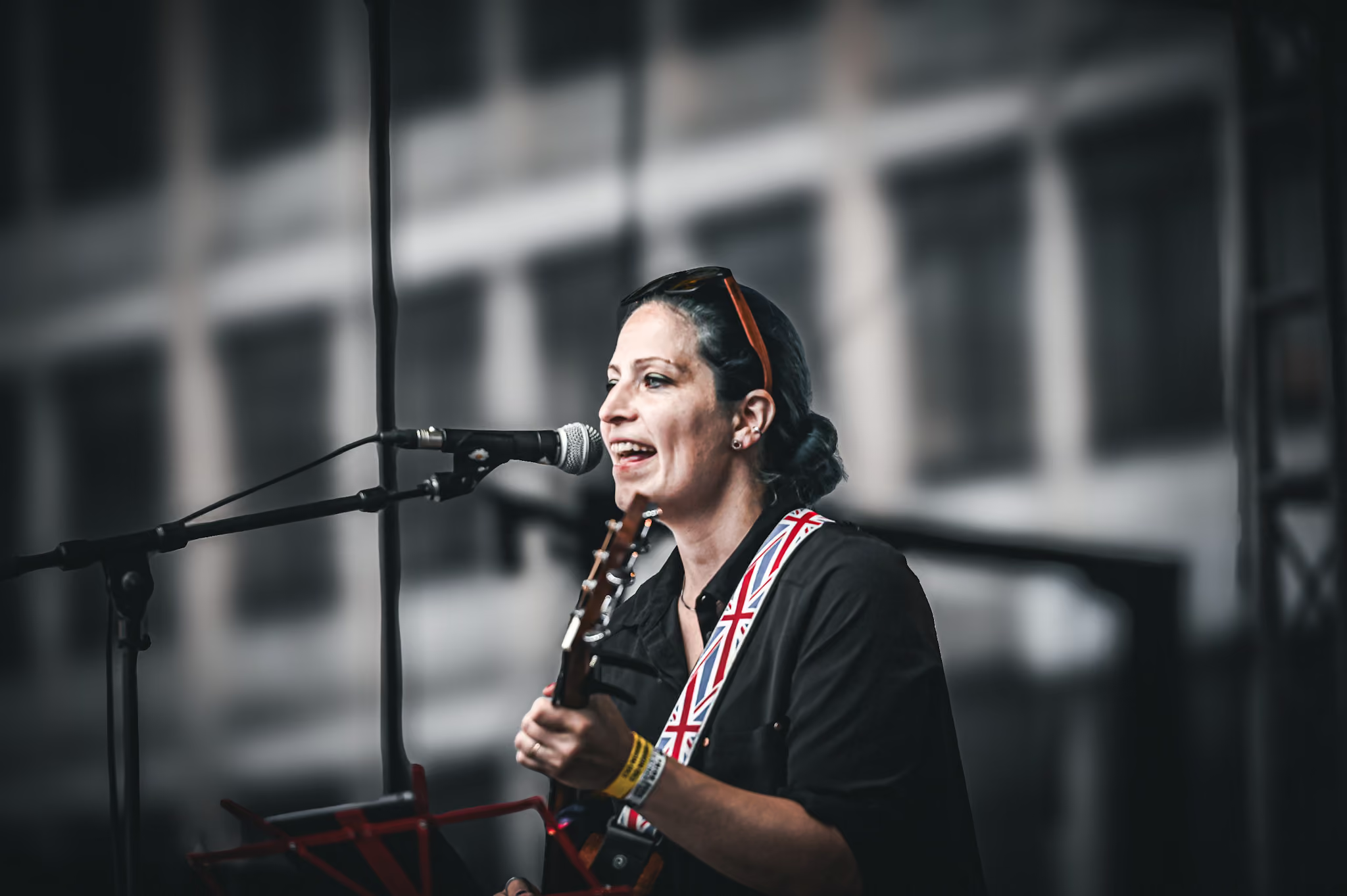



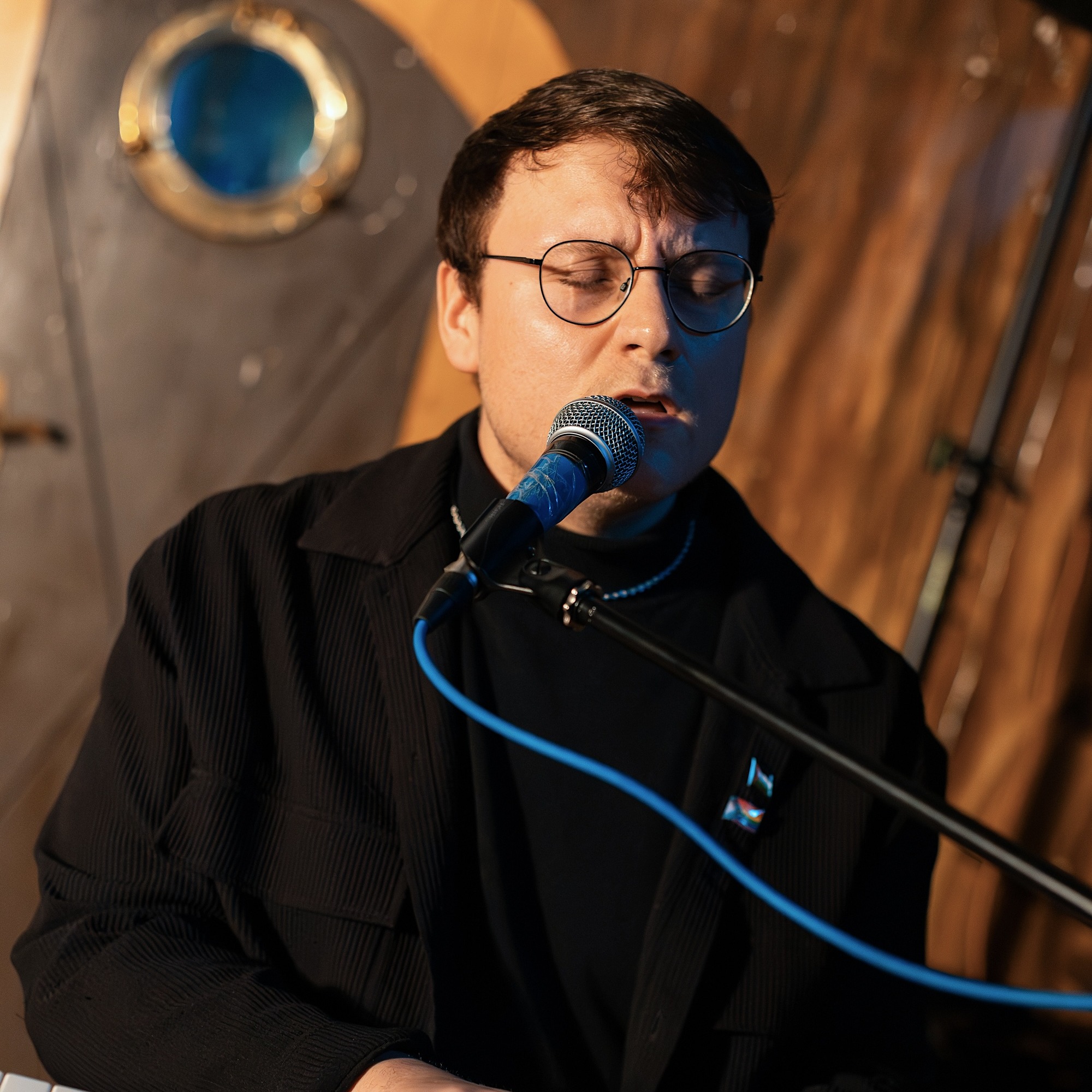

SIRIUS gives you personal singing lessons tailored to your needs - from finding a coach to payment, everything runs smoothly through our platform. Whether you want to add lessons or reschedule, it all works effortlessly online through our booking tool. You can even rent a keyboard to accompany yourself while you sing.
Learn the fundamentals of music theory, expand your vocal range and develop your sense of intonation - whether you want to sing pop, jazz, opera, rock or metal. These voice lessons and vocal lessons always meet you at your level.
SIRIUS gives you not only professional singing lessons but exclusive access to a digital Workspace that makes learning to sing more efficient and structured. In the SIRIUS Cloud you find all key materials and targeted vocal exercises from your vocal coach - available anytime in one place. Lessons can be summarized automatically, and you can access recordings of your sessions to track progress and work on your vocal technique.
Alongside one-on-one lessons you can join monthly group sessions to connect with other singers, try new vocal exercises and get valuable feedback - so you benefit from individual coaching and the energy of the community.

More hours = a better price per hour. Every plan: 45-min one-on-one lessons with vetted teachers.
Perfect to get started.
/hour
/hour
2 hours / month
$80.10 / month
$89.00 / month
with a 6-month membership
with a 3-month membership
↓ You save $53.40 with a 6-month plan
For lasting progress.
/hour
/hour
3 hours / month
$98.10 / month
$109.00 / month
with a 6-month membership
with a 3-month membership
↓ You save $65.40 with a 6-month plan
Faster progress, more practice.
/hour
/hour
4 hours / month
$116.10 / month
$129.00 / month
with a 6-month membership
with a 3-month membership
↓ You save $77.40 with a 6-month plan
All prices incl. VAT · Pause anytime
Do you have any experience?
Many music students worldwide already trust SIRIUS.
“Maya is very friendly and competent. The singing lessons are great! ”
.avif)
Lily
Singing student
“I've been studying singing with Jessica for 8 months now and I'm still having fun:)”
.avif)
Maria
Singing student
“Self-learning videos for learning to sing were not my thing. But since I discovered singing lessons with Lena about Sirius, I've been fully motivated.”
.avif)
Georgina
Singing student
“I'm taking singing lessons for the first time and I just love Sirius. I've received a lot of valuable tips from Habib. I really recommend it to you guys.”

Lucas
Singing student
“Lena not only knows about singing lessons, but also makes the lesson a real experience. It is always my highlight of the week.”
.avif)
Carl
Singing student
Worth knowing before you shop: the Lawson Academy at Converse teaches private voice from $22 to $32 per half hour as listed for the 2025-26 year, adults welcome, with scholarships - genuinely cheap, and we will say so. Ask us for our own rate and we will give it to you before you book. The trial hour costs nothing, and there is no semester attached to it.
Rev. Julius Cheeks was born into poverty in Spartanburg in 1929, started singing in second grade, and built a profound knowledge of scripture from 78rpm records, having left school early. He became one of the voices James Brown and Wilson Pickett took their singing from. He learned by ear, from records and from church, and then he did it for fifty years.
Six is where the Lawson Academy starts private voice students, and no stage rewards a trained ear like the adolescent voice change. Adults are welcome at any age.
Breath moves within weeks. A tone you would take into Twichell Auditorium is nearer twelve months. After that it turns into something long and considerably more interesting.
They do. Sound is the only thing required to travel, and it travels clearly enough to work with. In a county that grew sixteen percent in five years while the city grew three, with the growth out in the county rather than downtown, not driving in is worth real time.
Do you have any experience?
More cities in South Carolina
Singing lessons by state
Spartanburg is called the Hub City for a literal reason: Union Station sat near the middle of a roughly circular town boundary, and six railroads ran out from it like spokes, the first of them in 1859. Around forty textile mills went up from the late 1800s, and most of the work eventually went elsewhere; BMW, Michelin, Milliken and, for decades, Denny's are what came after. The arithmetic worth knowing is this - the city holds about forty thousand people, roughly a tenth of Spartanburg County, and the county grew sixteen percent in five years while the city grew three. Anyone describing this as a town of forty thousand is technically right and practically wrong.
Because the supply here is genuinely good and shaped in one particular way: almost all of it sits inside a college. Converse University's Petrie School of Music was among the founders of the national accrediting body for music schools back in 1928, and its Lawson Academy of the Arts is a real community music school - voice from age six upward, adults explicitly welcome, classical, musical theater and sacred, nine teachers on the list, twenty-two to thirty-two dollars per half hour, scholarships available. That is a better deal than most cities this size can offer and we are not going to pretend otherwise. Wofford's Choral Society admits community members without audition, Mondays six to eight - though it performs only in the spring semester of odd-numbered years. The Spartanburg Festival Chorus mixes Converse students with area singers. What does not exist is anything free-standing: no independent community chorus, no oratorio society, and the Chapman Cultural Center funds seven partner organizations - a ballet, an orchestra, two theaters, an art museum, a science center and a guild of visual artists - not one of them choral.
Everything above runs on somebody else's calendar: a sixteen-week semester, a Monday slot, a chorus that sings every other spring. If your week does not line up with an academic year, none of it reaches you, however good it is.
Breath first. Then tuning that survives an audition panel, a top arriving in one piece rather than by degrees, and the endurance for a whole program instead of a single number. Style after that, because the repertoire here runs from gospel to Puccini and they do not ask the same things of a voice.
We go through your repertoire before anything else, and only then start hunting for the right teacher. The introduction costs nothing, there is no semester to enroll in, and the hours move when your week does.
The trip is made by sound and nothing else, and that is where the effort went. A jaw tightening or an onset sitting under the pitch arrives undamaged and gets named before the line ends.
For a small city the record here is extraordinary. The Pink in Pink Floyd is Pink Anderson, the Piedmont blues singer raised in Spartanburg and buried at Lincoln Memorial Gardens - Syd Barrett found the name in the liner notes of a 1962 Blind Boy Fuller album, next to the Floyd of Floyd Council. Ira Tucker, born here, joined the Dixie Hummingbirds at thirteen in 1938 and stayed seventy years. Rev. Julius Cheeks, born here in 1929, sang with the Sensational Nightingales and shaped how James Brown and Wilson Pickett attacked a note. Clara Smith, born in 1894 in the Highlands off West Henry Street, cut over a hundred and twenty sides for Columbia and recorded duets with Bessie Smith. The Marshall Tucker Band formed here in 1972 and took its name off a keychain hanging on their rehearsal warehouse door; Marshall Tucker was a blind piano tuner from this town. Gianna Rolandi, who sang fifteen seasons at New York City Opera, grew up here raised by a Converse voice teacher and a Wofford music chair. And Carlos Moseley, born here in 1914, ran the New York Philharmonic and invented its free concerts in the city parks.
Our students sign on from Converse Heights and the streets off East Main, and from Boiling Springs, Duncan, Inman and Greer.
A shift that does not respect the evening, a commute in from the county where the growth actually is, and a college calendar that empties in May: three arguments against a fixed weekly slot on somebody else's campus. An hour that arrives where you happen to be answers all three.
Take the free hour. Sing the one song you know better than any other, and take the verdict a trained ear returns.
A city that produced two of the most influential gospel voices in America is not short of singers. Start at home, in the Hub City.



.avif)
.avif)
