
.avif)


Do you have any experience?
We match you with the perfect vocal coach for your goals, so you can learn to sing conveniently online - singing lessons with no waiting time. Right after signing up you get a no-obligation trial-lesson slot via WhatsApp.
After your free trial lesson, discuss your goals and availability with your vocal coach and start learning to sing right away.
Book your singing lessons flexibly online. In the SIRIUS Workspace you get unlimited access to vocal exercises outside your lessons, so you can keep practicing at home with our tools.
Want to learn to sing and looking for a vocal coach in Peoria, Illinois? We work with SIRIUS-vetted vocal coaches. Based on your needs we match you with the perfect vocal coach - whether you are just starting to sing or looking for singing lessons for adults or kids. Want to work on your intonation, improve your head voice or explore breath training? Sign up for our free trial lesson and get a session proposal with your perfect vocal coach.
Our experienced vocal coaches help you unlock your full potential. Our technology, built for online singing lessons, guarantees excellent sound quality and lets you learn to sing from anywhere - with no extra software or download.











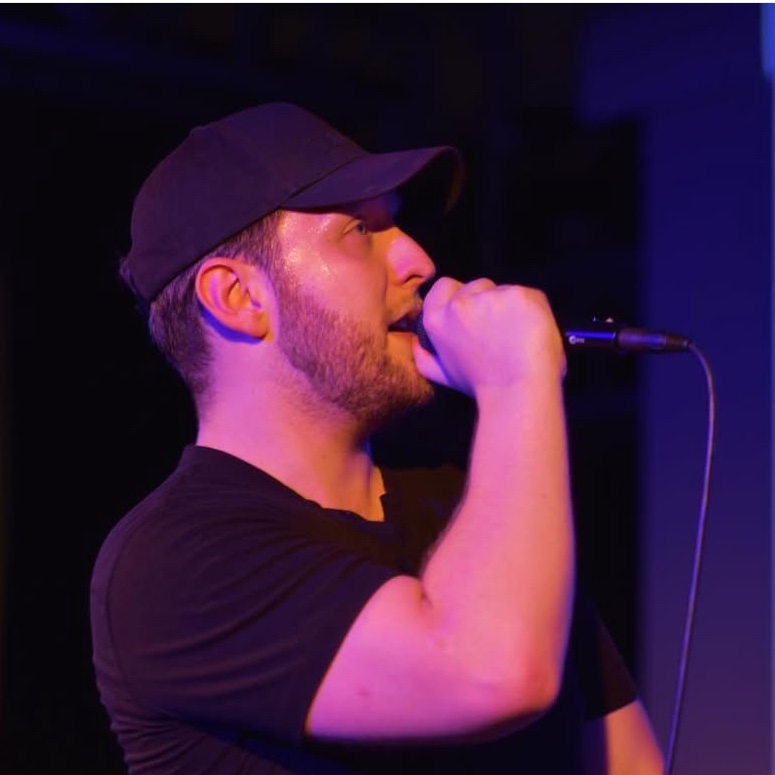


SIRIUS gives you personal singing lessons tailored to your needs - from finding a coach to payment, everything runs smoothly through our platform. Whether you want to add lessons or reschedule, it all works effortlessly online through our booking tool. You can even rent a keyboard to accompany yourself while you sing.
Learn the fundamentals of music theory, expand your vocal range and develop your sense of intonation - whether you want to sing pop, jazz, opera, rock or metal. These voice lessons and vocal lessons always meet you at your level.
SIRIUS gives you not only professional singing lessons but exclusive access to a digital Workspace that makes learning to sing more efficient and structured. In the SIRIUS Cloud you find all key materials and targeted vocal exercises from your vocal coach - available anytime in one place. Lessons can be summarized automatically, and you can access recordings of your sessions to track progress and work on your vocal technique.
Alongside one-on-one lessons you can join monthly group sessions to connect with other singers, try new vocal exercises and get valuable feedback - so you benefit from individual coaching and the energy of the community.

More hours = a better price per hour. Every plan: 45-min one-on-one lessons with vetted teachers.
Perfect to get started.
/hour
/hour
2 hours / month
$80.10 / month
$89.00 / month
with a 6-month membership
with a 3-month membership
↓ You save $53.40 with a 6-month plan
For lasting progress.
/hour
/hour
3 hours / month
$98.10 / month
$109.00 / month
with a 6-month membership
with a 3-month membership
↓ You save $65.40 with a 6-month plan
Faster progress, more practice.
/hour
/hour
4 hours / month
$116.10 / month
$129.00 / month
with a 6-month membership
with a 3-month membership
↓ You save $77.40 with a 6-month plan
All prices incl. VAT · Pause anytime
Do you have any experience?
Many music students worldwide already trust SIRIUS.
“Maya is very friendly and competent. The singing lessons are great! ”
.avif)
Lily
Singing student
“I've been studying singing with Jessica for 8 months now and I'm still having fun:)”
.avif)
Maria
Singing student
“Self-learning videos for learning to sing were not my thing. But since I discovered singing lessons with Lena about Sirius, I've been fully motivated.”
.avif)
Georgina
Singing student
“I'm taking singing lessons for the first time and I just love Sirius. I've received a lot of valuable tips from Habib. I really recommend it to you guys.”

Lucas
Singing student
“Lena not only knows about singing lessons, but also makes the lesson a real experience. It is always my highlight of the week.”
.avif)
Carl
Singing student
<p>In Peoria the money moves in an odd order: the Young Artist prize is a $350 scholarship earmarked for study, so the reward lands first and the teaching is bought afterward, somewhere the Chorale does not run. SIRIUS reverses that. The opening lesson comes before any invoice and carries no charge, an hour in which a coach listens and then says plainly what is there. Lessons begin at $29 once you decide to go on, with no season to sign up for.</p>
<p>That sentence is usually a report on an audience rather than on a voice. The better question is narrower: what exactly happened, and when? Almost always the answer is one room and one remark, years ago, nothing measured since. Meanwhile First Baptist says of its choirs that "Reading music is not necessarily a requirement", a fair signal that the bar people picture stands higher than the bar that exists. Pitch, breath and register respond to training. An opinion somebody formed about you in the fourth grade is not evidence.</p>
<p>Three of the city's doors show how age gets handled here. The Preparatory Chorus takes grades 1 through 5 on Tuesday afternoons. The Symphony Guild's competition takes entrants "18-years-old and younger", in grades 7 through 12. The Bradley community ensemble takes students, alumni, faculty and residents in one room, and it alone has no upper edge at all. Lessons are built like that third door. Nobody is sorted out at the top, nobody is told to come back in two years, and the age you happen to be is the starting condition rather than the qualification.</p>
<p>Here is a calculation this city makes possible. The Young Artist prize is "a $350 scholarship to be used for music study", which at a starting price of $29 a lesson comes to roughly a dozen hours of teaching. That is a useful order of magnitude for the question. A dozen hours will not turn anybody into the singer who wins that prize, and the committee presumably knows it. Past that point the work changes character: less repair, more choice.</p>
<p>It depends what you need the room for, so take the two cases apart. If you want a room full of people around you and a conductor's cue, you want a hall, and this city has halls. If you want one person to hear precisely what your voice does and say something useful, distance stops mattering once the audio is good: that job was always done with ears rather than presence. This is the town that gave the language a phrase about testing material on an audience. The test was never the size of the room. It was whether one person out there could tell you something true about what you had just done.</p>
Do you have any experience?
One competition in this city hands money to young singers; the other will not hear an applicant who has no private teacher. Neither teaches anybody to sing. The Peoria Symphony Orchestra Guild takes no entry unless the applicant already pursues, in its own words, "a regular schedule of music lessons with a private teacher". The Civic Chorale gives its Young Artist winner "a $350 scholarship to be used for music study". Bradley University does teach voice singly, but only inside its own enrollment: the catalog opens those lessons to "all University students". Peoria, Illinois is well equipped to judge a singer and to pay one. Teaching is the part the competitions and the choirs leave to somebody else.
Because nearly every door here has a judgment behind it. The Civic Chorale rehearses Tuesdays from 7:00 p.m. to 9:00 p.m. at First Christian Church on North University Street and warns candidates that "You may be asked to demonstrate music reading skills (rhythmic and tonal) and tonal memory during your audition". Bradley lists all six of its vocal ensembles as auditioned. Church music is the exception: First Baptist on West Lake Avenue says of its groups that "Reading music is not necessarily a requirement". Between the graded door and the open one, no choir teaches.
A lesson is an hour with one listener in it. Bradley's community ensemble carries 60-80 singers, and anybody standing in front of that many is balancing a group against itself: the hour belongs to their combined sound, and it has to. In a lesson the whole hour goes to what a single voice does when the line climbs. Nobody holding 60-80 people together has ten minutes for why your tone thins as the tempo rises, and no amount of goodwill manufactures those ten minutes.
Reading comes first here, and not because it is noble: the Chorale may ask you to demonstrate it at the door, which gives it a local deadline. Then tuning, holding a pitch steady while a piano moves underneath it. Then breath, the least visible item and the most decisive. Then the handover from chest to head, the crossing untrained voices try to shout through. Then tone, which arrives last because it is made of the three physical ones before it.
Look at what singing costs here before a note is taught. Chorale membership runs $50 a season. On top of that a soprano matches a dress and jewelry at about $125, and a tenor or bass makes "a one-time purchase of approximately $300" for a tuxedo plus about $50 in accent pieces. The clothes cost more than the singing does, and none of them teach. SIRIUS runs the other way round: no season, no dress, no tuxedo. The coach is selected around your voice and your aims, the plan is yours rather than an ensemble's, hours move when your week moves, and the opening hour goes uncharged. After that, lessons start at $29.
On October 16, 1920 a vaudeville house with 1,600 seats opened downtown, across from the Orpheum; two years later the Hippodrome gave the city four large vaudeville rooms at once. That density is where "Will it play in Peoria?" comes from: a town used often enough to try new material on real listeners that the question hardened into a saying. Trying something and hearing back is the oldest working method there is, and a recording restores it. Every SIRIUS lesson is recorded, so a phrase you were sure went well can be checked against what actually left your mouth.
The city taxes itself for a band. Around 1937, in the band's own account, "through efforts of Local 26 of the American Federation of Musicians and interested citizens a band tax was passed", and the money still buys "over 25 concerts a year". The Municipal Band reached its 89th season in 2026 and plays Sundays at 7:00 p.m. at the Fred Huber Bandshell in Glen Oak Park. Every one of those concerts is free of charge. Singers reach that stage as soloists inside a wind band's program. At Washington and State, Preston Jackson's bronze marks Richard Pryor, born here on December 1, 1940.
Almost everything on offer here turns on a roster rather than on a voice. The Chorale's Youth Chorus is entered through what it carefully calls vocal placements, and rehearses Tuesdays until 6:00 p.m. The Symphony Guild's competition asks first whether a private teacher is already in the picture. All of that is a rule about paperwork. None of it is a statement about what a voice can do, and none of it is the thing that improves one.
Peoria's fixed points are genuinely fixed. Choir is Tuesday at 7:00 p.m. or it is nothing that week. Buses run Monday to Friday from 5:30 a.m. until 12:45 a.m. and stop earlier on weekends, and since CityLink ended transfers, "a rider will have to pay a fare each time they board the bus", so a rehearsal across town costs two fares and a timed plan. A lesson that meets you in your own room costs no fare and no crosstown leg.
Give the city its due: the calendar is full and it is exact. Auditions on a Tuesday in August, a Young Artist competition on a Saturday morning in October, three Christmas concerts in December. The gap sits upstream of all of it. Between deciding you would like to sing and standing at a table with two prepared songs in hand lies a stretch of work no choir or competition in this city offers to share. It opens with the things your voice can already do.
Peoria has paid for music out of a tax since about 1937, and it hands scholarships to singers. No choir room in it was ever built to give one voice an undivided hour. The city sorts and rewards; a lesson teaches. No choir or competition here does the second job. Your voice can begin where you already are, on a Tuesday that suits you, with a coach listening to nothing else.



.avif)
.avif)
