
.avif)


Do you have any experience?
We match you with the perfect vocal coach for your goals, so you can learn to sing conveniently online - singing lessons with no waiting time. Right after signing up you get a no-obligation trial-lesson slot via WhatsApp.
After your free trial lesson, discuss your goals and availability with your vocal coach and start learning to sing right away.
Book your singing lessons flexibly online. In the SIRIUS Workspace you get unlimited access to vocal exercises outside your lessons, so you can keep practicing at home with our tools.
Want to learn to sing and looking for a vocal coach in DeKalb, Illinois? We work with SIRIUS-vetted vocal coaches. Based on your needs we match you with the perfect vocal coach - whether you are just starting to sing or looking for singing lessons for adults or kids. Want to work on your intonation, improve your head voice or explore breath training? Sign up for our free trial lesson and get a session proposal with your perfect vocal coach.
Our experienced vocal coaches help you unlock your full potential. Our technology, built for online singing lessons, guarantees excellent sound quality and lets you learn to sing from anywhere - with no extra software or download.


.avif)

.avif)





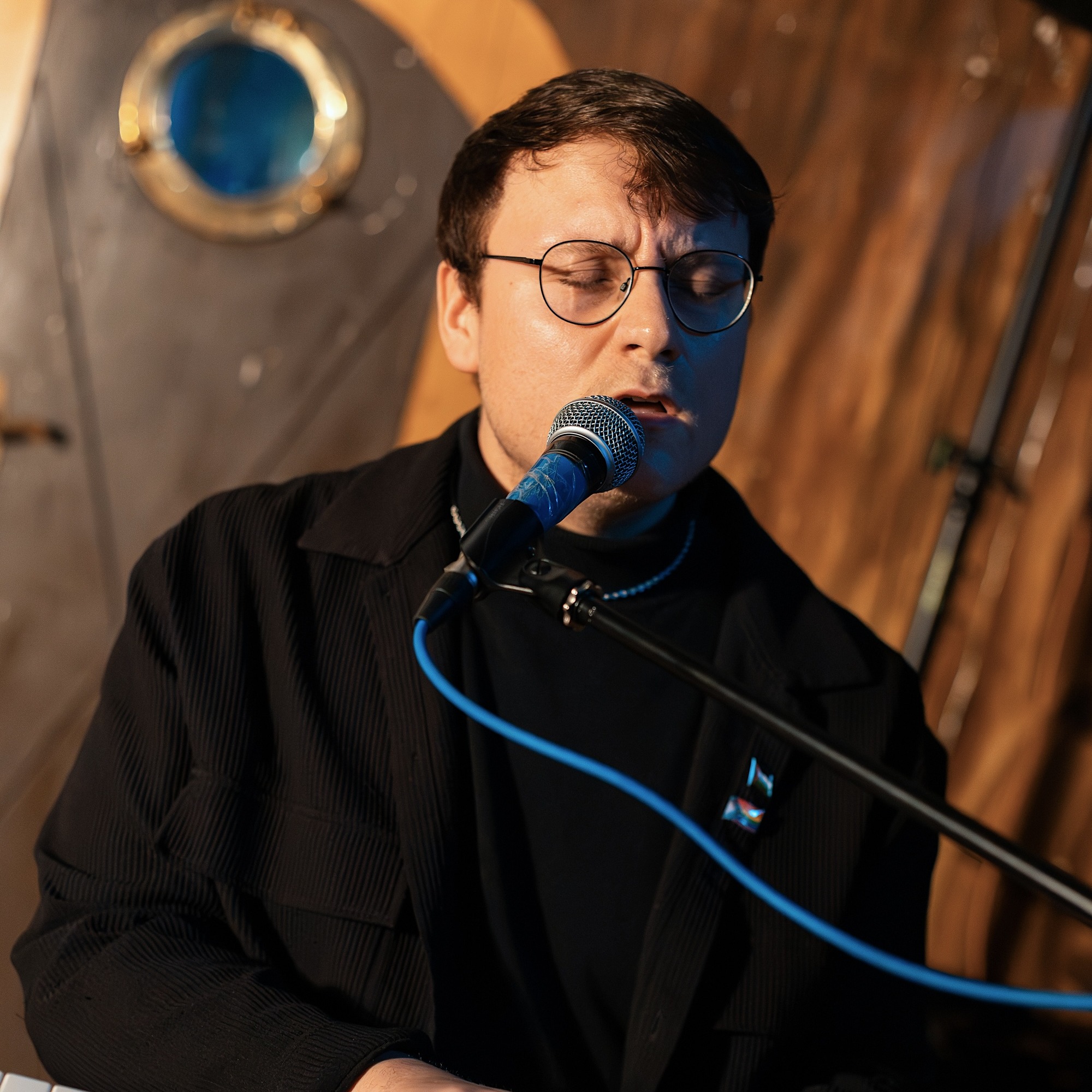

SIRIUS gives you personal singing lessons tailored to your needs - from finding a coach to payment, everything runs smoothly through our platform. Whether you want to add lessons or reschedule, it all works effortlessly online through our booking tool. You can even rent a keyboard to accompany yourself while you sing.
Learn the fundamentals of music theory, expand your vocal range and develop your sense of intonation - whether you want to sing pop, jazz, opera, rock or metal. These voice lessons and vocal lessons always meet you at your level.
SIRIUS gives you not only professional singing lessons but exclusive access to a digital Workspace that makes learning to sing more efficient and structured. In the SIRIUS Cloud you find all key materials and targeted vocal exercises from your vocal coach - available anytime in one place. Lessons can be summarized automatically, and you can access recordings of your sessions to track progress and work on your vocal technique.
Alongside one-on-one lessons you can join monthly group sessions to connect with other singers, try new vocal exercises and get valuable feedback - so you benefit from individual coaching and the energy of the community.

More hours = a better price per hour. Every plan: 45-min one-on-one lessons with vetted teachers.
Perfect to get started.
/hour
/hour
2 hours / month
$80.10 / month
$89.00 / month
with a 6-month membership
with a 3-month membership
↓ You save $53.40 with a 6-month plan
For lasting progress.
/hour
/hour
3 hours / month
$98.10 / month
$109.00 / month
with a 6-month membership
with a 3-month membership
↓ You save $65.40 with a 6-month plan
Faster progress, more practice.
/hour
/hour
4 hours / month
$116.10 / month
$129.00 / month
with a 6-month membership
with a 3-month membership
↓ You save $77.40 with a 6-month plan
All prices incl. VAT · Pause anytime
Do you have any experience?
Many music students worldwide already trust SIRIUS.
“Maya is very friendly and competent. The singing lessons are great! ”
.avif)
Lily
Singing student
“I've been studying singing with Jessica for 8 months now and I'm still having fun:)”
.avif)
Maria
Singing student
“Self-learning videos for learning to sing were not my thing. But since I discovered singing lessons with Lena about Sirius, I've been fully motivated.”
.avif)
Georgina
Singing student
“I'm taking singing lessons for the first time and I just love Sirius. I've received a lot of valuable tips from Habib. I really recommend it to you guys.”

Lucas
Singing student
“Lena not only knows about singing lessons, but also makes the lesson a real experience. It is always my highlight of the week.”
.avif)
Carl
Singing student
The one in-person rate we could find published online is not in DeKalb itself: The Music Connection on DeKalb Avenue in Sycamore teaches voice and lists thirty-five dollars for half an hour, fifty for forty-five minutes and sixty for a full hour, plus a fifteen-dollar registration fee each semester. Closer to home, Northern Illinois University's Community School of the Arts lists voice among its instruments and takes adult students, but does not publish its rates online - call 815-753-1450 and ask, rather than trusting anyone who quotes you a figure for it. We tell you our number before a lesson goes on the calendar, and the opener is unbilled.
Anyone can learn. A voice you use and a person who listens to it weekly is the whole requirement. The proof is at 1915 North First Street, where the Tuesday a cappella chorus tells anyone reading its site that they may sit in on a rehearsal as a guest - what joining involves it does not publish. And no rehearsal, guest or member, is going to spend the evening on one person's breath.
Seven is a fair start for a child, so long as the session stays short, and then in deadly earnest once the voice begins to shift. Adults have no ceiling. Worth knowing about this town specifically: the population fell by about eight percent across the 2010s and has been flat since, so the adult market here is not a wave of newcomers. The adult beginner in this town has usually lived here a good while.
You will notice the support change inside a month. One song surviving an audience intact is a matter of months, not weeks. Reading fluently enough to sit down cold in a rehearsal and hold a line is the long one, and it tracks the hours you log, not the months on the calendar.
Yes, and the reason is printed in the job listings. The candy plant in town posts core hours of one in the afternoon to half past nine at night, and another role at three in the afternoon to midnight. A shift like that wipes out every organized singing night in DeKalb at once - the Monday chorus, the Tuesday chorus, the Tuesday band concerts. Between the university, the distribution centers, the hospital and the plants, a great many people here work hours that a fixed weeknight simply cannot accommodate.
Do you have any experience?
Nearby cities
More cities in Illinois
Singing lessons by state
The DeKalb Municipal Band was founded in 1854 by musicians coming home from the California Gold Rush, and it calls itself the longest continuously playing band in Illinois. Its 172nd season ran from the ninth of June to the eighteenth of August 2026, Tuesday evenings at half past seven plus a Fourth of July date, free, at the Dee Palmer Bandshell in Hopkins Park - the shell named for a man who conducted the band for sixty-three seasons. Here is the part nobody mentions: every single concert in that 2026 season had a vocal soloist. A tenor, a jazz vocalist, a mezzo-soprano, a lyric soprano described as one of the finest in northern Illinois. Eleven concerts, eleven singers, in a town of forty thousand people, for nothing at the door.
Because there is more adult singing here than the obvious searches turn up. HarmonEssence, an a cappella chorus chartered in 1985 and twice an international division champion, rehearses Tuesday evenings at Bethlehem Lutheran, 1915 North First Street, and invites anyone to sit in as a guest. The DeKalb Festival Chorus, more than forty singers and going since the 1970s, meets Monday evenings in Room 171 of the university's Music Building; its two pages disagree with each other about auditions, so the honest thing to say is that arrangements are made with the director. Both publish start times their own pages contradict elsewhere, so call before you turn up. Then there are the church ensembles: a traditional choir at St. Mary's on Thursdays from seven, a chancel choir at First United Methodist on Wednesdays at quarter to seven, and a fourth group listed on that church's calendar only as the Celebration Chorale, Thursdays at eight, which we could not identify at all. Stage Coach Players, founded in 1947, runs open auditions that include a vocal component for musicals and publishes no participation fee; its 2025 season included the rock musical Next to Normal, which is a demanding sing and the commonest real reason an adult in a town this size books lessons. And Northern Illinois University runs a Community School of the Arts, affiliated to the national guild for community arts education, whose instrument list includes voice and whose students include adults.
Look again at those eleven soloists. Every one is a booked guest engagement, and the band's own published route to membership is for players. So DeKalb offers a real public platform for a trained adult singer, and the training that leads to it is scattered across a university outreach school, a studio in the next town and private teachers who never advertise. Two secular choruses, a theater company and at least four church ensembles will happily put you in a section. None of them is built to spend a standing weekly hour on one voice.
Breath before anything else. Then a crossing between registers that holds when you are tired at the end of a shift. Then tone that carries down a nave or across a park without force, because this town sings in both, and enough reading fluency to enjoy a Monday rather than survive it. And if what you need is sixteen bars ready by a date, that is a job with a deadline attached and we work to it.
You hear our number before a lesson goes on the calendar, and the opener is ours to pay for. There is no semester to sign up for, no term dates and nothing that renews, which in a university town is worth saying out loud.
The audio path is arranged so nothing cleans your voice on the way. The teacher gets what you actually sang, faults included, so a habit can be named on the spot it appears. If you want to hear yourself properly between lessons, the public library on Third Street runs a free sound studio with a decent microphone in it, bookable by anyone over thirteen.
The town exists in its present form because of a fence. Joseph Glidden took out patent 157,124 for wire fencing on the twenty-fourth of November 1874, aged sixty-one, having made the barbs on a coffee mill and twisted the strands on a grindstone. He and two other DeKalb men had all taken the idea from the same 1873 county fair, where Henry Rose showed a wooden strip with metal points driven through it; one of them accused Glidden of interference and delayed the patent by about a year. Glidden spent something like a hundred thousand dollars on lawyers, won at the Supreme Court in 1892 - the year his patent expired - and collected about a million in royalties along the way. He and Isaac Ellwood then helped found the state normal school that became Northern Illinois University. The music building where the Festival Chorus rehearses on Monday nights is downstream of a barbed-wire lawsuit. As for famous names, the town's most musically consequential native is Philip Ewell, born and raised here, a trained cellist and now one of the most argued-over music theorists in America. The birthplace indexes add a handful of bands and a house producer. No famous singer surfaced in our searches, which is not at all the same thing as there being none.
DeKalb, Sycamore, Malta, Cortland, Genoa, Kingston, Waterman, Kirkland - the hour reaches all of them without anybody driving Route 23 in February.
The county's three largest employers are the university at about three thousand staff, a Target distribution center at sixteen hundred and the hospital system at sixteen hundred, with the school district at thirteen hundred, Amazon at a thousand and a 3M plant at eight hundred behind them. That is a warehouse-and-shift economy sitting on top of a university town, and the candy plant sets out the consequence in its own job listings: core hours of one in the afternoon to half past nine at night, and a second role running three in the afternoon to midnight. Those hours remove every evening option in this town simultaneously. There is one genuinely good piece of news on transport - the cheap shuttle to the Metra terminus at Elburn carries close to forty-three thousand passengers a year - but a train to Chicago does not help you get to a rehearsal that started while you were still on the line.
Take the free hour. Turn up with nothing prepared and sing the thing you already know all the words to.
A band with a singer at every concert, two choruses that meet on consecutive nights, four church ensembles, a theater company casting since 1947, and a university outreach school that teaches voice to adults. What is missing is an hour that bends around a shift. Start there, at home, in DeKalb.



.avif)
.avif)
