
.avif)


Do you have any experience?
We match you with the perfect vocal coach for your goals, so you can learn to sing conveniently online - singing lessons with no waiting time. Right after signing up you get a no-obligation trial-lesson slot via WhatsApp.
After your free trial lesson, discuss your goals and availability with your vocal coach and start learning to sing right away.
Book your singing lessons flexibly online. In the SIRIUS Workspace you get unlimited access to vocal exercises outside your lessons, so you can keep practicing at home with our tools.
Want to learn to sing and looking for a vocal coach in Mansfield, Ohio? We work with SIRIUS-vetted vocal coaches. Based on your needs we match you with the perfect vocal coach - whether you are just starting to sing or looking for singing lessons for adults or kids. Want to work on your intonation, improve your head voice or explore breath training? Sign up for our free trial lesson and get a session proposal with your perfect vocal coach.
Our experienced vocal coaches help you unlock your full potential. Our technology, built for online singing lessons, guarantees excellent sound quality and lets you learn to sing from anywhere - with no extra software or download.



.avif)


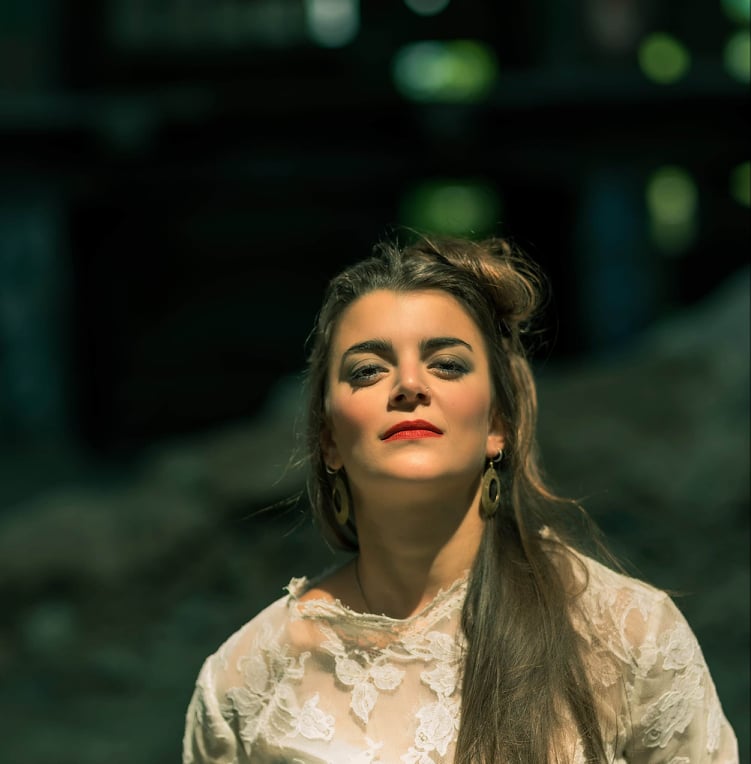
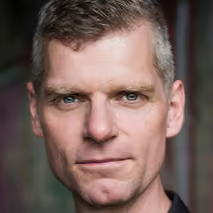

.avif)

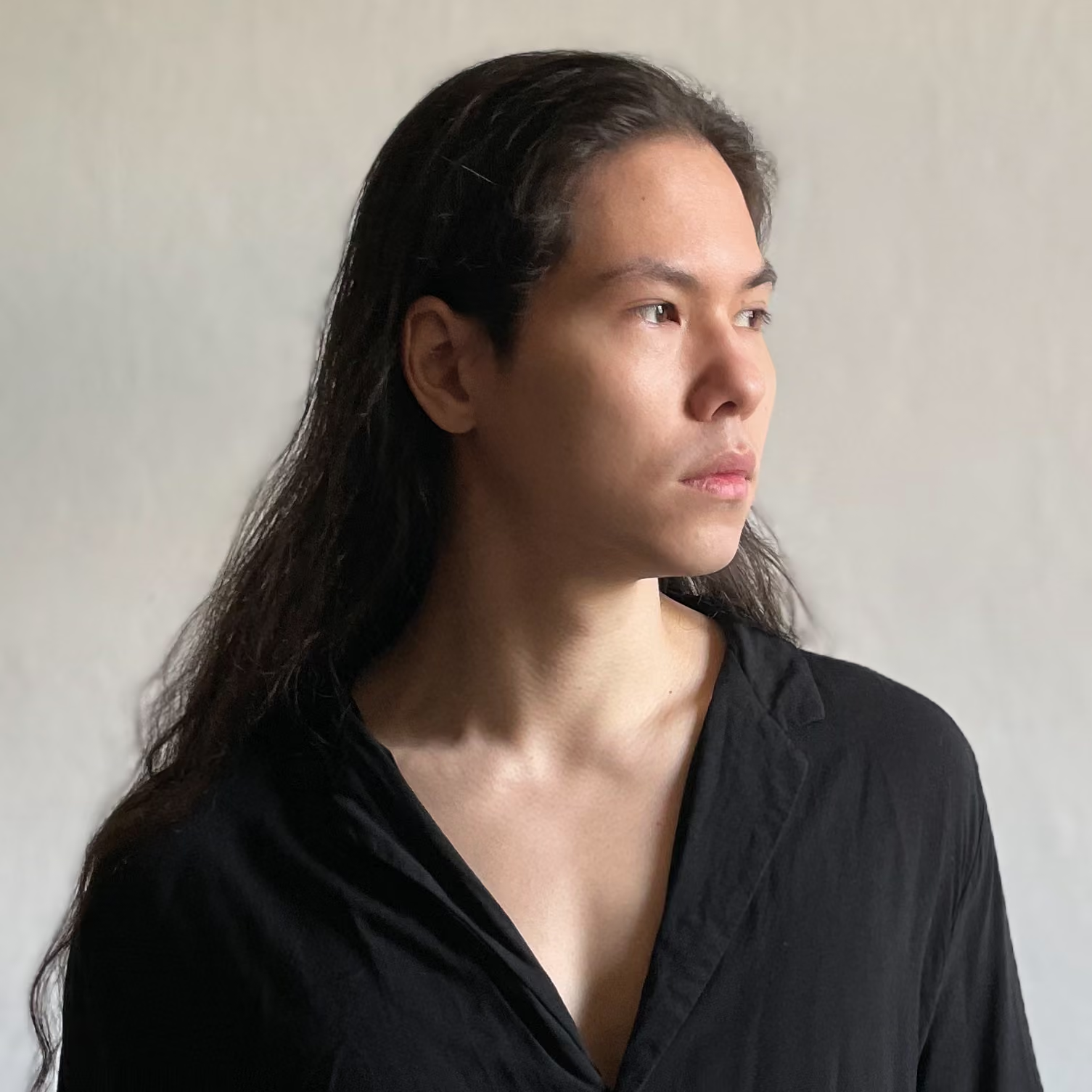

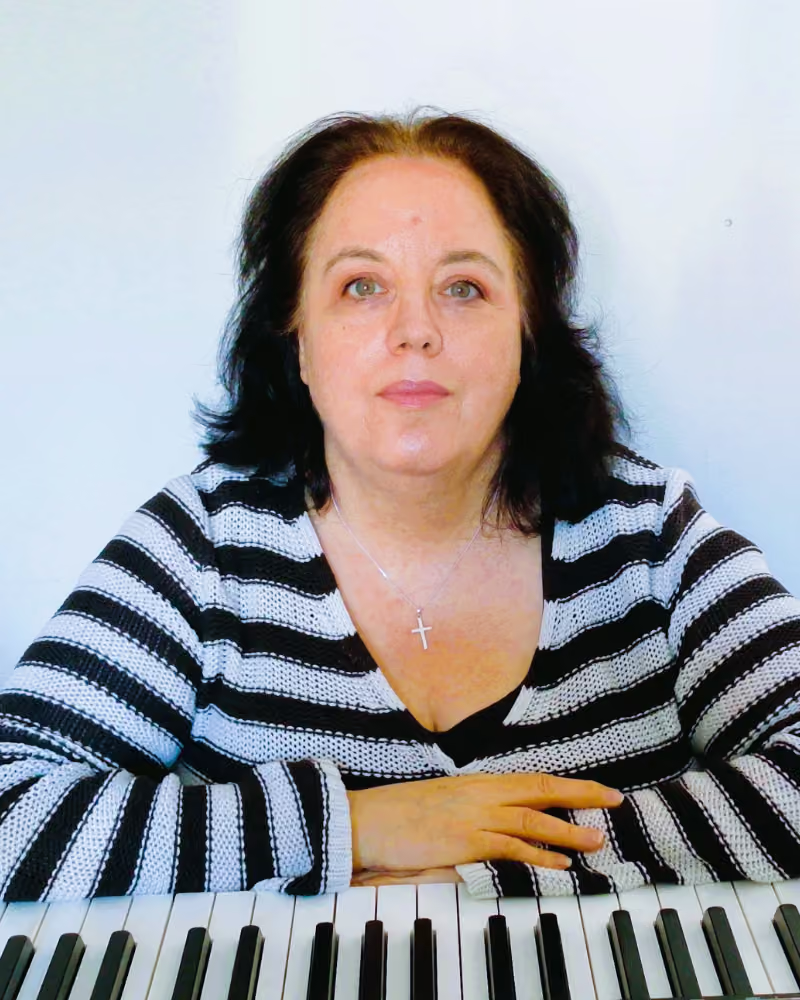





SIRIUS gives you personal singing lessons tailored to your needs - from finding a coach to payment, everything runs smoothly through our platform. Whether you want to add lessons or reschedule, it all works effortlessly online through our booking tool. You can even rent a keyboard to accompany yourself while you sing.
Learn the fundamentals of music theory, expand your vocal range and develop your sense of intonation - whether you want to sing pop, jazz, opera, rock or metal. These voice lessons and vocal lessons always meet you at your level.
SIRIUS gives you not only professional singing lessons but exclusive access to a digital Workspace that makes learning to sing more efficient and structured. In the SIRIUS Cloud you find all key materials and targeted vocal exercises from your vocal coach - available anytime in one place. Lessons can be summarized automatically, and you can access recordings of your sessions to track progress and work on your vocal technique.
Alongside one-on-one lessons you can join monthly group sessions to connect with other singers, try new vocal exercises and get valuable feedback - so you benefit from individual coaching and the energy of the community.

More hours = a better price per hour. Every plan: 45-min one-on-one lessons with vetted teachers.
Perfect to get started.
/hour
/hour
2 hours / month
$80.10 / month
$89.00 / month
with a 6-month membership
with a 3-month membership
↓ You save $53.40 with a 6-month plan
For lasting progress.
/hour
/hour
3 hours / month
$98.10 / month
$109.00 / month
with a 6-month membership
with a 3-month membership
↓ You save $65.40 with a 6-month plan
Faster progress, more practice.
/hour
/hour
4 hours / month
$116.10 / month
$129.00 / month
with a 6-month membership
with a 3-month membership
↓ You save $77.40 with a 6-month plan
All prices incl. VAT · Pause anytime
Do you have any experience?
Many music students worldwide already trust SIRIUS.
“Maya is very friendly and competent. The singing lessons are great! ”
.avif)
Lily
Singing student
“I've been studying singing with Jessica for 8 months now and I'm still having fun:)”
.avif)
Maria
Singing student
“Self-learning videos for learning to sing were not my thing. But since I discovered singing lessons with Lena about Sirius, I've been fully motivated.”
.avif)
Georgina
Singing student
“I'm taking singing lessons for the first time and I just love Sirius. I've received a lot of valuable tips from Habib. I really recommend it to you guys.”

Lucas
Singing student
“Lena not only knows about singing lessons, but also makes the lesson a real experience. It is always my highlight of the week.”
.avif)
Carl
Singing student
<p>No published rate for learning to sing turned up inside the city. Richland Academy of the Arts teaches voice privately in two 16-week semesters plus a summer term and names no fee; the Playhouse states there are no direct expenses for being part of a show, but it does not teach. The figures that do get published, $93.95 and $68.56 a service, are wages the symphony pays its instrumentalists. Ours is published and runs from $29 a lesson, and the hour that comes first is free.</p>
<p>The chorus that meets on Sunday evenings requires no audition at all, which is an institution putting its own season on the line for the proposition that ordinary voices work. Notice what talent would have to mean for the opposite to hold: that the vocal folds and the diaphragm are the only muscles in the body which fail to answer training. Nothing about them is unusual in that way. They are harder to feel than an arm, because you cannot watch them, and that is the whole reason the myth survives.</p>
<p>Around seven suits most children, once a lesson can be short and mostly played by ear. Adolescents should keep singing while the instrument rearranges itself; skipping those years costs more than it saves, and a supervised change is safer than an unsupervised one. No cut-off worth naming applies to adults. The Symphonic Choir at the high school runs to about forty-five, and the chorus downtown seats whoever walks in on a Sunday.</p>
<p>Count practice sessions rather than calendar weeks and the answer stops being vague. Breathing is the fastest to retrain because it is one movement repeated deliberately, and it is why a line that once gave way before the end stops giving way first. A vowel takes longer, because a vowel is a shape rather than a movement and it has to be found again at every pitch. Singing a prepared 30-second to 2-minute piece for a Playhouse panel without your pulse setting the tempo runs to a few months. Sight-reading an unfamiliar line cold is the long one, on the order of a year's steady weekly work.</p>
<p>Yes, and the reason is specific. Singing is corrected through sensation, and sensation only reports honestly while it is still happening, so the useful teacher is the one talking into your ear in the same second, not the one across a room. Video does that. It also records, which is how the week that follows stops being guesswork. The practical half matters too. Ninety minutes of chorus on a Sunday is a commitment you make once and then keep; twenty minutes of practice at a laptop on a Tuesday is one you can still make on the Tuesday.</p>
Do you have any experience?
More cities in Ohio
Singing lessons by state
One door in Mansfield opens without a test. The Mansfield Symphony Chorus rehearses weekly on Sundays from 6:30 to 8:00 p.m. at the Renaissance Theatre, and its own notice says no formal audition is required, that you should simply drop in during a rehearsal to meet the group. That is the whole entry procedure. The other ways of singing here that publish anything have something standing in front of them, and the something is usually a date, a fee or a piece you were meant to bring.
Because the gates are worth reading in order. The Mansfield Symphony Orchestra auditions on Sunday, September 20 at the Renaissance Theatre, closed applications on August 27, requires a resume and AFM membership, and pays $93.95 a service to principal players and $68.56 to section players; its 2026-27 audition list names instrumental positions only. The Mansfield Playhouse on East Third Street takes anyone, in its own words regardless of their level of experience on stage, and states that there are no direct expenses for being part of a show, but a musical audition wants a prepared song of 30 seconds to 2 minutes. Richland Academy of the Arts on North Walnut Street teaches voice privately in two 16-week semesters and prints no figure. So the door with no audition is real, and everything past it assumes a piece you have already worked on.
Suppose three things are wrong at once, which is normal. The jaw is tight, the air runs out early, and the top of the range is pinched. You can only work on one at a time, because two of the three often ease off once the right one moves. Working out which is which is the whole skill, and nobody at a Sunday rehearsal has that job.
The Playhouse audition sheet doubles as a syllabus. Thirty seconds to two minutes means a piece with a shape, not a fragment that stops. Accompaniment by compact disc or streamed track means no pianist bending to meet you, so your tuning has to hold against something that will not move. Cold readings mean the words arrive unrehearsed. And a chorus rehearsal runs ninety minutes on a Sunday evening, which is a stamina question before it is a musical one.
Follow the route the city lays out. You drop in on a Sunday and sing inside a section, which asks nothing of you. Then a musical is announced and the sheet wants 30 seconds to 2 minutes worked up alone, against a track, with a cold reading after it. Between those two evenings lies the actual work, and it is weekly rather than occasional. That is what the hour is for, and it is why it points at the Sunday rehearsal instead of away from it.
The Playhouse has already decided what a Mansfield singer rehearses against, and it is a machine. Bring a compact disc or a streamed track, says the sheet. Nothing on the other end slows down for you, waits through a breath you took badly, or lifts when you go flat. Rehearsing against an unmoving accompaniment is therefore a skill in its own right here, and it happens to be the easiest thing in the world to set up at home and nearly impossible to arrange in a rehearsal room.
The Renaissance Theatre at 138 Park Avenue West opened on January 18, 1928; it seats 1,402, and its auditorium reopened on August 1, 2026 after a renovation, with Guys and Dolls running through August 9. The Symphony Chorus appears there by name on March 13, 2027 at 7:30 p.m.; the season also holds a community concert on September 19, 2026 billed as a pay what you want event. On February 7, 2026 the Black History Celebration ran in the main library at 43 West Third Street from 11:00 a.m. to 3:00 p.m., free of charge, opening in the second-floor lobby with Mansfield Senior choir students singing Lift Every Voice and Sing. The Juneteenth parade stepped off from Arlin Field at 11:00 a.m. on June 13, 2026. Mitchell Chapel AME stands at 182 South Adams Street, Shiloh Baptist at 120 East Second Street, Mount Calvary Baptist at 343 North Main.
Read the Playhouse line literally, because it means what it says: anyone may audition, regardless of their level of experience on stage. Taken seriously, that sentence puts a beginner and a forty-year veteran on one list on one evening, judged on the same two minutes. The Symphonic Choir at Mansfield Senior carries about forty-five singers, so the school end is not thin either. What separates those people is not whether they can be taught but what a first month ought to contain, and that gets decided per person rather than per age bracket.
The last operating window Richland County Transit published, in 2025, ran Monday through Friday, 6:00 a.m. to 6:30 p.m., with the terminal on South Diamond Street closing at 5:30 p.m. A Sunday rehearsal beginning at 6:30 p.m. sits outside every hour of it. That is not an argument against the chorus, which is worth the ride; it is an argument about what has to be true before the ride is worth taking, namely that you can already do the thing you would be doing there. Preparation is the part that fits into a weekday evening at home, and it is the part that needs no bus at all.
The first decision is not how to sing. It is what to sing. Any song is fine, says the Playhouse sheet, which is true and unhelpful, because a piece pitched too high will make a trained singer sound untrained. Choosing well is a technical call about your particular range and where it currently sits easily. That conversation is not invoiced.
Mansfield does not lack a way in. It lacks a place to get ready, because the entrance that asks nothing also teaches nothing, and the rest hand you a date rather than a lesson. Weekly lessons at home fill that gap without a car and without a semester, and they end where the city already wanted you to go: a Sunday evening at 6:30, in a room that never asked a single question at the door.



.avif)
.avif)
