
.avif)


Do you have any experience?
We match you with the perfect vocal coach for your goals, so you can learn to sing conveniently online - singing lessons with no waiting time. Right after signing up you get a no-obligation trial-lesson slot via WhatsApp.
After your free trial lesson, discuss your goals and availability with your vocal coach and start learning to sing right away.
Book your singing lessons flexibly online. In the SIRIUS Workspace you get unlimited access to vocal exercises outside your lessons, so you can keep practicing at home with our tools.
Want to learn to sing and looking for a vocal coach in Bartlesville, Oklahoma? We work with SIRIUS-vetted vocal coaches. Based on your needs we match you with the perfect vocal coach - whether you are just starting to sing or looking for singing lessons for adults or kids. Want to work on your intonation, improve your head voice or explore breath training? Sign up for our free trial lesson and get a session proposal with your perfect vocal coach.
Our experienced vocal coaches help you unlock your full potential. Our technology, built for online singing lessons, guarantees excellent sound quality and lets you learn to sing from anywhere - with no extra software or download.



.avif)



.avif)







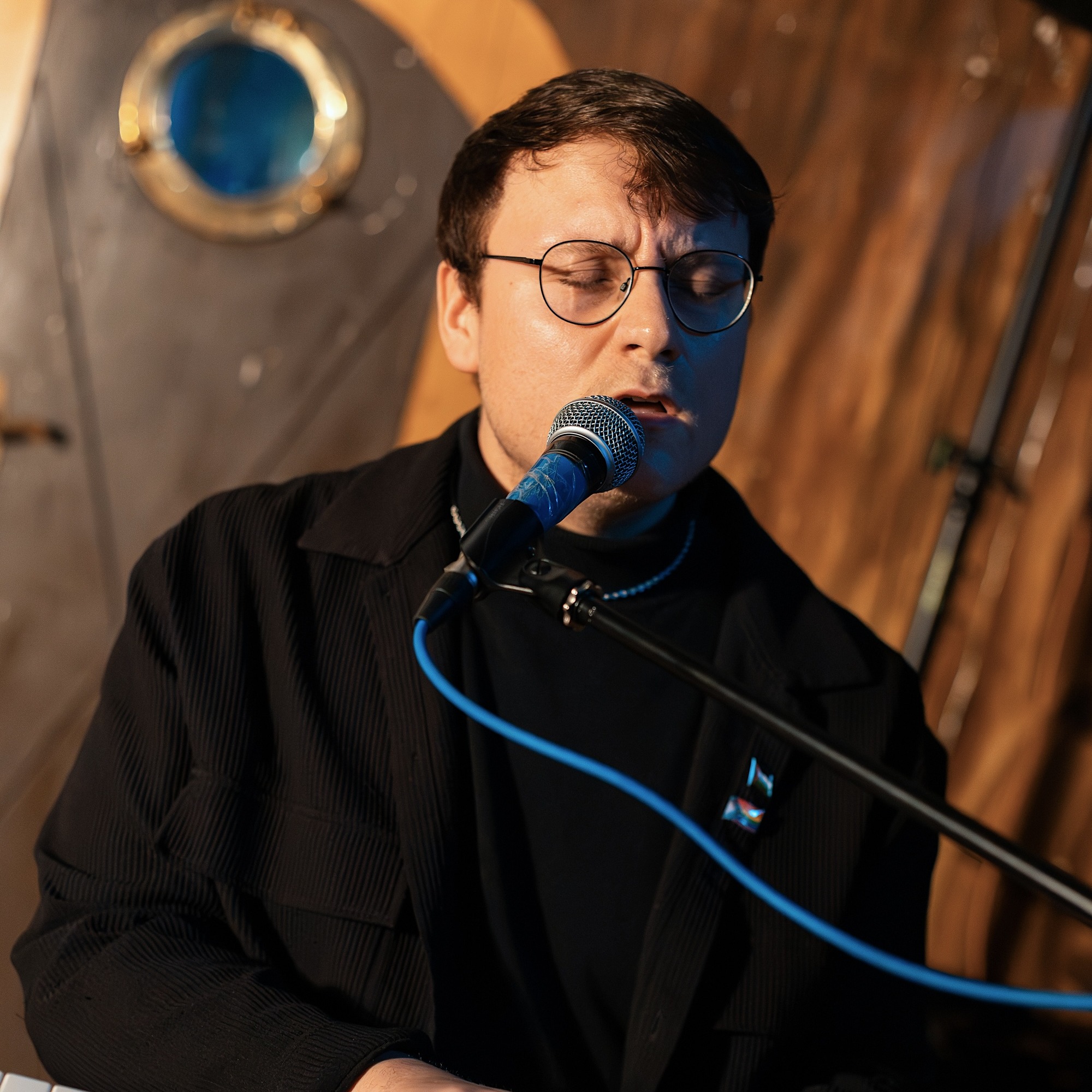

SIRIUS gives you personal singing lessons tailored to your needs - from finding a coach to payment, everything runs smoothly through our platform. Whether you want to add lessons or reschedule, it all works effortlessly online through our booking tool. You can even rent a keyboard to accompany yourself while you sing.
Learn the fundamentals of music theory, expand your vocal range and develop your sense of intonation - whether you want to sing pop, jazz, opera, rock or metal. These voice lessons and vocal lessons always meet you at your level.
SIRIUS gives you not only professional singing lessons but exclusive access to a digital Workspace that makes learning to sing more efficient and structured. In the SIRIUS Cloud you find all key materials and targeted vocal exercises from your vocal coach - available anytime in one place. Lessons can be summarized automatically, and you can access recordings of your sessions to track progress and work on your vocal technique.
Alongside one-on-one lessons you can join monthly group sessions to connect with other singers, try new vocal exercises and get valuable feedback - so you benefit from individual coaching and the energy of the community.

More hours = a better price per hour. Every plan: 45-min one-on-one lessons with vetted teachers.
Perfect to get started.
/hour
/hour
2 hours / month
$80.10 / month
$89.00 / month
with a 6-month membership
with a 3-month membership
↓ You save $53.40 with a 6-month plan
For lasting progress.
/hour
/hour
3 hours / month
$98.10 / month
$109.00 / month
with a 6-month membership
with a 3-month membership
↓ You save $65.40 with a 6-month plan
Faster progress, more practice.
/hour
/hour
4 hours / month
$116.10 / month
$129.00 / month
with a 6-month membership
with a 3-month membership
↓ You save $77.40 with a 6-month plan
All prices incl. VAT · Pause anytime
Do you have any experience?
Many music students worldwide already trust SIRIUS.
“Maya is very friendly and competent. The singing lessons are great! ”
.avif)
Lily
Singing student
“I've been studying singing with Jessica for 8 months now and I'm still having fun:)”
.avif)
Maria
Singing student
“Self-learning videos for learning to sing were not my thing. But since I discovered singing lessons with Lena about Sirius, I've been fully motivated.”
.avif)
Georgina
Singing student
“I'm taking singing lessons for the first time and I just love Sirius. I've received a lot of valuable tips from Habib. I really recommend it to you guys.”

Lucas
Singing student
“Lena not only knows about singing lessons, but also makes the lesson a real experience. It is always my highlight of the week.”
.avif)
Carl
Singing student
<p>No teaching fee gets published here at all. The one figure that does is a prize: the Symphony's Young Artists Competition pays its winner $500. For teaching, at least two studios in Bartlesville list voice in public, one on South Comanche Avenue and one on Renick Lane, and neither posts what it charges. The Chorale publishes no membership fee either. That describes what gets published here, not the teachers themselves. What we can put in writing is our own: lessons open at $29, agreed before any date is fixed, with the introductory hour outside the billing altogether.</p>
<p>Yes. The Chorale's audition is worth reading closely on this point, because it is a sorting hearing rather than a judging one: a short song, a sight-reading test and some vocalizations, used to find where a voice belongs in the choir. It produces a section, not an account of the singer. The Chorale's hearing is not arranged around filtering for talent. It is arranged around getting people singing, a different job and a good one, and it leaves the individual voice undescribed.</p>
<p>The only ages Bartlesville publishes are the summer musical's: seven at the bottom, seventeen at the top. Seven is a fair reflection of when an hour of teaching starts working, since below it children can sing plenty but cannot yet use a full lesson. Seventeen is where that particular program stops, not where singing does. The Chorale publishes no age boundary at all, and a seventy-voice community chorus is not something anyone ages out of.</p>
<p>Measure it against this city's own dates, counting from today. A week from now the breath is already sitting differently, and it is the first change anybody notices in themselves. By the last Tuesday in August, a season out, the register change has stopped announcing itself and a short song of your own choosing is steady enough to be heard alone in a hall. By the August after that, the sight-reading test is the straightforward part of the audition rather than the dreaded one. That last stretch is the slow one. It is also the stretch that changes how a whole season feels.</p>
<p>They do, and one of the studios here already offers lessons online alongside its in-person teaching, so the idea needs no defending. The local obstacle was never quality or distance. It is that this city runs on arrangements: a printed audition once a year, a shared hall with a negotiated calendar, and a ride service that recommends a day's notice. A lesson delivered each week to your own room is the only item on that list needing no arrangement beyond the first.</p>
Do you have any experience?
More cities in Oklahoma
Singing lessons by state
Six organizations in Bartlesville share one stage, and a seventh uses the building alongside a room of its own. The Foster Performing Arts Hall inside the Bartlesville Community Center, designed by William Wesley Peters, who trained under Frank Lloyd Wright, carries the Chorale, the Symphony, the Civic Ballet, Broadway in Bartlesville, the Children's Musical Theatre of Bartlesville and the Community Concert Association, with OKM Music working out of the house as well. Each of those groups publishes when it performs. Almost none of them publishes when it rehearses.
One evening a year is the only one printed. The Bartlesville Chorale, a seventy-voice community chorus singing since 1977, holds an open audition on the last Tuesday of August at 5:30 p.m. at the Center, asking for a short song of your choosing, a simple sight-reading test, and some vocalizations to find your fit in the choir. There is a second way in, but it has to be requested: an individual hearing arranged shortly before one of the regular Tuesday rehearsals. Note what is printed and what is not. The audition hour is public; the rehearsal hour on the same night is not posted anywhere we could find. Greater First Church on West 10th Street, a Black Baptist congregation founded here in 1908, is the exception, listing its Sanctuary Choir practice for Thursdays at 6 p.m.
An audition reads a voice three ways, once. A song, a sight-reading test, a run of vocalizations, and a section assignment follows. That is a snapshot, and it is all a chorus needs. What it cannot produce is a record: whether the sight-reading failed on rhythm or on intervals, whether the same note goes wrong weekly or only when you are tired. A weekly hour produces that record as a by-product, and the record is what changes a voice.
Walk the audition in order and it lays out the work. First the song you chose, which tests whether you can pick material that shows the voice instead of hiding it. Then the sight-reading, slowest of the three, which decides how much of a season is enjoyable rather than survived. Then the vocalizations, which are how anyone finds the place where the register shift either behaves or does not. Underneath all three sits the breath. The other three stand or collapse on it.
Two times in this city collide. CityRide, the demand-response service that stands in for a bus network here, stops running at 5:30 p.m. on weekdays. The Chorale's audition begins at 5:30 p.m. A lesson that opens at $29, with the first one unbilled, is not competing for that evening; it reaches the part of the week the evening never covered. The teacher also stays the same person throughout, which a once-a-year hearing cannot offer.
Snapshot against record is the whole argument of this page, and the recording is where that turns literal. Every session is stored, so a vocalization that finally sat right can be set against the same exercise a month earlier instead of remembered approximately. At least two studios in town list voice teaching, and one already advertises lessons online as well as in person, so the format is no novelty here.
OKM Music began as the OK Mozart International Festival in 1985 and adopted its present name in 2017 as the programming widened past Mozart into bluegrass, gospel and pop; the forty-second annual festival ran from June 5 to 7, 2026. The Symphony, under Maestro Lauren Green, describes 2026-27 as entering its sixty-ninth anniversary and opens the season on October 17, 2026. Its Young Artists Competition offers a high school player $500 and a solo with the orchestra at the March concert. The Children's Musical Theatre of Bartlesville runs a five-week summer intensive each year for ages seven to seventeen, tuition-free. Oklahoma Wesleyan University fields the OKWU Chorale, OKWU Relentless and a jazz ensemble, and says its fall concert is open to the community. The Delaware Tribe of Indians has its headquarters on Tuxedo Boulevard here, and its own account of Lenape music records that missionaries translated nearly 1,000 hymns into the Lenape language.
Take one person at three ages. At sixteen they are in the summer musical, which runs five weeks and stops, and the next mainstage summer is a year away. At thirty they miss a Tuesday in August and never get round to asking for a hearing. At sixty they sing at Greater First on a Thursday evening and have never once been heard singly. Same voice, three decades, and nobody has ever spent an hour on it alone.
CityRide is not a fixed-route service. It is demand-response and curb-to-curb, running Monday through Friday from 7 a.m. to 5:30 p.m., with evening and Saturday trips handled through a separate program, at $3 a ride, free for children under twelve riding with an adult, and a $0.50 fare that Cherokee Nation citizens can qualify for with a Tribal Citizen Card. Rides are booked by telephone, and the city recommends a day's notice. In other words, arriving anywhere at a set hour is something this city asks you to arrange the day before. A lesson taught in your own front room removes that step entirely.
The first hour is not invoiced, so here is exactly what it contains. In the opening minutes you sing whatever you already know, straight through, uninterrupted. After that it gets taken apart: the point the breath gave out, which vowel closed, and how far the range genuinely goes as against where you had assumed. By the end there is a plan in writing and a recording of the whole thing, both of which are yours whether or not you ever book a second hour.
Everything about singing in this city runs on somebody else's arrangements: a hall with seven claimants, a ride service wanting notice the day before, and one printed audition a year. The fifty-one weeks between those auditions are the actual subject of this page. They can be spent waiting, or spent arriving able to sight-read the test and knowing which song shows the voice. The next one is the last Tuesday of August, at 5:30 p.m.



.avif)
.avif)
