.avif)


Gibt es bereits Vorerfahrungen?
Do you have any experience?
Der Preis für eine Unterrichtseinheit beginnt bei 27€ und hängt von dem ausgewählten Paket ab.
We match you with a guitar teacher who fits your goals and the music you want to play, so you can start learning online with no waiting list. Right after you sign up you receive a no-obligation trial-lesson slot via WhatsApp.
After your free trial lesson you agree on goals, playing level and availability with your teacher, and your regular guitar lessons start right away.
Book your guitar lessons online whenever it suits you. The SIRIUS Workspace gives you unlimited access to exercises, chord sheets and recordings of your own sessions, so practice at home always has a clear direction.
Looking for a guitar teacher in Seattle? The search itself usually costs more evenings than the lessons do, which is why we take it on. Tell us your playing level, the hours you can realistically defend and the songs you want under your fingers, and a matching instructor comes back to you from a roster we have already vetted. Beginners who have never fretted a note and returning players hunting cleaner changes both get a plan aimed at one person, not at an average student. Book the free trial and you receive a proposed session slot together with the teacher we chose.
Every teacher on the roster is a working musician, used to breaking a hard bar down into something you can practice before next week, on acoustic or electric, with children and adults alike. Our video setup is built for teaching music rather than for meetings, so the guitar comes through with its tone intact and nothing needs installing beforehand. A phone, a tablet or a laptop is enough to join from anywhere in Seattle, and you stay with one teacher week to week, which is the part that turns practice into progress.





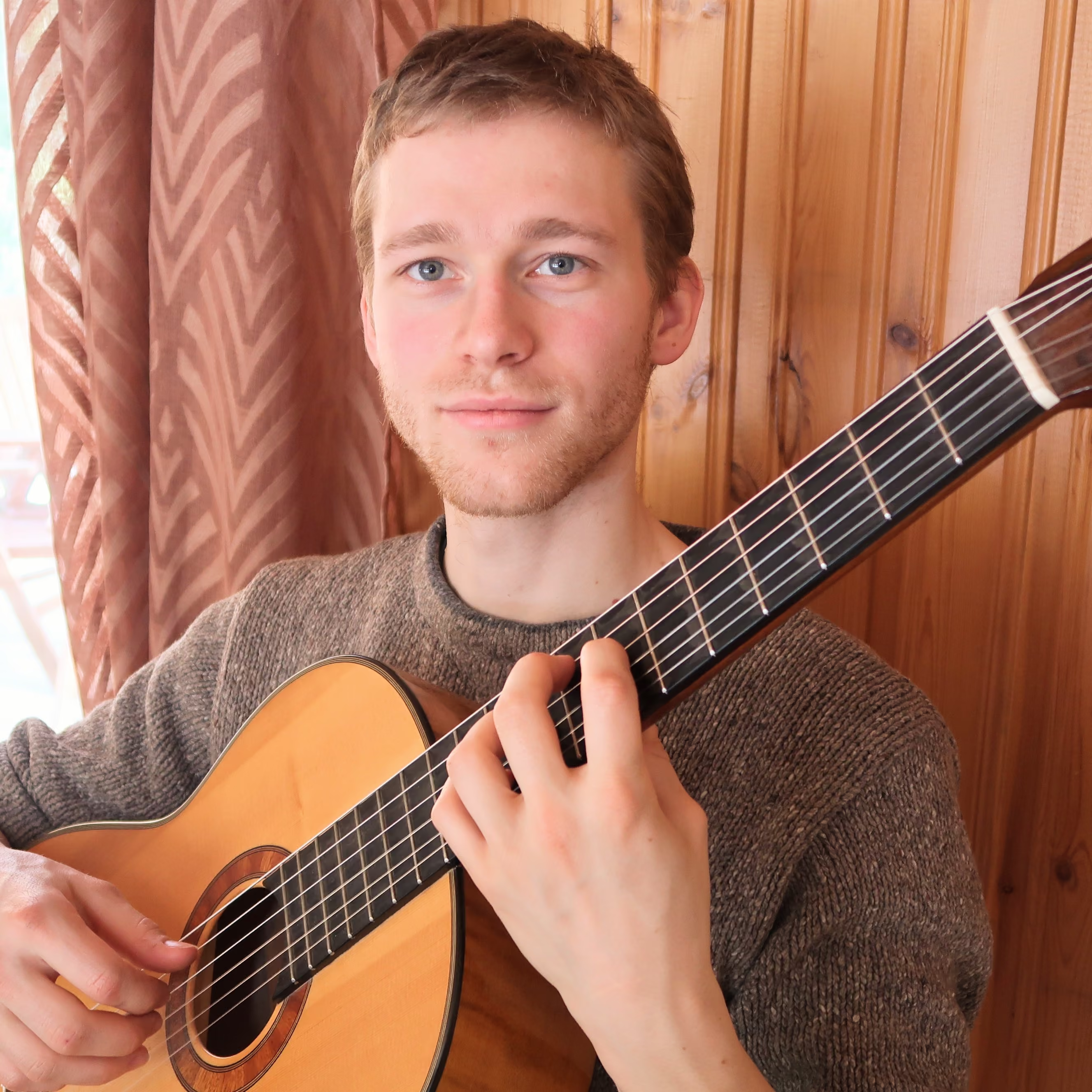
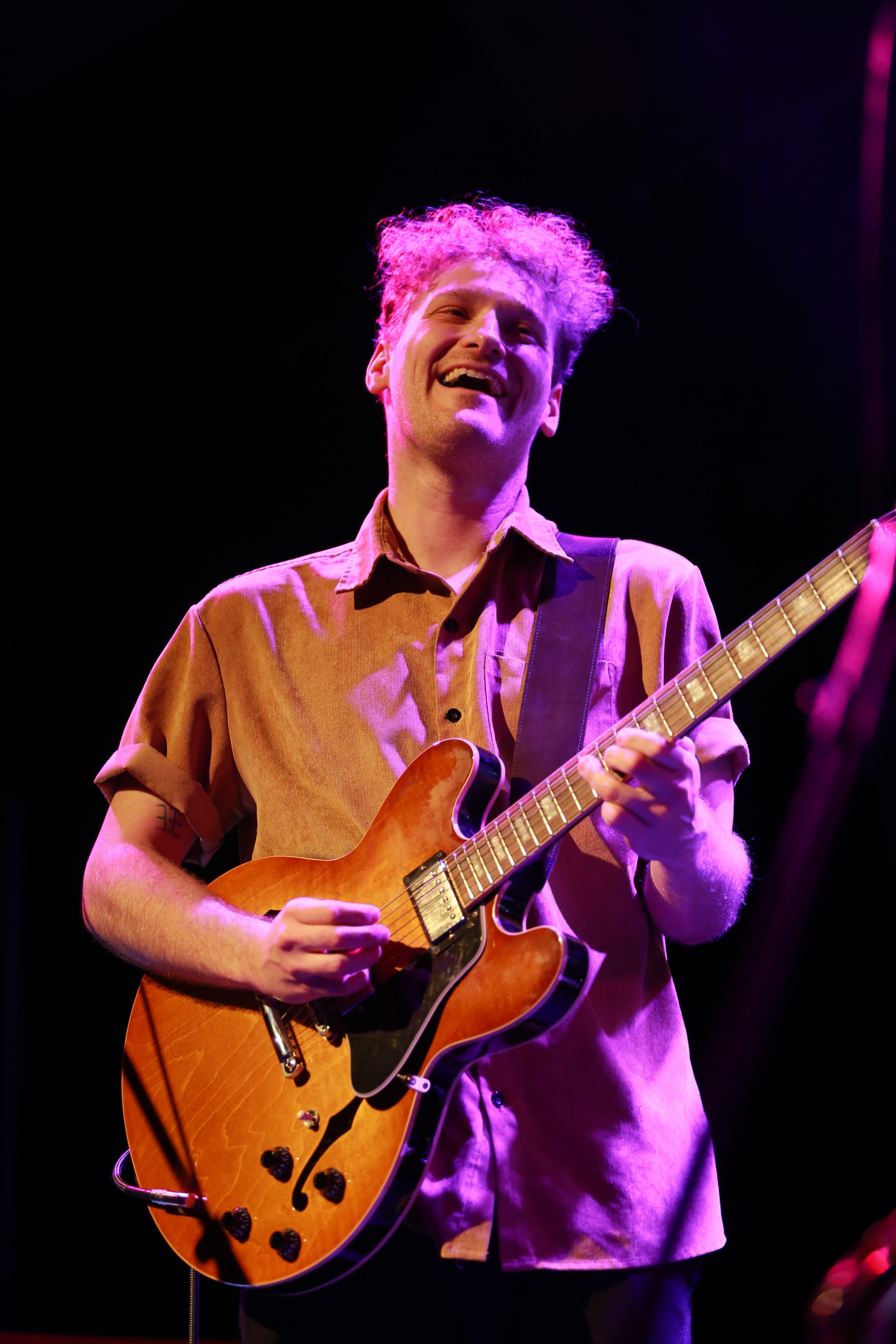
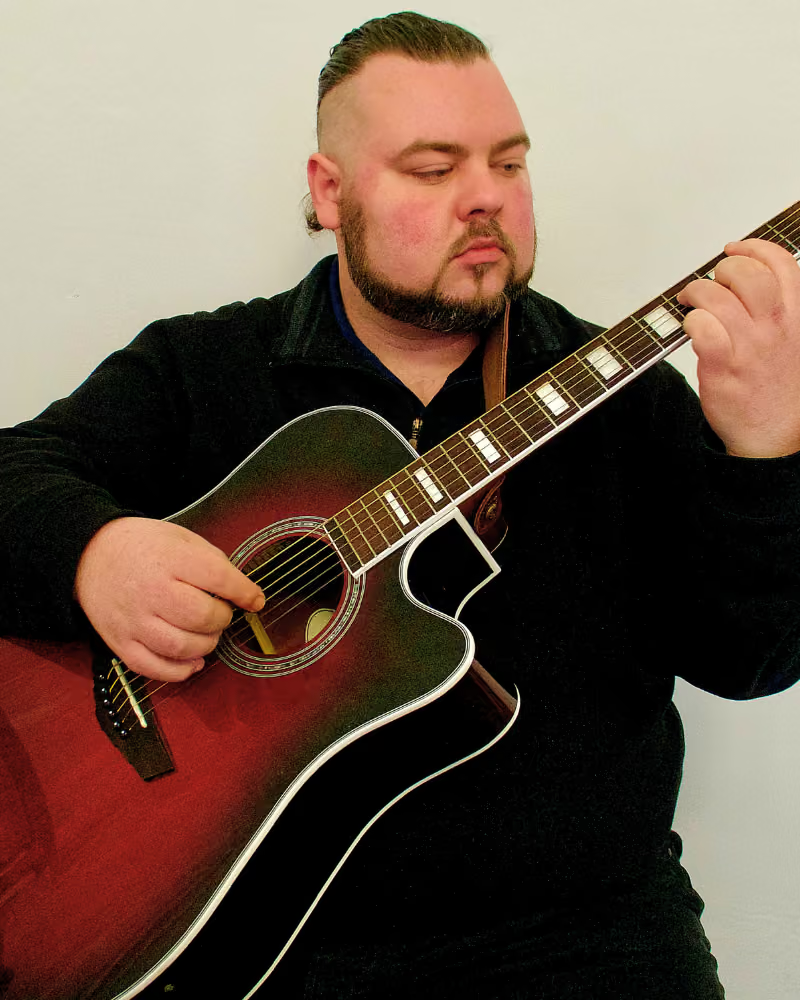


SIRIUS gives you one-to-one guitar lessons shaped around what you actually want to play, and everything from finding your teacher to payment runs through a single platform. Adding a lesson before a gig or moving a slot when the week gets busy takes a few clicks in the booking tool.
Learn the fundamentals of rhythm, chord theory and the fretboard, then apply them to the music you like, from rock and blues to pop, country, metal or fingerstyle. Acoustic or electric, your lessons always meet you at your level.
Alongside your lessons you get access to a digital Workspace built to make practice more efficient. In the SIRIUS Cloud you find the tabs, chord charts and targeted exercises your teacher assigns, all in one place. Lessons can be summarized automatically, and recordings let you go back to the moment a riff finally clicked.
You can also join monthly group sessions to play alongside other students, swap songs and pick up feedback, so you benefit from one-to-one coaching and from a community of players at the same time.

More hours = a better price per hour. Every plan: 45-min one-on-one lessons with vetted teachers.
Perfect to get started.
/hour
/hour
2 hours / month
$80.10 / month
$89.00 / month
with a 6-month membership
with a 3-month membership
↓ You save $53.40 with a 6-month plan
For lasting progress.
/hour
/hour
3 hours / month
$98.10 / month
$109.00 / month
with a 6-month membership
with a 3-month membership
↓ You save $65.40 with a 6-month plan
Faster progress, more practice.
/hour
/hour
4 hours / month
$116.10 / month
$129.00 / month
with a 6-month membership
with a 3-month membership
↓ You save $77.40 with a 6-month plan
All prices incl. VAT · Pause anytime
Many music students all over the world already trust SIRIUS.
“I've always played the same guitar chords and got much further into songwriting thanks to guitar lessons with SIRIUS”
.avif)
Louisa
guitar student
“Lisa always had to walk alone to her guitar teacher. Online guitar lessons are much more convenient.. ”
.avif)
Doro
Mother of a guitar student
“I finally really learned to play metal guitar with Robert. Power chords are just nice:)”
.avif)
steve
guitar student
“Learning guitar online quickly became boring without a teacher. Guitar lessons are super fun with Sirius.. ”
.avif)
Annika
Singing student
“I first had guitar lessons and have now started electric guitar lessons. It's great that you can easily switch... ”
.avif)
amir
Singing student
Gibt es bereits Vorerfahrungen?
Do you have any experience?
Treat this as a rough picture of the local private market and not a SIRIUS quote: independent guitar teachers around Seattle commonly sit near $40 to $55 for a thirty-minute slot and somewhere around $65 to $110 an hour, with long-established and studio-level players at the top of that range. Confirm the number with whoever you hire, because experience, session length and travel all move it. At SIRIUS your own rate is shown before you book, your opening session is a free trial, and no long-term contract attaches to it.
Usually yes, and you can make it certain. An unplugged electric is quieter than a conversation, so plenty of city practice happens with no amplifier switched on at all. If you want the amp, most small models have a headphone output, and a modeling amp or an audio interface into headphones gives you full volume in your ears and near silence in the room. Acoustics carry further but are rarely a problem before ten at night, and a felt pick or a cloth woven through the strings near the bridge takes the edge off. Your teacher can also steer a session toward the quiet techniques when the timing is awkward.
Very likely. Instruments survive storage better than people assume, and what feels wrong is usually the adjustment rather than the guitar, since neck relief and string height drift with time and humidity. New strings, a truss rod tweak and correctly set action can transform an old instrument for a fraction of the price of a new one. A shop with a real workbench, Emerald City Guitars in Pioneer Square being the obvious Seattle example, will tell you within minutes whether the neck is straight and what it needs. Bring the guitar to your trial lesson and your teacher will spot the obvious faults on camera.
It does, and the camera often shows more than a chair beside you would. Your teacher watches the fretting hand and the picking hand in close-up, notices a collapsing wrist or a thumb riding too high over the neck, and can play the same two bars back at half speed until you have them. Because location stops mattering, you are matched on teaching style and musical background instead of on which Seattle neighborhood somebody happens to live in, and any session can be recorded and replayed later in the week. One free session is enough to tell whether the format suits you.
Not for the early ones. An electric played unplugged is perfectly audible in a quiet room and carries you through chord shapes, changes, picking technique and scale work, which is most of what the first weeks consist of. The amp starts to matter once tone becomes part of the lesson, when you are bending notes, muting with the palm and hearing how gain reshapes your attack, and a small practice amp with a headphone socket covers that for very little outlay. Your teacher can advise on what fits the music you are aiming at before you spend anything. Note that SIRIUS does not rent out guitars or amps, so the instrument needs to be yours.
Gibt es bereits Vorerfahrungen?
Jimi Hendrix's father bought him his first electric guitar at Myers Music in Seattle in 1959: a white, single-pickup Supro Ozark that cost eighty-nine dollars. Hendrix was left-handed and the guitar was not, so he turned it over and restrung it. Seattle is known worldwide for one very loud decade, but what matters to a beginner is the plumbing underneath the legend: shops with a bench in the back, rooms that still book bands, and a weeknight where anybody can plug in.
Begin with the bench: a badly adjusted instrument stops more beginners than a shortage of talent. Emerald City Guitars has stood at 83 S. Washington Street in Pioneer Square since 1996, and behind the vintage stock the shop handles string changes, setups, neck resets, refrets and electronics, open Monday through Saturday, ten to four. In Fremont, Dusty Strings at 3406 Fremont Avenue North does next-day restringing on guitars, banjos, mandolins and ukuleles and takes on pickup installations; call ahead about anything larger. The stages held on as well: the Tractor Tavern at 5213 Ballard Avenue NW has booked bands nightly for over twenty-five years, while the Crocodile, now at 2505 First Avenue a few blocks from where it began, has passed thirty years in Belltown.
The ship canal cuts the north end off from downtown, and the bridges over it open for boat traffic without consulting your calendar. A student in Delridge and a teacher in Ballard look close on a map and are nothing of the sort at six in the evening. That is the plain argument for taking guitar lessons in Seattle online: no drive, no parking hunt, no case on a crowded bus, and the session happens where your guitar already lives.
Early months belong to the fretting hand and the clock. Open chord shapes come first, then serious time on the join between them, since holding a chord and arriving at it on the beat are separate skills. Strumming follows: which beats carry the accent, and how the wrist keeps moving through the ones you mute. Then the neck opens up: barre shapes, movable scale patterns, thumb-and-finger independence for fingerstyle, alternate picking for speed you can steer, and slurs that let a phrase move rather than land one note at a time. Tab is the working currency for guitar parts, so you read it early, plus enough notation to talk to a piano player.
No instrument is the correct one to begin on; the right one plays music you actually want to make. Steel-string acoustics demand more of the fingertips early and give you something that works unplugged on a porch in Wallingford. Electrics sit easier under the hand and bring bends and vibrato within reach sooner, but they pull an amplifier into the lesson: what gain does to your attack, and how mercilessly a clean channel reports everything you have not fixed. Classical nylon strings are the third door: wide neck, no pick, lightest tension of the three.
Guitar lessons in Seattle only work if they survive contact with the week you actually have. Four things make that likely:
Practicing is easier with somewhere to take it. The Skylark Cafe at 3803 Delridge Way SW in West Seattle runs an open mic every Wednesday: sign-up at 7:30, ten minutes or three songs a player, first come first served, with the line forming around seven. Above it sit the booked rooms: Ballard Avenue for roots, folk and alt-country, Belltown for volume, both working stages rather than plaques on a wall.
Eight-year-olds with short attention and very specific song requests. Adults who stalled on the F chord twenty years ago and never did sell the thing. People who look at screens all day and want an object made of wood. Intermediate players circling the same three keys who need theory, or slide, or somebody to push them. No age closes the door and no starting point is too low.
A sensible first target is not a headline slot at the Crocodile. It is ten minutes and three songs on a Wednesday night in Delridge, played on a guitar that has had an honest setup at the Pioneer Square bench. One free session tells you how far off that is.
Bei SIRIUS kannst Du kostenlos eine Probestunde nehmen.
Die Anmeldung ist 100% kostenlos und unverbindlich.
Wir schicken Dir nach der Anmeldung Terminvorschläge für Deine gratis Probestunde.
Worauf wartest du noch?




.avif)