
.avif)


Do you have any experience?
We match you with the perfect vocal coach for your goals, so you can learn to sing conveniently online - singing lessons with no waiting time. Right after signing up you get a no-obligation trial-lesson slot via WhatsApp.
After your free trial lesson, discuss your goals and availability with your vocal coach and start learning to sing right away.
Book your singing lessons flexibly online. In the SIRIUS Workspace you get unlimited access to vocal exercises outside your lessons, so you can keep practicing at home with our tools.
Want to learn to sing and looking for a vocal coach in Lufkin, Texas? We work with SIRIUS-vetted vocal coaches. Based on your needs we match you with the perfect vocal coach - whether you are just starting to sing or looking for singing lessons for adults or kids. Want to work on your intonation, improve your head voice or explore breath training? Sign up for our free trial lesson and get a session proposal with your perfect vocal coach.
Our experienced vocal coaches help you unlock your full potential. Our technology, built for online singing lessons, guarantees excellent sound quality and lets you learn to sing from anywhere - with no extra software or download.


.avif)

.avif)






SIRIUS gives you personal singing lessons tailored to your needs - from finding a coach to payment, everything runs smoothly through our platform. Whether you want to add lessons or reschedule, it all works effortlessly online through our booking tool. You can even rent a keyboard to accompany yourself while you sing.
Learn the fundamentals of music theory, expand your vocal range and develop your sense of intonation - whether you want to sing pop, jazz, opera, rock or metal. These voice lessons and vocal lessons always meet you at your level.
SIRIUS gives you not only professional singing lessons but exclusive access to a digital Workspace that makes learning to sing more efficient and structured. In the SIRIUS Cloud you find all key materials and targeted vocal exercises from your vocal coach - available anytime in one place. Lessons can be summarized automatically, and you can access recordings of your sessions to track progress and work on your vocal technique.
Alongside one-on-one lessons you can join monthly group sessions to connect with other singers, try new vocal exercises and get valuable feedback - so you benefit from individual coaching and the energy of the community.

More hours = a better price per hour. Every plan: 45-min one-on-one lessons with vetted teachers.
Perfect to get started.
/hour
/hour
2 hours / month
$80.10 / month
$89.00 / month
with a 6-month membership
with a 3-month membership
↓ You save $53.40 with a 6-month plan
For lasting progress.
/hour
/hour
3 hours / month
$98.10 / month
$109.00 / month
with a 6-month membership
with a 3-month membership
↓ You save $65.40 with a 6-month plan
Faster progress, more practice.
/hour
/hour
4 hours / month
$116.10 / month
$129.00 / month
with a 6-month membership
with a 3-month membership
↓ You save $77.40 with a 6-month plan
All prices incl. VAT · Pause anytime
Do you have any experience?
Many music students worldwide already trust SIRIUS.
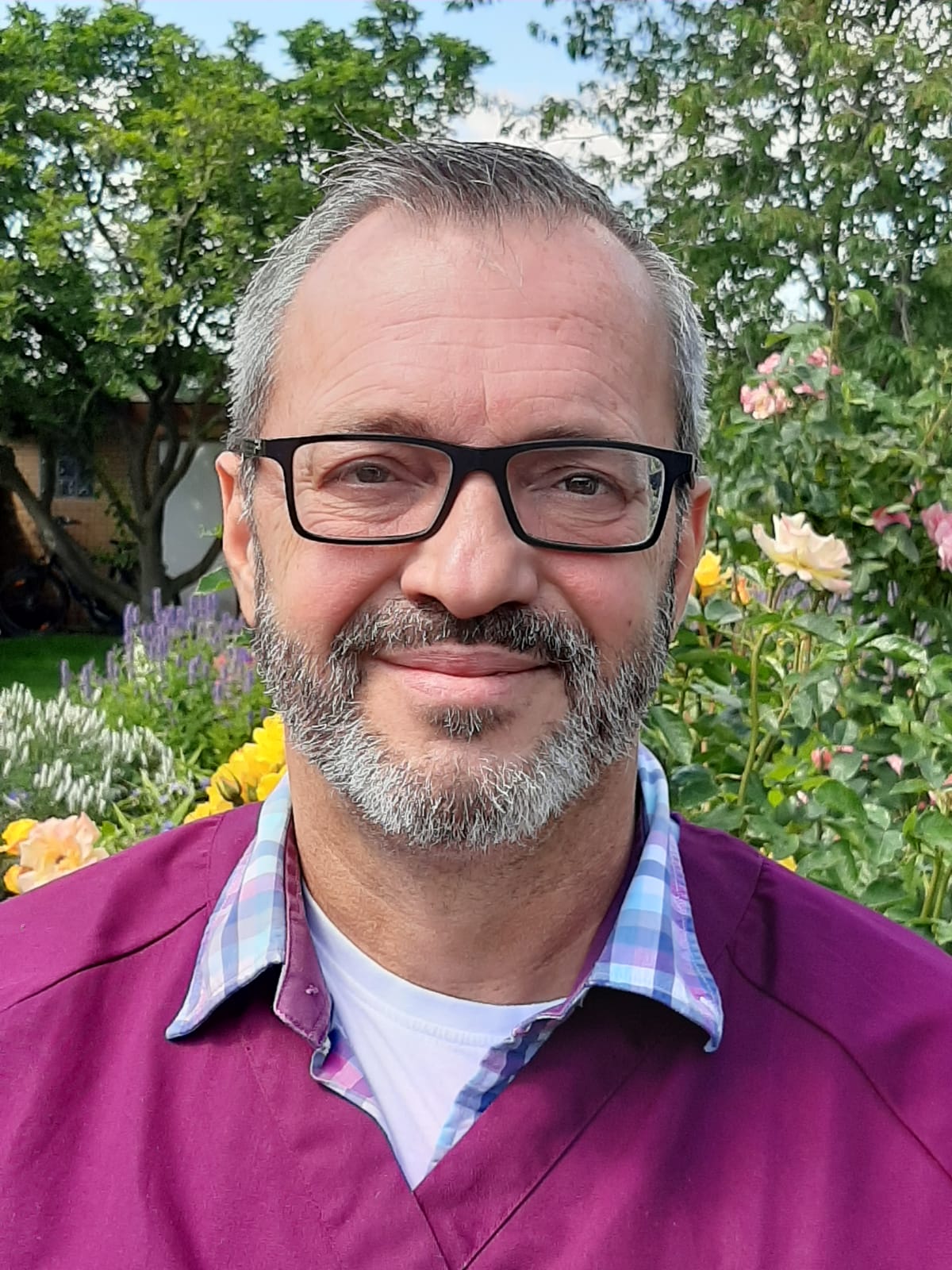
“Maya is very friendly and competent. The singing lessons are great! ”
.avif)
Lily
Singing student
“I've been studying singing with Jessica for 8 months now and I'm still having fun:)”
.avif)
Maria
Singing student
“Self-learning videos for learning to sing were not my thing. But since I discovered singing lessons with Lena about Sirius, I've been fully motivated.”
.avif)
Georgina
Singing student
“I'm taking singing lessons for the first time and I just love Sirius. I've received a lot of valuable tips from Habib. I really recommend it to you guys.”

Lucas
Singing student
“Lena not only knows about singing lessons, but also makes the lesson a real experience. It is always my highlight of the week.”
.avif)
Carl
Singing student
<p>No Lufkin studio publishes a rate for voice lessons that we could verify. The college charges a fee for applied music without printing the amount, and national booking sites quote figures that belong to the platform rather than to any teacher here. Our own number is easier to state. Lessons start at $29, and no charge at all attaches to the trial that comes first.</p>
<p>The catalog answer is that the chorale is open to all students, which is true and also incomplete. Being let into a room and being taught in it are different things. The applied voice course names its skills as posture, breathing, tone production and placement, and each of those is learned rather than inherited. If you can speak and hear the difference between two notes, the raw material is there; the rest is a series of ordinary corrections made in order.</p>
<p>Around seven is a reasonable start for a child, in short lessons built on songs rather than drills. It is worth noticing how the institutions nearby draw their lines: the preparatory division in Nacogdoches takes children into its chorus from second grade, starts strings at seven and guitar at nine, but will not begin voice until fourteen. It does not mean a younger child cannot be taught safely, and at the other end of life nothing rules anybody out.</p>
<p>The college gives a useful measure by dividing sight singing and ear training into four courses across four semesters. Reading is genuinely the long one. The rest moves faster. Breath support usually changes within five or six weeks, since what is being replaced is a habit. Pitch accuracy tends to settle by the third month once you are shown what to listen for. Tone and placement keep developing for years.</p>
<p>They fit this situation particularly well. What is scarce in Lufkin is undivided attention on one voice, and that is precisely what a video lesson delivers: no section to blend into, no piece with a concert date pulling the hour away. Your sound arrives clearly, the session is recorded, and pitch can be displayed against the target note while you hold it. For placement and tone, being able to replay a phrase from six weeks ago beats anybody's memory of how it went.</p>
Do you have any experience?
Nearby cities
More cities in Texas
Singing lessons by state
The Angelina College catalog lists MUEN 1141 Chorale as open to all students, with credit resting on attendance at all called rehearsals and all public performances. On the same page, the A.C. Ringers handbell ensemble is open to students by audition. And the applied music section says that nonmusic majors may take applied lessons as an elective by audition and consent of instructor. Singing alongside everybody else is the easy door here. Singing alone is the conditional one.
Because the door that is harder to open here happens to be the one that teaches you about your own voice. A chorale rehearsal works on the piece; that is its job and the catalog says so plainly. The applied voice course is where the catalog puts posture, breathing, tone production and placement, along with diction in English, Italian, German and French. Those are the things a singer actually wants, and reaching them locally means clearing an audition first and persuading an instructor second.
The timing of auditions here is worth a look. Four members of the AC choir qualified for the Texas two-year college All-State choir in San Antonio in February 2026, and the notice records how: those performers auditioned in November. So auditions do exist in Lufkin. For the chorale, a hearing follows admission rather than guarding it, and nobody at that stage is telling you what your voice can do.
Take the college's own list as the standard, since it is written down. Posture that lets the ribs stay open. Breath spent evenly instead of dumped in the first bar. Tone production, meaning the difference between pushing and letting a note carry. Placement, which is where the sound sits and why one vowel rings while the next goes dull. Alongside those, the catalog runs sight singing and ear training as four separate courses over four semesters, which tells you how long reading really takes.
No enrollment, no audition, no instructor's consent to obtain. The catalog's own shape of study, an hour a week with one teacher, is exactly the arrangement on offer here, minus the semester it is bolted to. You keep the same teacher rather than whoever is free, the repertoire follows whatever you are actually trying to sing, and lessons begin in the week you choose.
Placement and tone production are the two hardest things to learn from words alone, because what a singer hears inside the skull is not what leaves the mouth. A recording settles that argument, and every lesson leaves one behind. Your pitch can be drawn beside the intended note as you hold it, so a flat top note stops being a matter of anyone's opinion. Over a year those recordings become a record of how far the voice has moved.
The Pines Theater at 113 S First St opened in September 1925 and reached a hundred years in September 2025; the archivist's account of opening night mentions speeches from politicians and community leaders and a soloist who came and gave a concert. The city bought the building in 2007 and it reopened in 2012, and it has carried a National Register listing since 1988. It seats 452 today. The Temple Theater stands on the Angelina College campus at 3500 S First St, seats 898, and is not available for public rental, so those two houses stand on the same street, one at number 113 and one at 3500. The Angelina Arts Alliance has been bringing performers here since 2001 and built a season of 17 performances across three series. The Texas State Forest Festival, now in its 42nd year, runs September 17 to 20 at the George H. Henderson Jr. Expo Center, with music on the Swingin' Axe stage and gate admission of $8.
The same asymmetry shows up outside the college. First Missionary Baptist Church on Scarborough Street lists five choirs by name, among them the Mass Choir, the Male Chorus and the Mission Chorus, and lists no individual instruction. Collins Chapel CME on Rowe Street lists its choir rehearsal for 7:00 p.m. on Wednesdays and has a minister of music. Twenty miles north in Nacogdoches, the SFA preparatory division takes children into its chorus from second grade but does not accept a voice student until fourteen. A lesson closes that gap at any age.
The Brazos Transit District runs its Lufkin service from 5 a.m. to 7 p.m., and its two city routes are loops rather than out-and-back lines, both finishing at Jennings Station. The Blue Route reaches Angelina College thirty-eight minutes past the hour. A single ride is $1.00, a day pass $3.50 and a month $45.00. If your singing lives on somebody else's campus, that loop is part of the commitment. A lesson at home is not on any route and does not need a fare.
Nothing is billed for the opening hour, which exists to answer the question these doors never put to you. Sing something you like. Hold a note steady while its pitch is drawn next to it. Read a short line, or say that you cannot read yet. What comes back is a description of your range, where the breath gives out, whether placement or pitch is the weaker of the two, and what to work on first. Nothing is enrolled and nothing is charged.
Lufkin will let almost anybody into a choir and asks a great deal of anybody who wants an hour on their own. That is an unusual order to put things in, and it leaves the beginner in an odd spot: welcome in the room, unattended in it. An hour a week with one teacher is the missing half, and it does not require a catalog, a semester or anyone's consent.



.avif)
.avif)
