
.avif)


Do you have any experience?
We match you with the perfect vocal coach for your goals, so you can learn to sing conveniently online - singing lessons with no waiting time. Right after signing up you get a no-obligation trial-lesson slot via WhatsApp.
After your free trial lesson, discuss your goals and availability with your vocal coach and start learning to sing right away.
Book your singing lessons flexibly online. In the SIRIUS Workspace you get unlimited access to vocal exercises outside your lessons, so you can keep practicing at home with our tools.
Want to learn to sing and looking for a vocal coach in Goldsboro, North Carolina? We work with SIRIUS-vetted vocal coaches. Based on your needs we match you with the perfect vocal coach - whether you are just starting to sing or looking for singing lessons for adults or kids. Want to work on your intonation, improve your head voice or explore breath training? Sign up for our free trial lesson and get a session proposal with your perfect vocal coach.
Our experienced vocal coaches help you unlock your full potential. Our technology, built for online singing lessons, guarantees excellent sound quality and lets you learn to sing from anywhere - with no extra software or download.











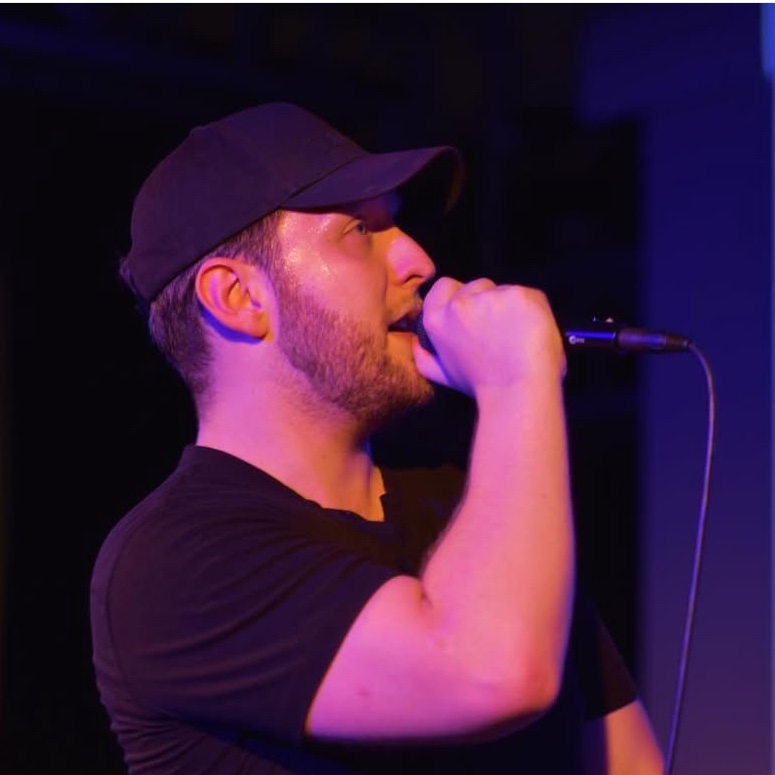


SIRIUS gives you personal singing lessons tailored to your needs - from finding a coach to payment, everything runs smoothly through our platform. Whether you want to add lessons or reschedule, it all works effortlessly online through our booking tool. You can even rent a keyboard to accompany yourself while you sing.
Learn the fundamentals of music theory, expand your vocal range and develop your sense of intonation - whether you want to sing pop, jazz, opera, rock or metal. These voice lessons and vocal lessons always meet you at your level.
SIRIUS gives you not only professional singing lessons but exclusive access to a digital Workspace that makes learning to sing more efficient and structured. In the SIRIUS Cloud you find all key materials and targeted vocal exercises from your vocal coach - available anytime in one place. Lessons can be summarized automatically, and you can access recordings of your sessions to track progress and work on your vocal technique.
Alongside one-on-one lessons you can join monthly group sessions to connect with other singers, try new vocal exercises and get valuable feedback - so you benefit from individual coaching and the energy of the community.

More hours = a better price per hour. Every plan: 45-min one-on-one lessons with vetted teachers.
Perfect to get started.
/hour
/hour
2 hours / month
$80.10 / month
$89.00 / month
with a 6-month membership
with a 3-month membership
↓ You save $53.40 with a 6-month plan
For lasting progress.
/hour
/hour
3 hours / month
$98.10 / month
$109.00 / month
with a 6-month membership
with a 3-month membership
↓ You save $65.40 with a 6-month plan
Faster progress, more practice.
/hour
/hour
4 hours / month
$116.10 / month
$129.00 / month
with a 6-month membership
with a 3-month membership
↓ You save $77.40 with a 6-month plan
All prices incl. VAT · Pause anytime
Do you have any experience?
Many music students worldwide already trust SIRIUS.
“Maya is very friendly and competent. The singing lessons are great! ”
.avif)
Lily
Singing student
“I've been studying singing with Jessica for 8 months now and I'm still having fun:)”
.avif)
Maria
Singing student
“Self-learning videos for learning to sing were not my thing. But since I discovered singing lessons with Lena about Sirius, I've been fully motivated.”
.avif)
Georgina
Singing student
“I'm taking singing lessons for the first time and I just love Sirius. I've received a lot of valuable tips from Habib. I really recommend it to you guys.”

Lucas
Singing student
“Lena not only knows about singing lessons, but also makes the lesson a real experience. It is always my highlight of the week.”
.avif)
Carl
Singing student
<p>The college bills by the credit hour - "$76.00 per semester hour" in state - which is how institutions price a seat in a room. We price an hour of somebody's attention instead, which is a different thing to buy and suits people who are not enrolled in anything. No charge attaches to your first lesson; after that the price starts at $29. There is no semester to purchase, no registration, and nothing owed once you stop.</p>
<p>The question is worth less than it looks, because it reports a result and says nothing about the cause. Actual tone deafness is vanishingly rare. Untrained voices are breathy, or they run out, or they come apart above a certain note, and every one of those has a technical cause and a technical answer. The reason it feels like a permanent condition is that nobody has ever separated the symptom from the cause out loud in front of you. That separation is what the first hour is for.</p>
<p>Age decides which door, not whether there is one. Locally the doors are grade-shaped: Curtain Warmers covers grades one to three, Overture Singers grades four to seven, and the county choral festival has drawn students from twenty-one schools in a single year. Those brackets exist for scheduling, not for physiology. A lesson has no bracket - which matters most for the people the brackets never covered, meaning adults, who make up the bulk of anybody's teaching practice and none of the local listings.</p>
<p>The honest answer runs backwards, from the thing you are aiming to do rather than from a date. Holding your part in a Wednesday rehearsal without guessing is a matter of weeks. A solo in front of a congregation is more like a season. The voice you can rely on during a bad day goes on improving for years, with no finishing line to cross. That is why nobody sensible gives a single figure: the question contains at least three different questions, and they have three different answers.</p>
<p>An air base, a community college and a city-owned theater all sit within these city limits, and none of them is nearer to you than the table you are reading this at. That is the arithmetic of an online lesson, and in a county this size it is not a trivial one. On the teaching itself: the work was always listening rather than sitting nearby, and a coach on a connection hears your voice more closely than anyone standing in a choir room ever has. The college's catalog warns students taking its classes on the base that "A new BACKGROUND SECURITY CHECK (BSC) FORM must be submitted each term". A lesson asks that you switch on a screen.</p>
Do you have any experience?
The Wayne Community College catalog puts two things side by side without appearing to notice. MUS 131 Chorus I carries "Prerequisite None" and "Offered F,Sp" - every fall, every spring, no experience asked. MUS 151 Class Music I, the one course in the catalog that teaches "skills and techniques of the particular instrument or voice for those with little or no previous experience", carries a different line: "Offered On Demand". In Goldsboro, North Carolina, singing together is a scheduled course with four numbered levels. Learning to sing is a request you have to make and then wait on.
Because the scheduled things and the taught things are not the same things. First Baptist Church on South John Street prints four ensembles with days and times against them - Sanctuary Choir at 7:00 p.m. each Wednesday until 8:00 and again Sunday mornings at 10:30, Sanctuary Bells Wednesdays from 5:00 to 5:45 p.m., Senior Bells Tuesdays at 11 a.m., the Early Worship Team Thursday evenings at 6:00 - and encourages readers to "join our Early Worship Team or any of our vocal and bell choirs". That is a generous, genuinely open calendar. What sits on it is rehearsal time, which assumes a voice rather than building one.
"Prerequisite None" means Chorus I asks for no prior coursework, and it is also why the course cannot be calibrated to you. A class of mixed voices has to pitch its instruction at the room, which is the correct decision for a chorus and leaves each singer roughly where they arrived. Calibration is what an hour of private teaching is for: the material is chosen after somebody has heard you, not before, and it changes the week your voice changes.
One credit and two contact hours: worth knowing what a group course buys and what it does not. Breath comes first here, because everything downstream is paid for out of it. Tone is second, and it is what a congregation actually notices. Stamina third: a service plus a rehearsal in one week is more singing than most untrained voices have ever done. Fourth, the handover where the voice changes weight, which no group setting will fix for you. Tuning is fifth and, against expectation, the easiest to move. Reading music can run alongside any of it and need not come first.
Whether this is worth anything to you depends on which of the two doors above you were reaching for. If you want to be in a room with other singers, the church prints four ways in and the college prints four levels. Should the aim instead be work on your own voice, that is what SIRIUS is: one coach, one singer, an hour on video, booked when you can take it and moved when you cannot. The coach is selected around the music you genuinely sing. Nothing is charged for your opening lesson, and afterward lessons begin at $29.
Sound has to arrive, and then it has to stay. Arriving is the harder half: most connections are tuned for talk, which discards the quiet detail where a note begins - the very thing being listened for. Ours keeps it. Staying is the half people underrate, and it is precisely where a lesson outperforms a rehearsal. Nothing said to you across a crowded choir room survives the drive home, whereas the sentence that finally made the top of your range behave is still on the recording on Saturday morning.
The North Carolina Arts Council runs a Goldsboro Area region within its African American Music Trails of Eastern North Carolina, built on interviews with more than 90 musicians and covering jazz, rhythm and blues, funk, gospel, hymns, blues, rap, marching bands and beach music. First African Baptist Church at 803 Harris Street is on that trail; the General Association for Colored Baptists of North Carolina came out of the congregation in October 1867. Dillard High School, the town's black high school, was known for its "comprehensive curriculum, winning athletic teams, bands, choral music, debating and stellar drama productions", and when Dillard/Goldsboro Alumni & Friends marked seventy years in 2025 an alumni choir sang. Eleanor Harris taught music and led choirs at Dillard and at Goldsboro High. The gospel group the Anointed Jackson Sisters come from here, and the Cherry Hospital Museum on Stevens Mill Road displays photographs of the hospital band.
StageStruck on West Chestnut Street, running since 1991, names its youngest singing groups by grade: Curtain Warmers for grades one through three, Overture Singers for grades four through seven. The college numbers its chorus levels 131, 132, 231, 232. Between the last named grade and the first course number the published listings thin out, and past MUS 232 the college's own ladder stops. Those numbers organize institutions, not voices. An hour is organized around one person, so the only number that matters in it is how long you have been singing - and even that only tells the coach where to start.
The published week in this town is dense and rigid: Tuesday morning bells, Wednesday evening choir at 7:00, Thursday evening worship team, Sunday morning at 10:30, and a college term that begins when the term begins. All of them are standing commitments at fixed addresses, and one awkward evening removes a week. An online lesson holds neither an address nor a fixed evening. It settles into whatever space the week offers, and rearranges itself when the week does.
"On demand" means somebody has to do the demanding. The catalog line carries a quiet catch: the course exists and waits until enough people ask at once - sensible enough for a college schedule, useless for an instrument you happen to be carrying around inside you. A lesson inverts it. The demand is one person, and it is met this week rather than next term.
Goldsboro sits on a state music trail, sent gospel singers out into the world, and lists four numbered levels of chorus in a public catalog. It schedules singing together and defers being taught. Those are different things, and only one of them changes what happens when you open your mouth - which is why the part of this that is not on demand, and never has been, is the hour with your name on it.



.avif)
.avif)
