
.avif)


Do you have any experience?
We match you with the perfect vocal coach for your goals, so you can learn to sing conveniently online - singing lessons with no waiting time. Right after signing up you get a no-obligation trial-lesson slot via WhatsApp.
After your free trial lesson, discuss your goals and availability with your vocal coach and start learning to sing right away.
Book your singing lessons flexibly online. In the SIRIUS Workspace you get unlimited access to vocal exercises outside your lessons, so you can keep practicing at home with our tools.
Want to learn to sing and looking for a vocal coach in Durango, Colorado? We work with SIRIUS-vetted vocal coaches. Based on your needs we match you with the perfect vocal coach - whether you are just starting to sing or looking for singing lessons for adults or kids. Want to work on your intonation, improve your head voice or explore breath training? Sign up for our free trial lesson and get a session proposal with your perfect vocal coach.
Our experienced vocal coaches help you unlock your full potential. Our technology, built for online singing lessons, guarantees excellent sound quality and lets you learn to sing from anywhere - with no extra software or download.

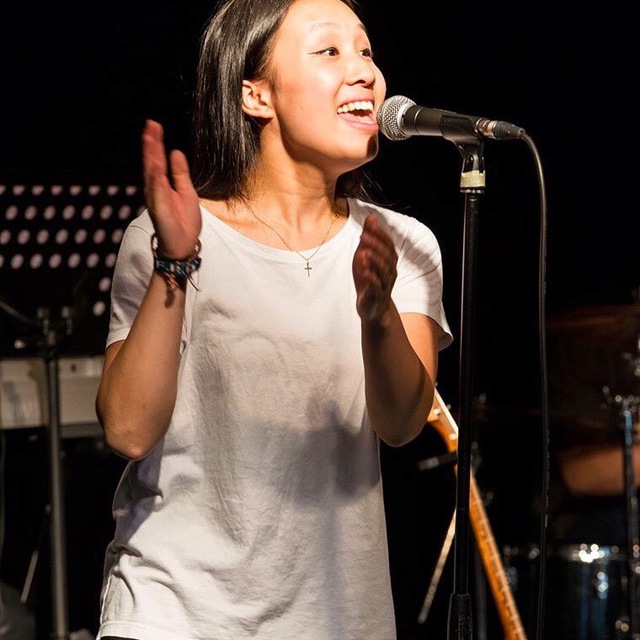















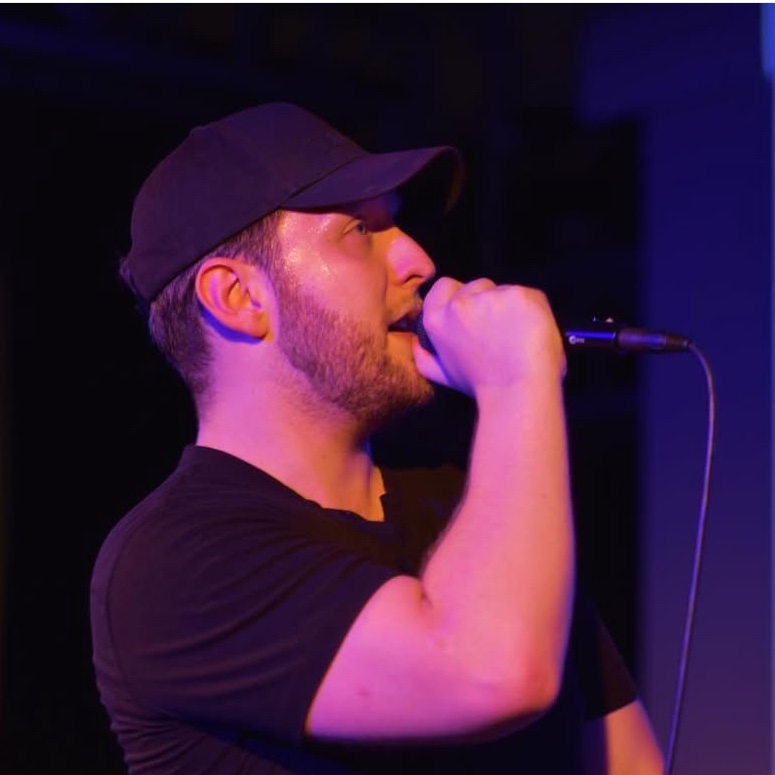


SIRIUS gives you personal singing lessons tailored to your needs - from finding a coach to payment, everything runs smoothly through our platform. Whether you want to add lessons or reschedule, it all works effortlessly online through our booking tool. You can even rent a keyboard to accompany yourself while you sing.
Learn the fundamentals of music theory, expand your vocal range and develop your sense of intonation - whether you want to sing pop, jazz, opera, rock or metal. These voice lessons and vocal lessons always meet you at your level.
SIRIUS gives you not only professional singing lessons but exclusive access to a digital Workspace that makes learning to sing more efficient and structured. In the SIRIUS Cloud you find all key materials and targeted vocal exercises from your vocal coach - available anytime in one place. Lessons can be summarized automatically, and you can access recordings of your sessions to track progress and work on your vocal technique.
Alongside one-on-one lessons you can join monthly group sessions to connect with other singers, try new vocal exercises and get valuable feedback - so you benefit from individual coaching and the energy of the community.

More hours = a better price per hour. Every plan: 45-min one-on-one lessons with vetted teachers.
Perfect to get started.
/hour
/hour
2 hours / month
$80.10 / month
$89.00 / month
with a 6-month membership
with a 3-month membership
↓ You save $53.40 with a 6-month plan
For lasting progress.
/hour
/hour
3 hours / month
$98.10 / month
$109.00 / month
with a 6-month membership
with a 3-month membership
↓ You save $65.40 with a 6-month plan
Faster progress, more practice.
/hour
/hour
4 hours / month
$116.10 / month
$129.00 / month
with a 6-month membership
with a 3-month membership
↓ You save $77.40 with a 6-month plan
All prices incl. VAT · Pause anytime
Do you have any experience?
Many music students worldwide already trust SIRIUS.
“Maya is very friendly and competent. The singing lessons are great! ”
.avif)
Lily
Singing student
“I've been studying singing with Jessica for 8 months now and I'm still having fun:)”
.avif)
Maria
Singing student
“Self-learning videos for learning to sing were not my thing. But since I discovered singing lessons with Lena about Sirius, I've been fully motivated.”
.avif)
Georgina
Singing student
“I'm taking singing lessons for the first time and I just love Sirius. I've received a lot of valuable tips from Habib. I really recommend it to you guys.”

Lucas
Singing student
“Lena not only knows about singing lessons, but also makes the lesson a real experience. It is always my highlight of the week.”
.avif)
Carl
Singing student
"Twenty-nine dollars sounds low, so something must be waiting behind it." That suspicion is earned, because local pages here teach a reader to expect the unit to move: one transit amount here means a year in three places and something shorter in the fourth. Lessons here set out from $29, with the preceding hour unpriced. That unit is rationed to a single sentence and stays in it: sixty minutes, one coach, one week.
The Concert Choir at Fort Lewis College admits singers unheard; its Chamber Choir listens during the opening two days of term. One body, two doors, and neither door tests reading. That pair answers the worry. A singer who cannot follow a printed part walks through the wider door unimpeded, and a pitch that slides records a history of going unheard rather than a verdict on the instrument. An hour skims off the guesswork: you sing, somebody names what happened, and the two claims come apart.
Rehearsal length settles this better than a birthday does. The Durango Choral Society gives its youth choir forty-five minutes and its adult choir two hours and fifteen minutes, and both sit on a Tuesday evening. Forty-five minutes is about what a young singer can hold, and that capacity arrives somewhere around six or seven, before the voice itself does. In the other direction the measure stops applying: an hour veers back to sixty minutes for a beginner of seventy, who brings a settled breath to it.
How long a lesson lasts and how long the work takes are different measurements. A lesson runs sixty minutes and comes back weekly. A younger throat does better on a shorter slot. The work nests inside a longer frame. Three months will take a song from start to finish. The handover between registers beds down across a season. Breath that stays firm in a hostile room outlasts both, and keeps improving after they have arrived. That second span is drawn up beside the first and leaves its length alone.
Where the sound path carries the overtones, a video hour teaches what a room teaches. That is the piece we built. The Durango Public Library lends seven kinds of thing that are not books and embosses an exclusion onto the list; among the seven sits no hotspot and no laptop, so the link is yours to supply. Set the requirements next to the exemptions: a connection, a room that will take the volume, a device that holds still, against no drive across town and no keyboard at home.
Do you have any experience?
Five of the six Durango Transit routes print no hour. The trolley board reads TRANSIT CENTER :00 | :20 | :40, the Fort Lewis and Walmart boards read :00 | :30, and Mercy Hospital reads :08 | :38. A rider catching one of those at twenty-minute spacing needs two digits and no more. The line that runs once a day during the college academic year, the Fort Lewis Express, prints sixteen full clock times from 7:30 a.m. onward. The more often a thing happens here, the less of the clock gets written down.
Because the notice board tells you how often a thing comes back, and a voice has no board. A schedule thinning to three marks is readable at a glance to a rider who knows the route, and opaque to the one standing at it on a first morning. The singer who had to work out what two digits meant stays under that name until somebody writes the hour out. Singing runs the other way: the rehearsal is weekly and the change is slow, and what needs the full clock is the part that happens once. Twenty minutes of practice belongs on a minute mark; the hour that fixes what the practice got wrong belongs on an hour.
The Durango Choral Society runs four choirs and rehearses each of them on a Tuesday, and the clock that shortens as the service thickens shows up inside its own week: the adult choir sits for two hours and fifteen minutes, the children's chorale for an hour and a quarter, and the youth choir for forty-five minutes. A young voice is grouped with the length it can hold, and the coach whose time is printed in full sidelines no part of that hour for a room. Why should a beginner have to take a two-hour rehearsal to find out what fifteen focused minutes would tell them?
Durango High School lists seventeen music courses, and its four choirs form a four-step ladder, each choir carrying one credit across two terms while eleven of the remaining courses carry half a credit across one. SIRIUS is listed beside it with no rungs: breath measured against the phrase it has to cross, a register change you stop hearing as one, tuning that survives a hall, and score-reading sufficient for the part in hand. The ladder fixes your rung; the lesson shifts it, and the two run in opposite directions.
The box office of the Community Concert Hall keeps an inventory line of two rules: M-F, 12:00 pm - 5:00 pm on a working day, and one hour prior to show time on a performance day. Community Concert Hall is where the rule stops. Elsewhere the full clock the rare trip keeps has to be hunted down. An opening figure of $29 is where lessons begin; its trial hour goes unpriced, and the plan underwrites itself in writing that sits beneath the week rather than on top of it. Where, on a published page, does a singer find the hour that belongs to them alone?
The Durango Public Library lends seven kinds of thing that are not books, and the list carries an exclusion: bicycle locks stay in the building. Searched item by item across four of its own pages, the list holds no hotspot, no laptop, no recording device. DuranGO! runs the other rule from 5 p.m. until midnight: rides must be booked through the DuranGO! app, and the driver takes no cash. Both keep to that column. The lesson printed with a full clock time stores what the hour produced, so the recording, the exercise and the written note stand side by side in one workspace afterward, and the clock that shortens as the service thickens has no bearing on it.
Fort Lewis College takes singers into its Concert Choir without an audition and into its Chamber Choir by one held in the opening two days of the semester; eight further select ensembles admit by audition. The Durango Choral Society rehearses its children's chorale at St. Mark's Episcopal Church, whose own office is open Monday, Wednesday, Thursday and Friday and closed on the Tuesday those children sing there. Stillwater Music teaches private lessons across a range of instruments and prints COST: Varies in the place a figure belongs. The Durango Arts Center opens Tuesday to Saturday from 12:00 p.m. to 6:00 p.m.
Durango Transit reaches $30.00 by four separate routes: a year for a student, a year for a member of staff, a year for a veteran, and a month for an adult. One amount, two spans, four kinds of rider. What you are counts for more than how long you get. An hour printed to the full clock is booked as sixty minutes at seven years old and at seventy; what shifts is how much of it goes on singing. A schedule thinning to three marks tells a regular rider enough and leaves a newcomer guessing, and beginners stand where the newcomer stands.
Durango Transit charges $1.00 a trip and $10.00 for a weekly pass, so ten trips come to $10.00 and the pass starts paying from the eleventh. The coach whose time is printed in full is tallied as one figure whichever way the week falls: a departure given as two digits closes no door on a singer who books an hour and then moves it. Mornings before a shift, an evening after the 5:30 p.m. library close on a Friday, a Tuesday that turns into a Thursday. The restriction is that the hour exists; where it sits is yours.
The Fort Lewis Express runs once daily, Monday through Friday during the college academic year, and prints its whole time grid from 7:30 a.m. to 7:45 a.m., fifteen minutes end to end, with no return published. A first lesson set at a time printed in full works the same way: one hour, written out, with the return left to you. The singer who had to work out what two digits meant clears the line for a plainer shape of morning. Bring something your voice knows by heart, sing it once, and take away a plain account of what happened in it. Those hours separate cleanly from the rest of the week, and they keep doing it.
Under the column head of a transit board, twenty minutes is the unit and the hour is left out. Under the column head of a once-daily run, the hour is spelled and the minutes are counted. An hour printed to the full clock is shown beside both, and it fills neither column: sixty minutes, one voice, written out. Turn the rule around and it still holds, which is how you know it is a rule and not a habit: what happens rarely gets written out in full. Singing lessons happen weekly, and yours should still be written out in full.



.avif)
.avif)
