
.avif)


Do you have any experience?
We match you with the perfect vocal coach for your goals, so you can learn to sing conveniently online - singing lessons with no waiting time. Right after signing up you get a no-obligation trial-lesson slot via WhatsApp.
After your free trial lesson, discuss your goals and availability with your vocal coach and start learning to sing right away.
Book your singing lessons flexibly online. In the SIRIUS Workspace you get unlimited access to vocal exercises outside your lessons, so you can keep practicing at home with our tools.
Want to learn to sing and looking for a vocal coach in Hollister, California? We work with SIRIUS-vetted vocal coaches. Based on your needs we match you with the perfect vocal coach - whether you are just starting to sing or looking for singing lessons for adults or kids. Want to work on your intonation, improve your head voice or explore breath training? Sign up for our free trial lesson and get a session proposal with your perfect vocal coach.
Our experienced vocal coaches help you unlock your full potential. Our technology, built for online singing lessons, guarantees excellent sound quality and lets you learn to sing from anywhere - with no extra software or download.












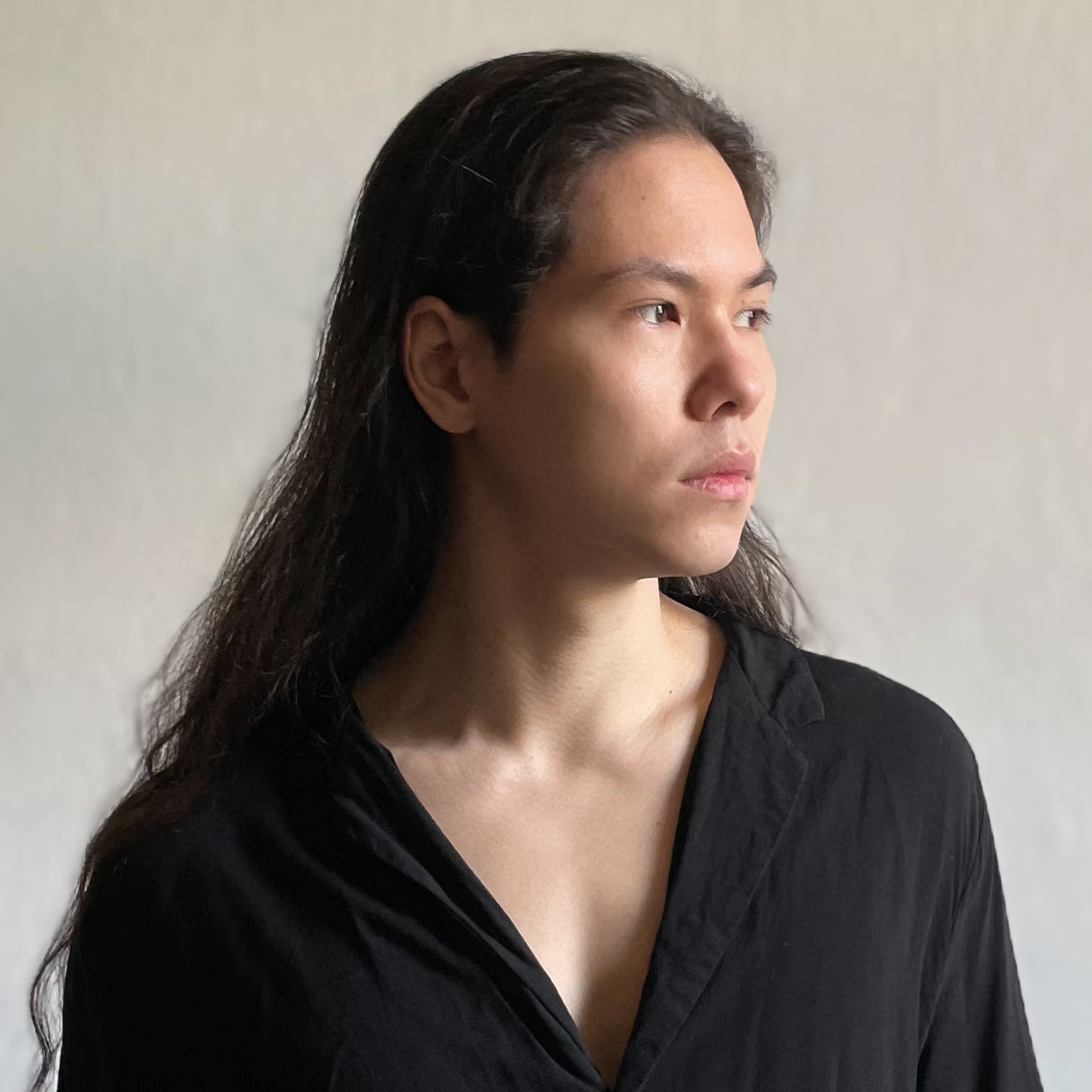


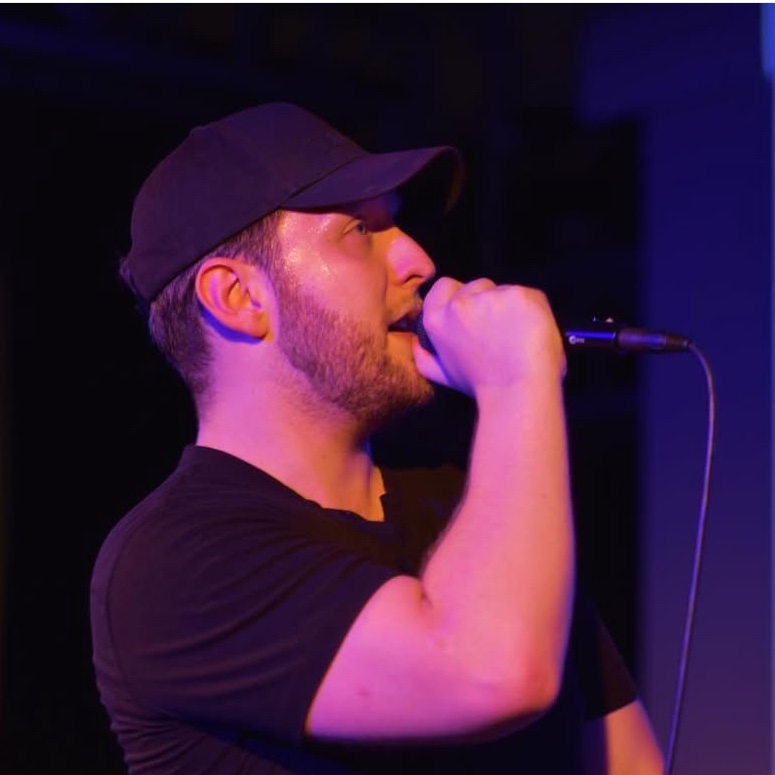


SIRIUS gives you personal singing lessons tailored to your needs - from finding a coach to payment, everything runs smoothly through our platform. Whether you want to add lessons or reschedule, it all works effortlessly online through our booking tool. You can even rent a keyboard to accompany yourself while you sing.
Learn the fundamentals of music theory, expand your vocal range and develop your sense of intonation - whether you want to sing pop, jazz, opera, rock or metal. These voice lessons and vocal lessons always meet you at your level.
SIRIUS gives you not only professional singing lessons but exclusive access to a digital Workspace that makes learning to sing more efficient and structured. In the SIRIUS Cloud you find all key materials and targeted vocal exercises from your vocal coach - available anytime in one place. Lessons can be summarized automatically, and you can access recordings of your sessions to track progress and work on your vocal technique.
Alongside one-on-one lessons you can join monthly group sessions to connect with other singers, try new vocal exercises and get valuable feedback - so you benefit from individual coaching and the energy of the community.

More hours = a better price per hour. Every plan: 45-min one-on-one lessons with vetted teachers.
Perfect to get started.
/hour
/hour
2 hours / month
$80.10 / month
$89.00 / month
with a 6-month membership
with a 3-month membership
↓ You save $53.40 with a 6-month plan
For lasting progress.
/hour
/hour
3 hours / month
$98.10 / month
$109.00 / month
with a 6-month membership
with a 3-month membership
↓ You save $65.40 with a 6-month plan
Faster progress, more practice.
/hour
/hour
4 hours / month
$116.10 / month
$129.00 / month
with a 6-month membership
with a 3-month membership
↓ You save $77.40 with a 6-month plan
All prices incl. VAT · Pause anytime
Do you have any experience?
Many music students worldwide already trust SIRIUS.
“Maya is very friendly and competent. The singing lessons are great! ”
.avif)
Lily
Singing student
“I've been studying singing with Jessica for 8 months now and I'm still having fun:)”
.avif)
Maria
Singing student
“Self-learning videos for learning to sing were not my thing. But since I discovered singing lessons with Lena about Sirius, I've been fully motivated.”
.avif)
Georgina
Singing student
“I'm taking singing lessons for the first time and I just love Sirius. I've received a lot of valuable tips from Habib. I really recommend it to you guys.”

Lucas
Singing student
“Lena not only knows about singing lessons, but also makes the lesson a real experience. It is always my highlight of the week.”
.avif)
Carl
Singing student
<p>The published figures around here run by the season and by the seat. The chorale asks $150 for adults and $75 for teenagers and folds voice instruction into that fee. A school musical charges $10 at the door, with a concession rate for students, seniors and younger children. The stage company charges its cast, though it publishes no figure. Ours runs by the hour: lessons begin at $29, and no money moves for the trial. Length and how often you come shift the number from there. Nothing has to be bought in advance.</p>
<p>Ask what somebody reporting "I can't sing" is actually describing, and it usually turns out to be a price, a room or a rule. The chorale answers one of those outright by holding no auditions at all and telling newcomers to come along and try it for a while. Nobody there is going to tell you whether you can sing, because nobody there is listening for it. The stage company's rules concern clothes, shoes and accompaniment tracks. Those rules judge clothing and accompaniment tracks. They were never meant to judge a voice. The sentence needs a room with one singer in it before it carries any weight.</p>
<p>Three published age rules run around here, and no two are shaped alike. The parish school choir is closed at both ends, grades five to eight, because a school choir has to be. The stage company set a window of 13 to 19 for one production. The chorale is conditional at the bottom and open above it: 13 to 15 with an adult alongside, 16 and over on their own. Lessons take the third shape and lower the bottom edge again. Around six a child is working on pitch and on liking it; in the middle teens the instrument itself is shifting, and the range wants regular checking. There is no season to wait for; any week does.</p>
<p>The chorale's own calendar is the fairest local measure. Its winter season starts in late August and performs in December; the spring one starts in late January and performs in April or May. Four months either way, and four months is roughly the distance over which a change becomes audible to somebody who is not you. The slowest thing inside that span is a habit, because a habit has to be unlearned before its replacement holds. Nobody can promise the four months will feel like enough.</p>
<p>Three things have to cross for an hour to work: your voice, the coach's ear, and the instruction that comes back. All three survive a connection intact, and that is why the format works. A room stays behind, and a room is what a lesson has least use for anyway: no acoustic to balance, no blending to do, no waiting through anybody else's phrase. The parts of singing that need a hall are the parts a choir does. The parts that need a listener are the parts an hour does.</p>
Do you have any experience?
Around Hollister the money moves a different way at each of three doors. The San Benito Oriana Chorale, which holds no auditions, asks $150 for a season and folds professional voice instruction into that fee, with no audition attached at all: "We do not do auditions -- just show up and try us out for a while." The San Benito Stage Company charges its cast for the right to be in the show, and membership buys a discount on that charge. At Hollister High School the singers pay nothing and the audience pays instead, $10 at the door and $7 for students, seniors and children up to twelve.
The chorale rehearses Monday evenings from 6:45 to around 9:00 p.m.; teens pay $75. The stage company published its audition rules for a youth production, and they read as a list of conditions: wear the clothes and shoes specified, bring your own karaoke accompaniment, nothing unaccompanied, nothing from the show itself. Its Alice in Wonderland Jr. put 37 young performers on the Granada stage on Fifth Street. Three doors, three answers to the same question about money.
The chorale's offer is real, and it is shared. Voice instruction inside a choral setting aims at the sound the group is making, across a Monday evening of two and a quarter hours. In 2022 the chorale was described as 44 singers, from children to seniors. Spread across one Monday evening, that leaves very little for any single throat. An hour has one.
Where the work starts depends on what you brought. Usually tuning, since that answers fastest and shows up first on a recording. Then tone, matched to the space you sing in. Then breath, enough to carry a line over an accompanist. Reading arrives when the music you want asks for it. Last of all comes the handover between registers. It is a habit, and habits take a season. The order is set in your first hour and revised whenever your voice gives reason.
The three doors turned round show the shape of this. At the chorale you pay and the instruction is folded in with everyone else's. At the stage company you pay for the right to perform. At the school you pay nothing and the seats pay. Here you pay for the hour and the hour holds nothing but you: one coach who learns the songs you brought and is there again next time, a written plan for what follows, and dates that bend around a difficult week. No money moves for the trial hour. You are the only person it has to answer to.
A rehearsal recording and a lesson recording are different instruments. The first lets a group check a balance. The second lets one singer hear a single phrase again while the feeling of having sung it is still current. Ours is built for the second job, and the difference is ownership: a rehearsal tape belongs to the group that made it, a lesson recording belongs to the singer it was made of. Yours stays where you can reach it.
The Granada Theater at 336 Fifth Street stopped showing films at the end of 2007 and now carries the town's musicals, put on there by the stage company as its tenant. Hollister High School staged School of Rock in its own auditorium on Monterey Street over six nights in March: 27 performers from the school, a live band of students, singing prepared by Angela Prak. The chorale's spring program ran two evenings and an afternoon, tickets from $12 to $25, sold in town at Postal Graphics on Airline Highway. Sacred Heart Parish School on College Street keeps a choir of fifth to eighth graders who practice once a week during school hours.
The ages here are written down in steps. The parish school choir takes grades five to eight. The stage company set the window for its youth production at 13 to 19. The chorale is bounded only at the bottom, and conditionally: 13 to 15 with an adult present, 16 and over alone, adults without qualification. Each step exists so a group can be organized at all. Lessons have no step in them, so a child of seven, a teenager whose instrument is still shifting, and an adult starting over are three separate jobs inside one week. The fee at each door tells you who that door was built for.
County Express works on demand inside Hollister rather than on a fixed route, Monday to Friday between 6:00 a.m. and 6:00 p.m., booked up to an hour ahead through the app or the dispatcher, paid in cash to the driver or through a transit app. The stage company rents the Granada for its runs. The parish school choir works inside the school day. A lesson needs no booking of that kind, and no journey at either end of it.
Shannon Thiessen, who produced Alice in Wonderland Jr., said plainly what she thought the town was short of: "Hollister is in desperate need of things for kids." Her production borrowed every room it used: a warehouse to rehearse in, a parking lot when the cast outgrew that, and the Granada to play in. All three belonged to somebody else. A first hour borrows nothing, and the only thing anybody pays for is the hour itself.
All three doors are worth walking through. A season with the chorale gives you a Monday evening and a group that will not audition you. A cast fee gives you a stage. Ten dollars gives you a seat at a school musical on Monterey Street. None of them hands over an hour with your own voice as its only subject.



.avif)
.avif)
